
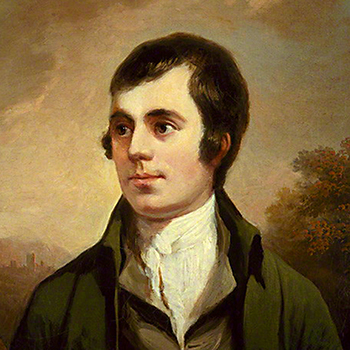
 Robert Burns—known today as Scotland’s national poet—holds a unique place not only in Scottish literature, but also in the cultural life of North Carolina. Born in 1759 in Ayrshire, Scotland, Burns wrote poetry and songs that captured the language, humor, struggles, and hopes of ordinary people. More than two centuries later, his works are still sung, studied, and celebrated worldwide. In areas of North Carolina shaped by significant Scottish immigration, Burns represents both a literary icon and a symbol of heritage, identity, and continuity.
Burns is best known for his lyrical poetry and songs written in both Scots and standard English. Among his most famous works are “Auld Lang Syne,” sung every New Year’s Eve across the globe; “Tam o’ Shanter,” a comic, supernatural narrative poem; “To a Mouse,” with its famous reflection on “the best-laid schemes o’ mice an’ men”; and “A Red, Red Rose,” one of the most beloved love lyrics in the English language. What distinguishes Burns is not only his language but his worldview: he wrote about farmers, lovers, workers, and dreamers, elevating everyday life to the level of art.
A champion of human dignity, Burns celebrated equality, compassion, and social justice. His poem “A Man’s a Man for A’ That” boldly asserts that true worth lies not in rank or wealth, but in character. These values resonated deeply in Scotland during a time of social change, and they continue to resonate in communities around the world that identify with themes of hard work, resilience, and democratic spirit. Burns’s ability to unite rich poetic expression with folk tradition is one of the reasons the Scottish diaspora has held onto his legacy so strongly.
During the eighteenth and early nineteenth centuries, large numbers of Scots—especially Highland Scots—immigrated to the Cape Fear Valley. Many arrived after the failed Jacobite Rising of 1745 and the subsequent political and economic pressures in the Highlands. They followed the Cape Fear River inland, establishing communities in what are now Cumberland, Harnett, Moore, Hoke, Richmond, Robeson, and Scotland counties. Gaelic was spoken in the area well into the nineteenth century, and Scottish surnames, churches, music, and customs took firm root.
Fayetteville itself, along with towns such as Laurinburg, Carthage, and Southern Pines, has long been shaped by this Scottish presence. Scottish Presbyterian congregations, family traditions, and later Scottish heritage organizations preserved not only genealogy but also literature and song. Within this cultural tapestry, Robert Burns became a focal figure—a poet who gave eloquent voice to the culture many settlers had left behind but still carried in memory and identity.
Burns’s ideals speak directly to values cherished in North Carolina: independence, hard work, humor, and neighborliness. Many of the Highland Scots who settled in the Sandhills were farmers, craftsmen, soldiers, and teachers. Burns—himself a farmer-poet—wrote from this same world of soil and sweat. His attention to rural life and his sympathy for ordinary people makes his poetry feel familiar, not distant or elite. Even for those without Scottish ancestry, his work captures universal human emotions and experiences recognizable in everyday life in the Carolinas.
The connection is not purely literary; it is expressed through living tradition. Piping, Highland dancing, tartan displays, clan gatherings, and heritage festivals across southeastern North Carolina keep Scottish culture visible and vibrant. Within these celebrations, Burns is often front and center—quoted, sung, or toasted. His songs and poems give artistic expression to the very heritage being celebrated in kilts, music, and community events.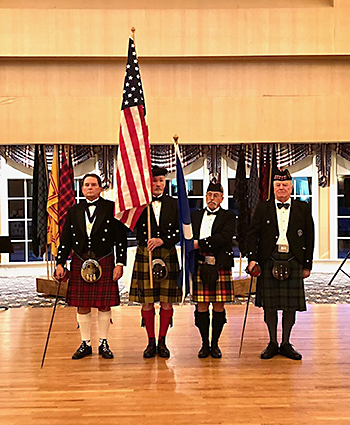 Burns is celebrated each year on or around his birthday, January 25, at “Burns Night” or “Burns Suppers.” These gatherings typically include the recitation of his poems, traditional Scottish music, dancing, and the ceremonial “Address to a Haggis,” one of Burns’s most theatrical works. These events are festive, but they are also acts of remembrance—ways for communities to reaffirm cultural roots and honor a shared past. Wherever Scots settled in substantial numbers, Burns Suppers followed, becoming a cherished tradition that blends literature, ritual, food, and fellowship.
The Cape Fear Valley Scottish Clans is having their annual Robert Burns Night on Saturday, Jan. 25 at Gates Four Country Club, located at 6775 Irongate Drive. This event will begin with a Social & Cocktail Hour at 5 p.m., featuring a cash bar. Piping, Dancing, and Address to the Haggis will begin at 6 p.m., followed by dinner at 6:30 p.m. Admission is $37.50 per person, $75 per couple, and $10 for a kid's plate. Dress code for the evening for men is Highland Military, coat and tie, or business dress. Ladies are asked to wear dressy, elegant evening wear. For more information on this event and other great Scottish events and history, visit their website at https://www.cfvscots.org/. (Please see update below)
Robert Burns is known as Scotland’s national poet because he distilled the spirit of a people into unforgettable words and melodies. He is celebrated because his works are both beautifully crafted and emotionally alive—full of humor, insight, love, and courage. He is also important in North Carolina, especially around Fayetteville, as his legacy is intertwined with the story of Scottish settlement in the region. Through Burns, communities in the Sandhills remember their roots, reflect on their identity, and celebrate the enduring ties between Scotland and the Carolinas.
1/22/2026-Email update from Cape Fear Valley Scottish Clans on their Burns Supper: "Due to the possibility of snow and sleet on Saturday, 1/24/26, we have decided to cancel the dinner. We have reserved Gates Four for Saturday, 2/7/2026. Those of you that have made your reservations already, please let me know immediately if you are willing and able to attend on 2/7/2026. Anyone else that was not able to attend on 1/24 but would wish to attend 2/7, please let me know quickly. The final date to have your payment in will now be January 30, 2026." POC is Marianne O'Leane at capefearscots@aol.com