
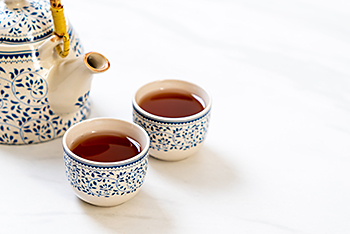
 A centuries old drink is being celebrated at the Museum of the Cape Fear until June 7. "Steeped in Time: Tea & Traditions" is a traveling exhibit from the Museum of the Albemarle celebrating all things “tea,” the second most consumed drink behind water.
The museum exhibit follows tea as it is grown, harvested and manufactured, shipped and consumed. Traditions and customs are explored throughout the display.
Tea is believed to have been discovered nearly 5,000 years ago in China. A legend tells the tale of Emperor Shen Nung sitting in the shade of a tea tree, boiling water, when a leaf fell off the tree and landed in the pot. He tried the boiling brew, found it to be delicious, and continued to experiment with the leaves from the tree, discovering a tasty drink with medicinal properties that could help his people. He urged everyone to plant trees and cultivate the plant, and over time has been dubbed the “Legendary Father of Tea.”
It took another 3,000 years for tea to truly catch on in China, but when it did, it took over the country. During the Ming Dynasty, from 1368 to 1644, China truly perfected the art of drying or roasting tea leaves for exportation, and that exportation changed the entire world.
In the 1650s, tea was introduced to the general public in Britain, and it took off from there. Tea became essential to social life. Parties were organized completely around the drink, manuals were written on how to brew the tea, how to write invitations to fancy tea parties, etiquette and serving methods. Tea became all the rage.
Enter the colonies in America. Tensions in the colonies had been rising for years, but the real deal breaker was the tea tax. Taxes on other goods had been mostly repealed by 1772, but the tax on tea remained ridiculously high, and this was to offset the cost of the bankruptcy of the East India Trading Company. The Sons of Liberty were enraged by the tea tax and shipping restrictions, and decided to take matters into their own hands. On Dec. 16, 1773, the Sons of Liberty emptied 342 chests of tea into the Boston Harbor. Ultimately, this act would be one of the catalysts for the Revolutionary War and the fight for independence.
More locally to North Carolina, the Society of the Patriotic Ladies in Edenton, NC, led a protest in Oct. 1774, which became known as the Edenton Tea Party. Fifty one women came together in an unprecedented move to stop drinking tea. More than just eschewing the social tradition that tea provided, these women were showing they had voices and would use them. Their bravery helped to coalesce the resistance to the Crown ripping through the colonies.
Tea continues to be a cultural and social drink and is now a $6 billion a year industry. “Steeped in Time: Tea and Traditions” at the Museum of the Cape Fear explores the fascinating history behind this drink and how it shaped our culture. The exhibit is available until June 7. The museum, a part of the NC Dept. of Natural and Cultural Resources, is located at 801 Arsenal Ave. Currently, the museum is open Tuesdays through Saturdays, 10 a.m. to 5 p.m., and Sundays, 1 p.m. to 5 p.m. Beginning June 1, the museum will be implementing new hours, Tuesdays through Saturdays, 10 a.m. to 5 p.m.
For more information about the museum and the exhibits, visit https://museumofthecapefear.ncdcr.gov/
Learn about tea at Museum of the Cape Fear
- Details
- Written by Aly Hansen