
 Every June, the language of freedom echoes across America in familiar ways. Parades, music, cookouts, speeches and celebrations will mark Juneteenth, the day enslaved African Americans in Texas finally learned they had been emancipated more than two years after the Emancipation Proclamation of 1863.
But in Fayetteville, one annual event has quietly evolved into something deeper than remembrance.
The Seventh Annual Hari Jones Memorial Lecture, hosted by the NC History Center on the Civil War, Emancipation & Reconstruction, has become less about revisiting history as a distant subject and more about confronting how unfinished, uneven and deeply personal the story of freedom still feels today.
This year’s lecture will take place on Monday, June 15, at 7 p.m. at Mt. Sinai Missionary Baptist Church at 1217 Murchison Rd., directly across from Fayetteville State University. The event is free and open to the public.
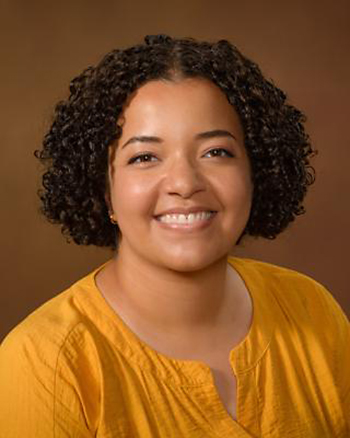
Featured speaker Adrienne Nirdé, director of the NC African American Heritage Commission, will deliver a lecture titled The Search For Freedom: Juneteenth in North Carolina. Her presentation will explore the fractured and complicated path Emancipation followed across the state during the Civil War and Reconstruction. For organizers, the lecture series has become one of the most meaningful Juneteenth observances in the region because it refuses to flatten history into something simplistic.
“I’m of the belief that it’s important because it takes the idea of Juneteenth seriously,” said Marc Barnes, whose firm works with the History Center. “We at the NC History Center on the Civil War, Emancipation & Reconstruction are about the idea of education.”
That emphasis on education, Barnes explained, is intentional.
In a cultural moment where historical conversations are often compressed into headlines, social media posts or political slogans, the lecture series attempts to slow things down. To listen longer. To wrestle with the uncomfortable details.
“It’s entirely fitting that we would help our neighbors celebrate Juneteenth by having historians come in and educate us,” Barnes said. “These are stories that are important to all North Carolinians.”
North Carolina’s story, he noted, is particularly difficult to summarize neatly. Unlike some Southern states that are often portrayed through a single Civil War narrative, North Carolina existed in layers of contradiction, divided geographically, politically and morally.
“The western third was pro-Union,” Barnes said during a recent interview. “The middle third included many who held anti-Confederate and abolitionist views, and the eastern third was pro-Confederate and pro-slavery. It’s both complicated and nuanced.”
That complexity sits at the center of Nirdé’s upcoming lecture.
Freedom did not arrive all at once here. It moved unevenly through the state, shaped by military occupation, local resistance, politics and geography. In some communities, Emancipation felt immediate. In others, it unfolded slowly and violently.
Barnes believes understanding that unevenness matters because it changes how people understand both the past and the present.
“It’s important for audiences in North Carolina to know what happened here, so that they understand more about their own past and thus our shared present,” he said.
That philosophy also shapes the vision behind the History Center itself, which is expected to open in 2028 as part of the North Carolina Department of Natural and Cultural Resources. Unlike traditional Civil War museums that focus heavily on battles and generals, the Fayetteville-based center has spent years collecting personal stories from families across all 100 North Carolina counties, stories about ordinary people who lived through slavery, secession, Emancipation and Reconstruction.
Some stories are heroic. Others are painful. Many have rarely been publicly told. Barnes described the work as an intentional effort to uncover voices history often pushed to the margins.
“The stories are collected, vetted and then shared,” he said. “It gives us a unique perspective.”
That mission aligns closely with Nirdé’s own work. Before becoming director of the African American Heritage Commission in 2023, she spent years working in museums and cultural institutions focused on recovering overlooked narratives and preserving community memory.
Barnes said that shared commitment made her a natural choice for this year’s lecture. “When you think about it, her career is directly in line with who we are,” he said. “We complement each other.”
The annual lecture also carries emotional weight because of the man whose name it bears. Hari Jones was more than a historian. To many who heard him speak, he was a storyteller capable of collapsing time, making audiences feel as though the Civil War era existed not in textbooks but just outside the room.
A former assistant director and curator at the African American Civil War Freedom Foundation and Museum in Washington, D.C., Jones became a trusted advisor and recurring speaker for the History Center before his sudden death in 2018, only days after delivering a Juneteenth lecture in Fayetteville. The memorial series was created shortly afterward.
Barnes believes Jones’ greatest gift was his ability to make people recognize history in places they had long overlooked. He recalled attending the first memorial lecture years ago and hearing retired Guilford College professor Dr. Adrienne Israel speak about abolitionist Levi Coffin and the nearby Quaker communities connected to the Underground Railroad.
“I realized I regularly drove by places tied to history I didn’t even know existed,” Barnes said. “Nothing brings history alive more than that.”
That realization that extraordinary stories existed quietly in ordinary spaces continues to define the lecture series today. And perhaps that is why the Hari Jones Memorial Lecture has endured in Fayetteville while so many public history events fade into routine ceremony. It asks audiences not simply to celebrate freedom, but to examine how fragile, delayed and contested freedom has often been.
As national conversations surrounding race, history and memory continue evolving, Barnes believes public lectures still serve a critical role in helping communities navigate difficult truths together.
“I believe strongly that lectures like these help us get to know more about each other and more about the past so that we can better understand the present,” he said.
Then, referencing Maya Angelou, Barnes paused on an idea that feels increasingly urgent in modern America. “Maya Angelou once urged all of us to do the best you can until you know better,” he said. “And when you know better, do better.”
For one evening in Fayetteville, that pursuit of understanding may become the most meaningful Juneteenth tradition of all.
(Photo: Adrienne Nirdé, director of NC African American Heritage Commission, will be giving the Hari Jones Memorial lecture for 2026 titled The Search for Freedom: Juneteenth in North Carolina. Photo courtesy of Marc Barnes)