
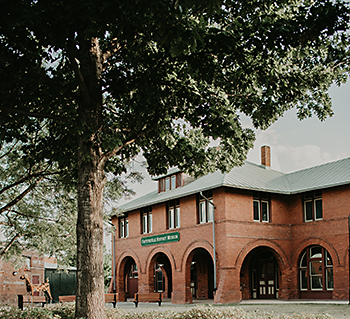
As we approach a milestone in America’s history, America's 250th anniversary offers a unique opportunity to connect with the foundational stories that shaped our nation. Right here in downtown Fayetteville, at 325 Franklin St, the Fayetteville History Museum is creating an immersive experience that brings these pivotal moments to life. The museum's special exhibition, "Anniversaries Abound!" combines America's semiquincentennial with the museum's own 20th anniversary, creating a deeply personal exploration of how our local community contributed to the birth of American independence.
Historic Properties Supervisor, Hattie Presnell, explains that the dual celebration was a natural fit.
"The Fayetteville History Museum has combined both America's 250th with the museum's 20th anniversary into one exhibit called 'Anniversaries Abound!'" she says. "It looks at Fayetteville's historic connections to the early stages of the American Revolutionary War and how, over time, the museum has helped to share this and other local history."
The result is an exhibit that honors both the nation's founding and two decades of preserving Fayetteville's stories.
The story begins with the towns of Cross Creek and Campbelton, the predecessors to modern Fayetteville, where passionate Patriots made their voices heard in support of independence.
“This has been an opportunity to bring our community's focus back on The Cumberland Association, also known as the Liberty Point Resolves. This document was signed on June 20, 1775, to support the independence of the colonies from Great Britain. As part of our 250th anniversary of the signing of this document last year, we were gifted excellent high-resolution copies of the originals held in the State Archives. These copies are proudly on display once again. Cumberland County had a very significant role in America's 250th,” Presnell said.
This document, now proudly displayed at the museum, represents one of the earliest organized statements of revolutionary intent in North Carolina.
What makes this exhibition particularly meaningful is its focus on tangible artifacts and personal accounts. Presnell and her team have collaborated with generous community members to assemble a collection of loaned items that tell authentic stories of the people who witnessed these transformative events. Presnell also says that this was one of the most challenging aspects of the exhibition.
“The most significant challenge we faced in creating the 250th portion of our exhibit was in collecting tangible artifacts. When creating exhibits, we can typically work around items we have in our own collections; however, for the 250th, it was a bit more difficult. We have some incredible community members who have graciously loaned items to the museum for this exhibit.”
This exhibition serves as an exceptional educational resource for learners at every stage of life. For students pursuing history, political science, or social studies, the museum provides primary source materials and carefully curated artifacts that bring textbook learning into vivid reality.
With so many different directions the museum could go with the exhibition, one might wonder how a museum decides what its exhibition will be about.
“For us in Fayetteville, it was simple! The Patriots of Cross Creek and Campbelton made their intentions known in 1775 and put action to words on February 27, 1776, at the Battle of Moore's Creek Bridge. Though we had both Patriots and Loyalists in Cumberland County, this particular battle was a turning point as it showed strength with the Patriots of North Carolina,” Presnell says.
The museum has made intentional efforts to include voices that have historically been overlooked, reflecting an ongoing commitment to comprehensive and inclusive storytelling.
“This has been an ongoing process that I've worked on since joining the museum. We've updated previous permanent exhibits to reflect the personal accounts of our full community. Recent exhibits (such as “The Art of Dying” and “Anniversaries Abound”) and future exhibits include the stories of all,” says Presnell.
By updating permanent exhibits to reflect personal accounts from the full spectrum of individuals who lived through these events, the museum creates learning opportunities that resonate with today's diverse community.
Presnell goes on to explain the starting point for her when putting together exhibitions.
“When researching topics for upcoming exhibits, the first subject I start with is our community. We are a local history museum. Whether the topic is sports, entertainment, or food, how has it impacted the facets of our community, and how has our community impacted the topic? The answers to these questions are what make history important and relevant. We have a few community stories we plan on sharing in the coming year that are truly remarkable. We want our community to feel connected to their history, and being seen in these stories is how it's done.”
The February 27, 1776, Battle of Moore's Creek Bridge represents a turning point that demonstrated the strength of North Carolina's Patriots, and the museum's presentation helps visitors understand why this local event mattered to the broader revolutionary cause. Whether you're a recent high school graduate exploring career paths in education or museum work, or a retiree seeking personal enrichment, this exhibition welcomes you with accessible, engaging content designed for all knowledge levels.
The Fayetteville History Museum has designed special programming that extends beyond the exhibition walls, creating multiple touchpoints for community engagement. In March, the museum offered a Historic Cross Creek Cemetery #1 tour, allowing participants to connect with the individuals of Cross Creek and Campbelton who directly participated in the American Revolution. These experiential programs transform abstract historical concepts into memorable, place-based learning experiences.
According to Presnell, these programs were intentionally designed to deepen the community's understanding of local involvement in the Revolution.
"Along with our anniversary room, we have had special programs that correlate with the individuals of Cross Creek and Campbelton who participated in the American Revolution," she explains. The cemetery tour served as a powerful reminder that the people who shaped history were not distant figures in textbooks, but neighbors whose stories remain rooted in Fayetteville's landscape.
Throughout the exhibition period, which started in early May through December, visitors can expect additional programming that correlates with the Patriots and Loyalists who shaped Cumberland County's revolutionary experience. These programs recognize that while the county produced strong Patriot voices, it also included Loyalist residents, presenting an opportunity to explore the complex nature of colonial society and the difficult decisions families faced during this period of upheaval.
The museum's approach to programming reflects the values of accessibility and community connection. With free admission and welcoming hours, the institution removes barriers that might prevent families, students, or individuals from participating in cultural enrichment. This commitment to inclusive access aligns with the broader mission of making education and cultural resources available to everyone in our community, regardless of economic circumstances.
(Photo: The Fayetteville History Museum is located in an old train depot. Photo courtesy of Hattie Presnell, Historic Properties Supervisor)