
Long before Fayetteville became synonymous with military service, another industry helped define the city and shape the lives of generations of local families.
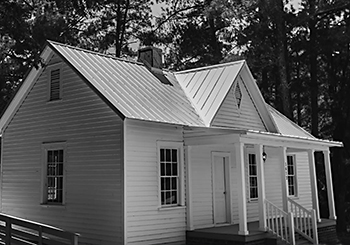
Inside a modest home tucked along Camden Road, those stories still live.
The Fayetteville History Museum will open the doors to the historic Massey Hill Mill House on July 11 from 11 a.m. to noon, inviting visitors to step into a world where life revolved around spinning frames, neighborhood schools and front porches occupied by people who knew one another not simply as neighbors, but as family.
For Hattie M. Presnell of the Fayetteville History Museum, the significance of the house extends far beyond its walls.
“The Massey Hill Mill House provides our community with a glimpse of how our local textile mill communities lived,” she said. “The Massey Hill community has a strong community built around the textile industry.”
That spirit of togetherness helped define an era when textile mills served as the heartbeat of daily life. Families settled near the mills. Businesses emerged. Churches flourished. Baseball teams representing competing mills filled summer evenings with friendly rivalries.
Massey Hill High School, which recently celebrated its centennial, became another gathering place. The anniversary celebration drew alumni from across the country, a testament to the bonds forged decades ago.
“Individuals didn’t just work at the mill, or attend the same school or church, or go to the same stores,” Presnell said. “They were and are family. There is a reason why the 100th anniversary of Massey Hill High School was so well attended. It was a family reunion.”
Visitors attending the upcoming open house will encounter more than historical photographs and artifacts. The home itself has been carefully arranged to recreate everyday life as it would have appeared for a typical mill worker’s family.
Within the house, exhibits highlight several of the area’s textile operations, including Tolar, Hart and Holt Mills, Victory Mill and Lake View Cotton Mill. Rooms have been furnished to reflect the era, offering a tangible connection to a way of life that once touched thousands of residents.
“People will be able to see what these homes looked like and learn about the mills that shaped this community,” Presnell said.
The work of preserving those memories falls largely to the Fayetteville History Museum, whose mission reaches far beyond its downtown location.
“The purpose of the Fayetteville History Museum is to collect and share the stories about our entire community,” Presnell said. “It is an ongoing process that I’m grateful to be a part of.”
Sometimes that work leads to unexpected discoveries.
“Through our collection and research process, we are introduced to some amazing stories and ‘a-ha’ moments that help put the pieces together,” she said. “We hope to collect more of these stories in the near future.”
Those pieces matter because communities are built not only through industry, but through shared experiences and collective memory.
Today, many of the mills are gone, but their legacy remains etched into neighborhoods and family histories. Preserving places like the Massey Hill Mill House ensures that future generations understand the sacrifices, traditions and relationships that helped shape Fayetteville long before modern development transformed the city.
In many ways, the house serves as more than a museum.
It is a reminder that communities are woven together much like the textiles that once came from the mills themselves, thread by thread, story by story and family by family.
The Massey Hill Mill House open house is free and open to the public. For one hour on July 11, visitors will have the opportunity to step back in time and discover how a neighborhood built around industry became something far more enduring: a community bound together by memory. For more information, visit their website at https://www.fayettevillenc.gov/Parks-and-Recreation/Facilities/Fayetteville-History-Museum
(Photo: The Massey Hill Mill House will be open by the Fayetteville History Museum on July 11 for the public to check out a piece of Fayetteville's history. Photo courtesy of Fayetteville History Musem's Facebook page)