
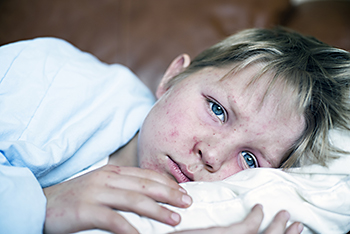
 Measles is once again making headlines as cases and exposures are reported in parts of North Carolina, including Cumberland County. Health experts say the best way to protect yourself and your family is to stay informed and make sure vaccinations are up to date.
Nikki Carter, an Infection Preventionist with Infection Control at Cape Fear Valley Health, says measles is much more than a rash.
“People often think of the rash first, but measles actually starts much like other viral illnesses,” Carter said. “Fever, cough, runny nose and red, watery eyes are often some of the first symptoms people notice.”
Measles is an acute respiratory virus that spreads very easily from person to person through droplets in the air when an infected person coughs, sneezes or even breathes. It is considered highly contagious because the virus can remain in the air and on surfaces for up to two hours after an infected person leaves an area.
“People can spread measles before they even know they are sick,” Carter said. “That is one of the reasons it can move so quickly through a community.”
Early symptoms usually appear seven to 14 days after exposure. A rash usually develops three to five days later, often beginning on the face before spreading down the body. A person with measles is contagious for about four days before[AC1.1] the rash appears through four days after it develops.
According to the Centers for Disease Control and Prevention, one person with measles can infect 12 to 18 other people who are not immune. While anyone can get measles, some people are at greater risk for serious illness and complications, including children younger than 5, adults older than 20, pregnant women and people with weakened immune systems.
Complications can range from ear infections and diarrhea to more serious conditions such as pneumonia, bronchitis and swelling of the brain. The good news is that measles is largely preventable through vaccination. The measles vaccine is given as part of the MMR vaccine, which protects against measles, mumps and rubella.
According to the CDC, one dose of the vaccine is about 93% effective at preventing measles, while two doses are about 97% effective.
“Most people are already protected because the vaccine has been part of the childhood vaccination schedule for many years,” Carter said. “If you are not sure whether you have been vaccinated, talk with your medical provider.”
If you think you may have been exposed to measles, contact your healthcare provider or local health department right away. People who are not vaccinated or do not have immunity may need to stay home from work, school and public places for up to 21 days after exposure.
If you develop symptoms such as difficulty breathing, severe dehydration, confusion or extreme weakness, seek medical care right away. Before visiting a doctor’s office, urgent care facility, or emergency department, call ahead and inform the staff that you may have measles, so they can take steps to protect other patients and staff.
“Staying informed and staying protected is the best thing you can do for yourself, your family and your community,” Carter said.
Health & Wellness: Measles awareness: Symptoms, prevention, when to seek care
- Details
- Written by Lia Tremblay