
Long before Fayetteville earned its reputation as a military town, it was a place where ordinary citizens made an extraordinary choice.
In the summer of 1775, months before the Declaration of Independence was signed in Philadelphia, a group of local men gathered in what was then Cross Creek to publicly declare their support for the cause of liberty. Their pledge, known today as the Liberty Point Resolves, has become one of Cumberland County’s defining historical moments. Yet for many residents, the names behind those signatures have remained little more than footnotes.
A new publication from the Cumberland County Public Library is working to change that.
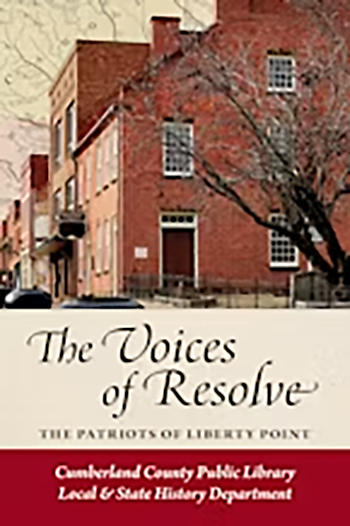
Released this summer by the Library’s Local & State History Department, The Voices of Resolve: The Patriots of Liberty Point shifts the focus away from the document itself and onto the people who created it. Instead of retelling a familiar Revolutionary War story, the book asks a different question: Who were the individuals willing to risk their livelihoods and potentially their lives for an uncertain future?
The answer unfolds over more than 200 pages of carefully documented research. Developed over two years, the project draws from military records, court documents, land grants, wills, family papers, newspapers and other historical sources to reconstruct the lives of the Liberty Point signers and the community they called home. According to the Cumberland County Public Library, the publication contains more than 1,000 source citations, making it one of the most thoroughly researched works ever produced on this chapter of local history.
For readers, however, the value isn’t found in the footnotes. It’s found in the humanity.
History has a way of reducing people to dates, monuments and bronze plaques. This book reminds us that before they became historical figures, they were merchants trying to keep businesses open, farmers working the land, fathers raising families and neighbors navigating a community divided over Britain’s rule. That broader perspective feels especially timely.
Across the country, communities are marking the 250th anniversary of the American Revolution by reflecting on national milestones. Fayetteville’s contribution to that conversation is distinctly local. Rather than looking only at famous names from Boston or Philadelphia, this project invites residents to explore the people who stood on the banks of Cross Creek and helped shape history from right here in Cumberland County.
The publication also expands beyond the Patriots themselves. It examines the Loyalists who opposed independence, explores the experiences of women whose contributions often went unrecorded and traces the fascinating journey of the original Liberty Point Resolves document after it disappeared from public view. The result is a richer, more balanced portrait of a community wrestling with the same questions of loyalty, identity and sacrifice that defined the colonies as a whole. The book is only one part of a larger effort underway at Headquarters Library.
As part of North Carolina’s America 250 initiative, the library has introduced new exhibits, educational programming and public history projects designed to make Revolutionary-era history more accessible. Together, they reflect a growing recognition that preserving history isn’t simply about protecting old documents; it’s about helping modern communities understand how those documents continue to shape the present.
That commitment has earned statewide recognition. The Liberty Point Chapter of the National Society Daughters of the American Revolution recently announced that the Library’s Local & State History Department will receive the America250! Commendation Medal for its work preserving and sharing Cumberland County’s Revolutionary history.
For many readers, The Voices of Resolve will offer something more valuable than a lesson about the past.
It offers perspective.
The Liberty Point Resolves were never just ink on parchment. They represented real people making difficult decisions without knowing how history would judge them. Two and a half centuries later, their community is still discovering who they were.
Perhaps that’s the greatest contribution of this remarkable project. It reminds us that history doesn’t begin in textbooks. It begins with people. And some of America’s most important stories didn’t happen in distant capitals; they happened right here in Fayetteville. For more information, visit the Cumberland County website at https://bit.ly/4wFxC9m