
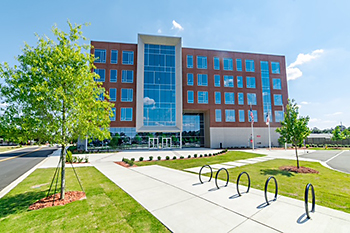
Early last month, a life-altering, community-changing event occurred on the campus of the Cape Fear Valley Medical Center.
A brand spanking new medical school hosted a ribbon-cutting for a $60-million, state-of-the-art medical school building, which will open its doors to 64 students in the next few weeks, with larger classes slated for coming years. The school is a partnership with Methodist University and will change the face of medical care in southeastern North Carolina for the foreseeable future.
Numbers make the need for this new venture crystal clear.
The United States is short about 80-thousand physicians. North Carolina needs about 7,800 of those. Raw numbers do not tell the entire story, though. Residents of Raleigh and Charlotte, our state’s largest metropolitan areas, enjoy access to medical care from primary doctors to the most specialized providers. If you live in southeastern North Carolina or in other rural areas, medical care, particularly specialized care, is much harder to come by, and getting harder and more competitive by the day.
North Carolina is now the 3rd fastest growing state in our nation, with the highest level of what demographers call “domestic migration,” people moving here from other states. We currently have about 29-thousand medical doctors, which is roughly 26 physicians for every 10,000 residents. When the Brody School of Medicine at East Carolina University was established in 1977, almost 50 years ago, North Carolina had just over 4 million residents. Today, our state has more than double that number, with a population estimated at 11.2 million people.
Our neck of the woods, defined as the 20 counties comprising southeastern North Carolina with a population approaching 2 million people, is mostly rural, with 2 significant metropolitan areas, Wilmington and Fayetteville. Both have large medical centers, which also serve people from surrounding rural areas at their main hospitals and in satellite facilities. Since 2010, 149 rural hospitals have closed in the United States, including 8 in North Carolina. One of those was in nearby Richmond County. Such closures mean that rural residents must travel for both primary and advanced medical care, sometimes in very difficult, even dangerous circumstances. In our part of the world, that includes waiting hours, perhaps days, in the very busy Cape Fear Valley Medical Center emergency room.
Clearly, the new Methodist University Cape Fear Valley School of Medicine will address a gaping need for medical care in a part of North Carolina that does not have enough providers. But the presence of a medical school and the people associated with it will provide more than health care. It will enrich our community’s social and cultural fabric as well.
Medical school is generally a 4 year academic commitment, followed by several years of on-the-job training, depending on the particular medical field. Studies show that approximately 2/3s of medical students wind up practicing in or near where they studied and trained, having settled into the community and formed relationships, perhaps even families. They become our neighbors, our friends, and our children’s playmates. They will share their life experiences from wherever they came, and they and their families will contribute their time, talents, and treasure to our community in return.
Partnerships, like marriages, are always a leap of faith, trusting that both partners have only the best intentions and will work for the health and longevity of the partnership. Both Methodist University and Cape Fear Valley Health are deeply invested in southeastern North Carolina and have been since the mid-20th century. They have everything to gain from an educated and healthy community, and so do we.
Sounds like the best sort of partnership to me!
Editor's Note: Margaret Dickson is on the Board of Trustees for Methodist University.
(Photo: The new Methodist University Cape Fear Valley School of Medicine will welcome its first cohort in a few weeks. The public is invited to an open house on Thursday, July 9 from 3 p.m. to 6 p.m. Photo courtesy of Methodist University)