- Details
-
Tuesday, 02 December 2025
-
Written by John Hood
North Carolina has one of the best-performing economies in the country. We also have one of the country’s most competitive tax codes. That’s no coincidence. Tax reform had served our state well.
According to a just-released study by the Tax Foundation, North Carolina’s overall tax system is the 13th-most competitive in the country and third-best in the southeast, after Florida (#5) and Tennessee (#8).
In all the major categories of taxation — individual income, corporate income, property, retail sales, and payroll (to fund unemployment insurance) — our state ranks in the top half by the Tax Foundation’s criteria of simplicity, neutrality, transparency, and growth-enhancement. We do particularly well in corporate taxes (3rd lowest) and payroll taxes (7th).
During the 1990s and 2000s, North Carolina fared poorly on most of these measures. To the extent our state competed effectively for people, businesses, and capital investment, it did so in spite of our tax system, not because of it.
Fiscal conservatives shouldn’t oversell the effects of tax policy. Many other factors influence economic decisions, and North Carolina has many attractive features and assets to offer prospective residents, entrepreneurs, and investors. All other things held equal, however, most empirical research on the question shows a negative association between high taxes and economic growth.
South Dakota, for example, has one of America’s lowest tax burdens. New York has its highest. Plenty of people would still rather live, work, or invest in New York than in South Dakota because of the former’s deeply developed markets, cultural amenities, and access to capital of all kinds. But South Dakota’s pro-growth tax code has helped it compete — and New York is leaking people and money to places such as Florida, Texas, and North Carolina that have assets South Dakota lacks as well as better tax systems.
“Taxes are not everything,” the Tax Foundation observes, “but they do matter, and they are within the control of policymakers. Even within a given revenue target, there are better and worse ways to raise revenue.”
In addition to the research it cites, I’ll mention a 2023 study in the Journal of Risk and Financial Management. Its authors examined 10 years of county-level data across the United States. They found that, to varying degrees, increases in income, sales, and property taxes are all associated with lower rates of employment, growth, and innovation (as measured by patents issued per resident). “The results consistently underline that taxes have detrimental effects on local economies,” they wrote, “whether urban or rural.”
Since 2011, the North Carolina General Assembly has broadened the base and lower the rates of both our personal-income tax and our sales tax. Lawmakers have also slashed our corporate-income tax by more than half and are on track to phase it out entirely by the end of the decade. By itself, the latter reform will likely vault North Carolina into the top 10 states in tax competitiveness.
Corporate taxes are especially pernicious and harmful because they warp capital flows and labor markets. Remember that corporations aren’t actually taxpayers. They are bundles of contracts among taxpayers. When corporate managers send money to state or federal treasuries to satisfy their companies’ income-tax liability, those funds must come from one of three places: 1) money otherwise paid to employees and vendors, 2) money otherwise paid to owners and shareholders, or 3) money collected from their customers as higher prices.
Studies show that the actual incidence of a hike in corporate tax is spread across all three groups, but not evenly. Consumers are often very responsive to price changes and can often buy products made in lower-tax jurisdictions. In the short run, shareholders may take the hit — but over time, managers reduce it by moving assets and establishments to lower-tax jurisdictions. That leaves the least-mobile group, workers, bearing most of the cost over time.
North Carolina can and should eliminate our corporate tax, taxing people’s consumed income transparently and proportionally through other means to fund truly necessary public services.
Editor’s note: John Hood is a John Locke Foundation board member. His books Mountain Folk, Forest Folk, and Water Folk combine epic fantasy with American history (FolkloreCycle.com).
- Details
-
Tuesday, 25 November 2025
-
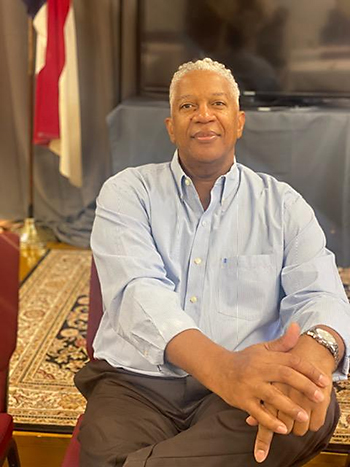
Written by Kirk deViere

I spend a lot of time in neighborhoods across Cumberland County. VFW halls. Coffee shops. Churches. Youth sports fields. Senior centers. Classrooms. And everywhere I go, I meet people who care deeply about their families, their neighbors, their towns and cities. But too often, they do not believe their caring matters. They have stopped expecting their government to listen.
That is the real crisis. Not jobs. Not investment. It is about whether people believe this place is theirs. Whether they trust us. Whether they have pride in Cumberland County.
My time in the military taught me something fundamental about leadership. Mission first, people always. Yes, you have to accomplish the mission. But the only way to accomplish any mission that matters is by taking care of your people. When people know you have their back, when they trust you will fight for them, that is when they will walk through walls to get the job done.
That principle guides everything I do as Chairman. Our mission is clear. Build a thriving Cumberland County with strong schools, safe and healthy communities, good jobs, and quality of life. But we will never accomplish that mission by treating residents like obstacles to work around. We accomplish it by putting people first.
When I became Chairman, I knew we had to rebuild that foundation. Person by person. Neighborhood by neighborhood. Because you cannot legislate pride into existence. You cannot mandate trust. Those things grow from real relationships between real people who show up for each other consistently.
So that is what we have been doing. My job is not just leading the Board of Commissioners as Chairman. It is knowing the volunteer who runs the food pantry, the veteran organizing cleanups in his neighborhood, the teacher fighting for her students, the small business owner investing in their community, the healthcare provider caring for our families. It is remembering their names, following up on their concerns, celebrating their wins. Mission first, people always.
And here is what happens when you approach governing that way. People start believing again. Not in grand promises or political rhetoric, but in the simple truth that someone is actually listening.
We have made transparency the cornerstone of everything we do. When we tackle major challenges, we do not just announce decisions. We bring residents along through every step, share the data and reports we are working from, explain what we are considering and why. Not after the fact, but during the process when their input can actually shape the outcome.
That openness is not easy. It means admitting when we do not have all the answers. It means being accountable when we fall short. But it is the only way to earn trust. And trust is everything. Just like in the military, when your people trust you are working for their best interests, they become your strongest allies in accomplishing the mission.
When people trust their government, something remarkable happens. They start taking pride in their community again. They pick up trash in their neighborhoods. They support local businesses. They show up to meetings. They volunteer. Pride becomes contagious.
We have focused relentlessly on what people can see and feel in their daily lives. Parks that are clean and safe. Neighborhoods that feel cared for. Water that is safe and clean. Schools our children deserve.
Healthcare people can access when they need it. A hand up for people in need. Jobs that let families build a future here. Events that celebrate our incredible diversity and military heritage. These are not just line items in a budget. They are investments in people’s ability to take pride in where they live.
And I see that investment growing every day. More people at public meetings. More volunteers for community projects. More families choosing to stay. More pride in being from Cumberland County.
This is happening because people are choosing to engage, because they believe it matters, because they trust we are building something real together.
The beautiful thing about pride is how it multiplies. When residents believe in their county, they become our best ambassadors. They tell their military friends to retire here. They convince their kids to come back after college. They brag about Cumberland County to anyone who will listen. That is how you build sustainable growth. Not through marketing campaigns, but through genuine pride that spreads from person to person.
We are not there yet. Not every neighborhood feels this shift. Not every resident has seen the change. But we are building it, step by step, decision by decision, relationship by relationship
My commitment to you is simple. We are going to keep showing up. We are going to keep listening before we decide. We are going to keep making decisions with you, not for you. Mission first, people always. That is not just a saying. It is how we govern.
The Cumberland County we are building is not about impressing outsiders. It is about the people who already live here knowing this place is worth their investment, their hope, their pride.
Together, we build trust. Together, we build pride.
(Photo: Downtown Fayetteville lit up at night. Photo courtesy of City of Fayetteville's Facebook page)