https://www.upandcomingweekly.com/


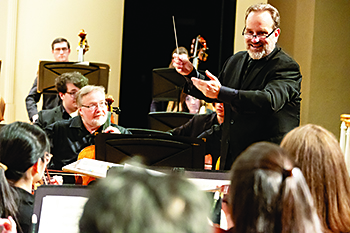
  • The Fayetteville Symphony Orchestra is proud to announce the appointment of Jessica Lynn Munch-Dittmar as Executive Director, effective August 4. She will succeed Anna Meyer, who led the Orchestra through significant growth in recent years and is leaving the FSO on July 7 to relocate with her family.
    “I am honored and thrilled to join the Fayetteville Symphony Orchestra as its new Executive Director,” said Munch-Dittmar. “This organization has a rich history of bringing extraordinary music to our community, and I am eager to collaborate with the musicians, staff, and board to build on that legacy. Together, we will create meaningful musical experiences that inspire and unite us all.”
    FSO board chair Mark Regensburger shares Munch-Dittman's enthusiasm.
    “We were able to speak to multiple wonderful candidates, any of whom would have been a strong leader for our community's premier professional musical organization. Jessica really was the cream of the crop,” he said. “She brings a powerful breadth of experience, including multiple appointments as executive director, consulting experience in fund raising and grant writing, and a particularly strong background in developing youth and education programs.”
    7Munch-Dittmar joins the Fayetteville Symphony Orchestra as executive director, bringing more than 17 years of experience in arts administration, music education, and nonprofit leadership. A South Carolina native, Munch-Dittmar holds a Bachelor of Arts in Music Education from the University of South Carolina and a Master of Arts in Arts Administration from the Savannah College of Art and Design.
    Munch-Dittmar has held prominent leadership roles, including chief executive officer of the Greater Miami Youth Symphony, interim CEO of the Ukulele Kids Club, and director of education and community engagement with both the Orlando Philharmonic Orchestra and the Winston-Salem Symphony. In these roles, she has demonstrated expertise in strategic planning, grant writing and management, audience development, and fostering collaboration across diverse stakeholder groups.
    A lifelong musician, Munch-Dittmar has performed with various community ensembles and has explored diverse musical traditions, including West African drumming. Her studies in this vibrant art form have deepened her appreciation for the universal power of rhythm to unite and inspire people.
    Munch-Dittmar is also passionate about diversity and inclusion and has been actively involved in nonprofit advocacy. As a board member for Pride Winston-Salem, she worked to promote equality and support LGBTQ+ initiatives, helping to grow community engagement and awareness. Her other board and advisory panel appointments include the Miami-Dade Department of Cultural Affairs and Culture Builds Florida. Currently, she serves as fundraising chair for A World Free of Suicide, showcasing her commitment to using the arts and advocacy as vehicles for positive social change.
    In addition to her professional accomplishments, Munch-Dittman is committed to her family and community. She lives with her husband, a devoted educator, and their energetic 8-year-old son, whose love of music and learning inspires her work. Together, they enjoy exploring the arts, supporting local cultural events, and fostering connections with the communities they serve.
    The 2025-2026 FSO Season begins on September 20th in Seabrook Auditorium with Total Eclipse of The Chart. The FSO also has many educational programs, free events, and community performances. Learn more at www.fayettevillesymphony.org

  • If you liked NIL money and its ugly stepsister, the Transfer Portal, you are going to love Revenue Sharing for college student athletes.
    Remember the golden days of long ago when college players stayed at their schools long enough for fans of other schools to hate them? What Carolina fan did not enjoy wishing missed free throws on Dook’s Bobby Hurley or Christian Laettner? It was a wonderful part of basketball.
    But on 1 July, 2021, all that delightful ill will ended when NIL came into effect.
    Some background info about NIL and the Transfer Portal. For those who came in late, NIL stands for Name, Image, and Likeness for college players. They are officially allowed to be paid by third parties for endorsements, sponsorships, and business ventures.
    6Before NIL, none of these activities had ever occurred at any college. Not one. All colleges played by the same rules. Coincidentally, I have a bridge I would like to sell you.
    Some soreheads contend that NIL stands for “Now It’s Legal.” The Transfer Portal is where college players go at the end of each season to auction off their talents to the highest bidder. School loyalty is a moldy artifact of the past. Money talks and everybody walks to the next school. It is hard to remember their names after one season when they are one and done, gone on to another school or the NBA.
    The newest plan to turn college sports into free-range pro teams is Revenue Sharing. Colleges can now pay players in addition to third-party NIL money. Ponder what this portends.
    UNC’s esteemed Athletic Director Bubba Cunningham issued a statement regarding what Revenue Sharing will mean for the Tar Heels.
    Author’s Note: Bubba will soon be kicked upstairs to make room for a new UNC Athletic Director who has a 15-year background in NASCAR marketing.
    Here is what Bubba sez: UNC will pay $20.5 million each year to athletes with most of it going to the revenue-generating sports of men’s football and basketball.
    “Women’s basketball and baseball players are receiving some revenue share, as well.”
    “ Some” in this context means “a whole lot less.” The cap on the number of scholarships is removed with UNC increasing all sports scholarships from 338 to 532 paid positions. The sports budget at UNC will increase from $150 million to about $180 million next year. That is a lot of bucks. From whence shall these dollars arise?
    Funny you should ask about money? UNC recently appointed a new Money Czar with the colorful title of Chief Revenue Officer “to investigate and initiate new revenue opportunities, including naming rights, field sponsorships and jersey patches… More aggressive ticket sales initiatives (higher prices). Additional funding allocated by the State of NC from gambling revenues may also assist our efforts.” {Emphasis Added)
    What does this mean in English? Lots of cool stuff coming down the pike to raise bucks. Naming rights mean the Bank of America-Tar Heel football team may be playing on the Preparation H Hemorrhoid Cream Field in the beautiful Tidy Bowl-Kenan Stadium.
    Companies will jump at the chance to sponsor football penalties announced to TV audiences such as the Clearasil Acne Unsportsmanlike Conduct, Tampax illegal block in the back, Raid Roach Killer Roughing the Kicker, Charmin Toilet Paper illegal formation, Ex-Lax False Start, d-Con Rodent Killer Holding Penalty, and the Old Spice Antiperspirant Personal Foul.
    Imagine the thrill of watching the Heels play basketball in the Weed Eater-Dean Dome! Basketball penalties offer similar sponsorship opportunities. Could we hear calls for the Oral-B Flagrant Foul, the Chanel Number 5 Fragrant foul, the Equate Flushable Wet Wipes Double Dribble, the Ozempic Traveling Penalty, or the Draft Kings 5 Second Inbounds Violation? The possibilities are endless.
    Jersey patches on football players and basketball players are going to be a thing of beauty. The Heels will end up looking like NASCAR drivers with patches for Camel Cigarettes, Champion Spark Plugs, Bud Light beer, Smirnoff Vodka, etc., covering their baby blue uniforms. Pure class.
    The most exciting thing is Bubba’s passing mention that the Tar Heels may end up getting Gambling Money from the State. What could go wrong? Gamblers never try to fix games. If you are older than dirt, you might remember the old Dixie Classic Basketball tournament back in the ‘50s when UNC, Dook, Wake Forest, and NC State played 4 really good out-of-state teams. It ended ingloriously when players were caught shaving points. Of course, that could never happen again.
    Bring on the Fan Duel NIL sponsorship of players. Place bets at your seats. It’s gonna be yuge.

    (Illustration by Pitt Dickey)

  • Many residents in Cumberland County are uninformed about our current Tier 1 status and its significant implications. We must take action to ensure everyone is knowledgeable, and we must hold our public officials accountable for addressing this challenge.
    The North Carolina Department of Commerce annually ranks the state's 100 counties based on economic well-being and assigns each a tier designation. The county distress rankings tier system is designed to encourage economic activity in less prosperous areas of the state through various state incentive programs. County tiers are calculated using four key factors: the average unemployment rate, median household income, population growth rate, and the adjusted property tax base per capita.
    County tier rankings, which range from 1 to 3, are based on economic distress, with Tier 1 being the most distressed and Tier 3 the least. Tier 2 counties fall in the middle. Cumberland County is designated as a Tier 1 county, meaning it is classified as one of the most economically distressed areas in North Carolina. If you're unaware of this, you're not alone; many people find themselves in the same situation.
    5What may be even more surprising is that Cumberland's northern neighbor, Harnett County, is classified as Tier 2, with a median family income of $65,242 (as of 2022), compared to Cumberland's median family income of $58,013. Lee County's $63,060, and Moore County is classified as Tier 3, with a median household income of $78,057.
    From 2010 to 2022, Cumberland County experienced an average annual growth rate of just 0.2%. In contrast, Harnett County, one of the fastest-growing counties in North Carolina, experienced an 18.6% growth, while Hoke County also saw significant growth, increasing by 17.8%. When politicians state that Fayetteville and Cumberland County are experiencing growth, it is essential to understand the context. The Fayetteville, NC Metropolitan Statistical Area, as defined by the US Office of Management and Budget, includes Cumberland, Harnett, and Hoke counties, with Fayetteville serving as its central city. Fayetteville and Cumberland County's neighboring areas are experiencing growth, but the central city is not attracting new residents at the same rate.
    While I do not believe that liberals intentionally create poor communities, it is hard to overlook the fact that specific liberal policies can have unintended adverse effects on low-income neighborhoods. Cumberland County liberals often take pride in being a "blue" Democratic-leaning County, with Democrats typically holding the majority of elected offices. However, it is apparent to any observer that the conservative neighbors of Cumberland are achieving better results for their citizens. Although poverty affects people across political party lines, liberals and conservatives have different approaches to tackling this issue.
    Last year, voters in Cumberland County elected three new members to the Board of Commissioners: Henry Tyson, Pavan Patel, and Kirk deViere, who was later elected chairman. To say they hit the ground running would be an understatement. This new leadership is dedicated to improving the county's Tier 1 status. However, to seal the deal, Fayetteville voters must also choose visionary leaders this fall. It's time to look beyond party lines and focus on prosperity.

    (Photo courtesy of Flickr)

  • Below is a Letter to the Editor from my long-time friend and resident of Fayetteville, a person who is undoubtedly one of the most dedicated advocates of the Fayetteville downtown community, a successful businessman, and the most loyal purveyor and custodian of Fayetteville’s rich history, Dr. Hank Parfitt.
    His letter below asks some pointed questions about how and why the new board of Cumberland County Commissioners chose to reject the downtown location for a new Event Center and opt to renovate and revitalize the existing facilities at the Crown Complex out on Eastern Blvd. Hwy. 301.
    We value our readers' opinions and concerns and encourage them to submit letters and share their thoughts with us and the community.
    However, I want to address Dr. Parfitt's last and final “Why is it,” because it pertains to me personally and reflects on the nature and integrity of our community newspaper. Dr. Parfitt asks: Why is it: that Up & Coming Weekly Newspaper editor [publisher] /owner Bill Bowman (who says he wants his magazine [newspaper] to be a serious journalistic endeavor and a watchdog for the whole community), doesn’t ask these questions instead of blindly accepting Chairman DeViere’s meaningless “government speak” pronouncements?
    My response is “YES”, I do want my newspaper’s journalistic endeavor to be a media watchdog of sorts for the entire Fayetteville/Cumberland County community. This is a mission and mandate that has served as my company's foundation for three decades.
    And, “YES,” I certainly researched to find out information about these questions to include conversations with board chairman deViere and Commissioner Tyson, as has my respected colleague Troy Williams. And, “NO,” we do not blindly accept anyone’s “government speak.”
    So, with all due respect, below are the questions that Dr. Hank Parfitt has posed, and the conclusions that have resulted from the information readily available from dozens of reports, documents, surveys, videos, and minutes of meetings about the Event Center PROJECT and the options being considered.
    Any information contrary to what I have printed below needs to be brought to my attention immediately because that would be NEWS!. Thank you for reading Up & Coming Weekly community newspaper.

    —Bill Bowman, Publisher, Up & Coming Weekly


    4Letter to the Editor by Dr. Hank Parfitt
    Why is it…that the decision by the previous Cumberland County Board of Commissioners to put the new performing arts/event center Downtown – after many years of public input, studies by consultants, and thoughtful deliberation – was reversed by 4 commissioners (Marshall Faircloth, Pavan Patel, Henry Tyson, and Board Chair Kirk DeViere) without similar public discussion? Is it that they are that much smarter than everyone else?

    Bowman: Actually the June 4th vote was a 5-2. Left out was long time board member Jeannette Council. This decision followed months of studies including detailed cost reviews and several financial and parking assessments, and a community survey analysis. A CSL (Convention, Sports & Leisure) study in 2021 reflected that when residents were made aware of all the factors involved, they preferred renovation of the existing facilities to the downtown options.

    Why is it…that even though Chairman DeViere claims that “it (their decision) reflects our commitment to fiscal responsibility,” they were in such a hurry to throw away $30 million already spent on design fees, property acquisition, demolition and site prep, and even on steel already purchased, cut, and shipped? And…

    Bowman: Actually, that number is $36 million, and only $14 million has been spent. The remaining $22-million remains. Without a doubt, the site prep work will benefit what goes there next. What is puzzling is why the previous board made $26 million of commitments within days of the new board taking office.

    Why is it:…that they ignored Commissioner Adams’ warning that these expenditures would have to come out of the General Fund instead of funds from the Hotel Occupancy Tax if they abandoned the project? And…

    Bowman: Not sure how valid Adams’ warning is since the use of those funds need to be determined by the Local Government Commission.

    Why is it…they ignored the loss of revenue from upcoming shows already booked at the old Crown event center, which will have to be cancelled if the new event center has not been started by November, according to the Consent Agreement from the lawsuit over inadequate disability access at the old Crown theater?

    Bowman: According to Rick Moorefield, Cumberland County’s Attorney, the consent order does not state that the shows must stop. Planning for renovations will provide minimal disruption to existing bookings. And, based on Crown Complex General Manager, Seth Benalt’s enthusiasm for upcoming events, he didn’t show any concern about cancellations or loss of revenue.

    Why is it…that the one public meeting (June 4), announced only 3 days in advance, was not a serious debate as promised by Chairman DeViere, but instead a well-rehearsed performance by the “Gang of Four,” who seemingly had already decided they did not want the new event center Downtown?

    Bowman: I wasn’t aware there was going to be a debate, promised or otherwise. I do know that at all levels of government, there are very rigid regulations by the county’s standard public notice requirement. The June 4th meeting included several comprehensive presentations on the project costs, parking assessments, construction timelines, financial options for both locations, and professional cost estimates. Everything discussed at that meeting was supported with materials that were made available to the public and certainly provided to the media. A decision on the GMP3 package had to be made that day because the contractor’s bids were due to expire.

    Why is it…that they were so eager to tie the cost of a parking deck to the new center, even though the county had planned for years to build a deck anyway?

    Bowman: The $33 million parking deck (with an elevator) is needed for the downtown location due to no on-site ADA parking solution that previous planning failed to adequately address, representing a 25% cost increase consistently downplayed in public presentations. The parking deck RFP awarded to Samet Construction identified the Crown Event Center as a use in the scope.

    Why is it…that they were using this and anything else they could grab to inflate the cost of the center above and beyond any realistic projections, even adding to their calculations the $30 million already spent and already part of the projected cost, as Commissioner Tyson tried to do?

    Bowman: Inflate the cost? In 2014, when the project began, the renovation estimate for the Theatre was $35 million as opposed to the $75 million estimate for the new facility. At this point, it was a no-brainer to build new. However, in 2022, the new facility estimates reached $132 million; then again in 2024, costs reached $163 million, only to be "reduced" in 2025 to $144 million. (This did not include $33 million parking deck). This represents more than 100% increase from the original projections. Up & Coming Weekly editorialized that between 2015 – 2025 no one thought to go and get an updated estimate on what it would cost to renovate the existing Theatre property. I felt this was the first red flag that the downtown Event Center was thought to be a “done deal.”

    Why is it…that when County Manager Grier (who deserves kudos for keeping his cool when Commissioner Tyson, in so many words, accused him of fudging results to favor a Downtown location) told them they could include the deck but still stay under budget if he reconfigured it for average daily use instead of maximum occupancy in a worst-case scenario, they ignored his offer?


    Bowman: I was at the meeting, and Commissioner Tyson never accused the County Manager of fudging anything. Matter of fact, Tyson addressed all his remarks and his concerns about overinflated costs directly to the architect.

    Why is it…that they cancelled the new center by voting “to reject the revised cost estimate (guaranteed maximum cost or GMP3)” instead of saying exactly what they meant? When Commissioners Adams and Jones asked point-blank if it meant the project was cancelled, Chairman DeViere remained stone-faced and steadfastly mute.

    Bowman: Again, that vote to reject the GMP3 bid package did not cancel the project. It only rejected the bid.

    Why is it…that even though the County’s website lists under “Guiding Principles” for the Crown Event Project that it be “a local and regional asset that builds upon existing development and infrastructure and is a catalyst for existing and new businesses to flourish,” the “Gang of Four” decided to renovate a dilapidated 60-year-old building on 301 rather than Downtown, which has been revitalized thanks to joint partnerships between the City and individual investors, and where it can do the most good for the most people and indeed, the whole community?

    Bowman: The June 4th vote was a 5-2 vote to direct the county manager to develop an “RFQ" to renovate and modernize the Crown Arena and Theatre Again, it must be noted that the 2021 CSL study of over 1000 residents showed that when all relevant factors were considered, county residents preferred renovation of the existing facilities over all the downtown options.
    One final point of exception to Dr. Parfitt’s quote, “Downtown, which has been revitalized thanks to joint partnerships between the City and individual investors,” Revitalized? No, it hasn’t in spite of “joint partnerships between the City and individual investors.”
    And no one knows this better than Hank Parfitt. Fayetteville has great potential, but it will never be realized until it gets leadership that can bring everyone together for the greater good. Historic Downtown Fayetteville should be the Shining Star and number one destination in Cumberland County.
    It can be, and will be, with the right leadership.
    Bill Bowman can be contacted at: bbowman@upandcomingweekly.com

    (Photo: An artist's rendition of the Crown Event Center in downtown Fayetteville. Photo courtesy of City of Fayetteville)

  • Cape Fear Studios presents the 14th National 2D Competition exhibition until August 27. Cape Fear Studios is located at 148 Maxwell Street, and is open Tuesday-Friday, 11 a.m. to 5 p.m. and Saturday, 10 a.m. to 2 p.m. The juried show features artist entries throughout the United States. Luana Luconi, Founding Member of Portrait Society of America, and North American Ambassador for the Portrait Society, is the judge for this juried exhibit.
    19aTwo-dimensional art refers to all art forms that exist on a flat plane and have only two dimensions, height and width. It encompasses a wide range of artistic expressions, including drawing, printmaking, digital art, collage, photography, prints, and painting. The focus is on creating visual effects on the surface, such as canvas, paper, or screen. The tools of 2D art are pencil, pens, ink, charcoal, pastels, watercolor, acrylics, brushes, paper, canvas, tablets, software, and styluses.
    Luconi is an Elected Master Circle Member of the International Association of Pastel Society, a portrait artist, author, lecturer, and judge. Her educational background is inclusive of Rome and Florence, Italy, Switzerland, and the United States. Her portraits of CEOs, chancellors, administrators, government officials and military leaders hang in corporate sites, universities, government buildings, museums, and residences stateside and abroad. She is a Penguin House Author. Her book “Classic Portraits; Great Faces, Step by Step” is published and distributed worldwide and has been printed in Chinese. She has authored ten instructional DVDs in the mediums of pastels, watercolors, acrylics, and oils.
    See what the heart sees. See the award choices of Luconi at the Cape Fear Studios 14th National 2D Competition. This exhibit is a self-expression and sensory experience. General admission is free to the public. For more information visit the Cape Fear Studios website, www.capefearstudios.com

    (Photo by Gina Gaddis)

  • “The Savage South” is an image that retired UNC-Chapel Hill Lineberger Professor of the Humanities Fred Hobson thinks and writes about. He tried to explain to me why, over the years from colonial times until today, so many observers characterize our region as being more violent, more savage, than other parts of the United States.
    People have given many reasons to explain our region’s image. Of course, the institution of slavery is often at the top of the list. But Hobson asserts that, even before slavery had taken deep root, the southern colonies had a bad reputation. According to Hobson, the weather played some role. It was hot and miserable in the South during the summer—contributing to bad temper and misery. On the other hand, says Hobson, the warm weather made it easier to get subsistence crops out of the ground, so that some farmers had too much free time, leading to sloth and sometimes violence.
    18Still, slavery and its accompanying brutality were major reasons for the South’s bad reputation until the Civil War put an end to it. But the backwoods, mountain, and other “frontier” areas of the South never had a significant slave presence or culture. Nevertheless, observers viewed these areas as part of the “Savage South.”
    Hobson got my attention when he explained that these areas were settled mostly by hard-headed, independent-minded people from Northern Ireland, who were accustomed to standing up to authority and fighting to get whatever they considered to be rightfully theirs.
    Now, he was talking about my people, “Scots-Irish.” They were hardline Presbyterian Scots whose families had been settled in Ireland for many years. They had to fight for their rights in Ireland, both against the mostly Catholic native Irish, whom their settlements often displaced, and their English overlords, who tried to force the Anglican Church on them.
    The title of former Senator and Navy Secretary James Webb’s book, “Born Fighting,” supports Hobson’s assertion that these Scots-Irish were a major factor in the “Savage South” image.
    The Romans conquered the southern part of Britain but never controlled what is now Scotland. In fact, the Romans built a wall across the island to keep the northerners from attacking them—Hadrian’s Wall.
    There followed centuries of border wars between the ancestors of the Scots-Irish and the people who lived to their south. After the Norman conquests, the Scots resisted the Norman feudal model and their kings’ attempts to impose it on Scotland.
    In about 1603, the Scottish King James VI became King James I of England. Shortly afterwards, in an effort to gain greater control of Ireland, thousands of Presbyterian Scots moved to the northern part of Ireland to take over lands confiscated from native Irish Catholics.
    After years of standing up to and fighting both the Irish and the English overlords, waves of these Ulster Scots began migrating to the colonies, many of them winding up on the frontiers and in the mountains, with a great presence in the South. In America they fought Indians on the frontier and stood up to the English colonists who ran the colonial governments. When the American Revolution broke out, the Scots-Irish provided more than 40 percent of the troops that fought the British.
    Webb asserts that the Scots and the Scots-Irish, throughout their history, tended to select their leaders, rather than merely blindly following those who were put in charge. Their leaders had to earn their respect and loyalty. It was not automatic. And they expected their leaders to be brave, assertive, and tenacious.
    These traits made the Scots-Irish the backbone of American fighting forces in the Revolution, Civil War, both World Wars, Korea, and Vietnam, where Webb himself fought bravely. They are the fighting traits, though, that also helped give rise to the “Savage South” image that Hobson discusses.
    However, Webb believes that the fighting qualities of the Scots-Irish are basically positive values in themselves. Webb’s sub-title for “Born Fighting” is “How the Scots-Irish Shaped America.” I do not know how Webb would react to an idea that associated the Scots-Irish with an image of the “Savage South.” But there is no doubt that he would assert that the Scots-Irish traits of independence, suspicion of authority, and resistance to oppressive government are important and healthy characteristics that undergird the American democratic experience.
    Whatever you think of the Scots-Irish and their various traits, one thing is quite clear. America would not be the same without them (or should I say, without us.)

  • "Financial literacy is just as important in life as the other basics."
    —John W. Rogers Jr., American Investor

    While most can remember learning how to balance a checkbook and write a check in school, comprehensive financial literacy programs have not been the priority for curricula across the country and state. This is especially true for underserved communities, such as Title 1 public schools. For some, the only education they receive about finances is through self-education and life lessons. A local nonprofit is looking to change that narrative and equip adults and youth with financial education that will create success from the beginning. Money Box Academy offers four programs, each adapted for all age groups.
    17Youth Treasure Vault Program
    A 4-week course designed to introduce financial concepts through creative activities, culminating in the creation of personalized "Money Boxes.”
    Money Box Legacy Builders
    A 6-week program for adults that covers essential skills like budgeting, saving, investing, and legacy planning.
    Money Box Workshop
    A one-day summit held twice a year, featuring separate tracks for parents and youth, ensuring that financial literacy education reaches the entire family.
    Money Box Entrepreneur Vault
    A 4-6week intensive designed to equip entrepreneurs with skills to manage both personal and business finances, paving the way to successful financial management.
    Founder and board chair of MBA, Crystal McLean, is the heart, hope, and passion behind the nonprofit's mission to bring financial literacy to North Carolinians of all ages and those in underserved communities. A long-time advocate of empowering people with the information to make informed decisions that will last for generations to come, McLean not only teaches financial literacy, she lives it. A graduate of Fayetteville State University in Banking and Finance, she has worked in the financial industry for over 12 years, holding a variety of positions from teller to business lender and community development. Every position has increased her knowledge and understanding, culminating in the launch of Money Box Academy.
    “Money Box Academy is a nonprofit financial literacy and empowerment organization rooted in the community. It’s more than just teaching people how to budget—it’s about helping all age groups shift their money mindset, learn practical tools, and create healthy financial habits that build [a] lasting legacy. We’re about empowerment, education, and access,” McLean said.
    MBA offers a variety of services, according to McLean.
    “We offer hands-on workshops, financial literacy classes, money boot camps, and community-based events. We also create culturally relevant financial resources and publish books and tools to support learners at every stage. One of our most exciting developments is the upcoming launch of our one-on-one money counseling services, which will offer personalized support to help people take real steps toward their goals,” she said.
    McLean says MBA was created with the community it mind. It was created for “everyone.”
    “From kids in kindergarten to our senior citizens on fixed incomes, from young adults figuring out credit to entrepreneurs building empires, we serve rural communities, justice-involved individuals re-entering society, active-duty military members, veterans, and everyday families. Money Box was created for all of us, because we all need financial knowledge and support.”
    McLean emphasized the importance of opening MBA and launching it this year.
    “Honestly, the time to have done this was years ago,” she said, “but we’re here now, and people are ready. People are hungry for information. They’re more open to unlearning bad habits, looking at the hard truths, and doing the work to change their story. Now is the time because people are truly listening and willing."
    The next year looks promising for MBA, with McLean focusing on growing the business and expanding the academy throughout North Carolina.
    “We’re expanding into other parts of the state, finalizing our online resource hub, and launching our first official chapter outside of Fayetteville. Internally, we’re tightening systems, improving fundraising efforts, and staying laser-focused on reaching those in rural and underserved areas. The mission is only just beginning.
    “I’m just a local girl from Fayetteville who once struggled with money as a single mom, frustrated that no one taught me these things in school. I worked in banking and saw the same story over and over. That’s what lit the fire. What started as me writing books for youth has grown into this movement because the need kept growing. Money Box isn’t about me—it’s a God-breathed vision to serve and empower. It’s about helping people live out their purpose without financial stress, from their first piggy bank to planning legacy gifts. Whether you're a kindergartener, a business owner, or a veteran, Money Box is here for you,” she said.
    McLean said she has a lot of people to thank for her success with MBA.
    “First, all glory to God for this vision and His continued provision. My husband, Brandon McLean—thank you for trusting all my ‘extra’ ideas and standing beside me. My mother, Yolanda, your love and push mean everything. My mentor, Terri Tibbs, is my cheerleader and activator. Pastor Lorna Taylor—thank you for always praying and believing in me. My village: India, Angelica, Dalisha, Kasia, Leasia, Mytia, Brittany, and so many others—y’all have set up tables, created balloon columns, packed bags, and shown up every single time. I couldn’t do this without our incredible team: Directors Karizma Howard and also Instructor Sanea Vazquez, our Board Members Maria Johnson, Chris Peterkin, Tosh Comer, Rose Hedgpeth, and our advisory team—especially Sylvia Glanton, Charity Karanja, and of course, Terri Tibbs again. Our instructors, Rachel Townsend and Kendra Broughton, bring the message to life. To our city and community leaders: Derrick McArthur, Councilwoman Courtney Banks-McLaughlin, Councilman Malik Davis, Mayor Mitch Colvin, Mayor Pro-Tem Kathy Jensen, Dr. Kenjuana McCray, Dr. Tamara Colvin, and Ricardo Murphy at the FTCC Innovation Center—thank you for championing financial literacy and giving us space to grow. First Bank and so many others—you’ve helped fuel this work. I truly don’t do this alone. And together, we’re just getting started.”
    For more information on Money Box Academy, visit https://moneyboxacademy.org/.

  • A one-day event hosted collaboratively by several Fayetteville businesses and organizations is preparing to equip female entrepreneurs to chase their dreams. Women’s Business Center of Fayetteville, Center for Economic Empowerment and Development, Blissful Alchemists, the Greater Fayetteville Region, and Sunshine Beauty & Bliss will collaboratively host the event, “Beauty, Bliss and Business" on Monday, July 28. The event features 30 subject matter experts, panel discussions, speed networking, and a wellness emphasis including the chance to practice self-care through breathwork.
    Behind the event are two key organizers, both passionate about empowering women in business.
    Danice Langdon, WBCFay director, said the event was born out of connections forged during other WBCFay events, which led her and Brittany Campbell to consider what else they could collaborate on.
    Campbell, owner of Sunshine Beauty & Bliss, and co-founder and owner of Blissful Alchemists, says entrepreneurs can deal with information overload, especially from internet resources, making an in-person resource day the perfect option.
    16“When you have the opportunity to sit with someone right in front of you that is either doing what you’re doing, or has a resource for what you’re doing, you can build that trust and connection instead of just randomly looking for things online, because I think that gets overwhelming more than it ever has been before,” Campbell shared.
    Langdon added that the resources available will be highly practical and will save entrepreneurs time and energy identifying ways to strengthen their business operations, sharing examples of experts like bankers and lenders who can help solo entrepreneurs set up retirement accounts for themselves.
    Both Langdon and Campbell share an enthusiasm for empowering female entrepreneurs that is grounded in personal experience.
    Before becoming the WBCFay director, Langdon’s educational path gave her an up-close look at community connection and women in business. With a Master's degree in Sociology and a thesis titled “Gender Wage Gap and Its Associated Factors: An Examination Of Traditional Gender Ideology, Education and Workplace,” Langdon’s passion is clear. She said that while WBCFay doesn’t serve women exclusively--25% of their clients are male--they do emphasize women.
    “How do we lift one another up? How do we create balance and equality?” are questions that Langdon says intrigue and motivate her.
    Campbell shared her dynamic path from operating a home-based business to now co-owning and operating a beauty and wellness co-op space with capacity for nearly 20 beauty and wellness entrepreneurs under the same roof at Blissful Alchemists.
    An esthetician and military spouse with an undergraduate degree in marketing and a master’s degree in business from Methodist University, Campbell began offering spray tans, hair and makeup services out of her home, and eventually transitioned to a brick-and-mortar location, forming a co-op with other beauty and wellness entrepreneurs. Now, with their recent move into a 20,000 sq. ft. space, Blissful Alchemists is Fayetteville’s largest Beauty and Wellness Co-op community.
    “We really are about uplifting the entrepreneurs in our business and giving people a space to live out dreams,” she explained.
    Langdon and Campbell say the upcoming event is perfect for individuals in all stages of the beauty and wellness industry. Whether considering entering the industry by attending school or opening a business, or already in it, the event is for you. “We’re going to be meeting the needs of everyone from that beginning stage up to potentially opening up their own salon,” Langdon shared.
    Beauty, Bliss and Business will be from 9 a.m. to 3 p.m., opening with a panel discussion led by subject matter experts. Later on, there will be opportunities for speed networking, including 12-minute sessions where entrepreneurs can speak directly with an expert.
    “I always tell people, it's not a sales pitch, it's not high pressure, it's genuinely just an empowering, learning kind of day that is full of knowledge,” Langdon said.
    Light refreshments will be served for breakfast and lunch, and more panel discussions will be interspersed throughout. During the afternoon, attendees will even have the chance to slow down and practice breathwork together, a skill that can help entrepreneurs maintain a healthy body and mindset through the pressures of work.
    The list of subject matter experts that will be present includes: Awaken Wellness, First Citizen’s Bank, PNC Bank, Truist, ADP Payroll and HR Company, C&C Accounting, Clikk Accounting, Cavik Insurance, TrueCare DPC, DeNoire Suites, Glow Head Inc., Hairlooms Natural Hair Academy, Skin Specialist School of Esthetics, Dixie Rose Studios, Tiffany Haywood Blog & Brand Consultations, Blue Star Families, FTCC School of Cosmetology, Elements Salon, SBTDC, CREED, City of Fayetteville, Camy Kennedy, Saha Happyness, Waxology by Dee, Heal Holistic, Greater Fayetteville Chamber, Saucha Living, and The Drip Bar.
    Tickets for the event are $25 for general admission, $15 for students. There are additional scholarship opportunities. Tickets can be purchased at https://www.eventbrite.com/e/beauty-bliss-business-resource-day-tickets-1399863361999. The event will host only 50 attendees. Attend Beauty, Bliss and Business Resource Day, Monday, July 28 at 414 Ray Ave.

  • 15Beef burgers, beef sliders, and exotic burgers (anything but beef) served on the grill by competing food trucks will be on the menu at the inaugural Burger Competition sponsored by Superior Bakery, Kinlaws, and the Haymount Truck Stop.
    The event will start at 11 a.m. on July 19 at the Haymount Truck Stop, located on 100 Broadfoot Ave. The People's Choice Award for the Best Slider occurs at 7 p.m. Live music is provided by Buster Jangle from 4:30 p.m. to 7:30 p.m. The featured food trucks are Grill Me Up, R Burger, Oink N Moo and Savory Southern Cuisine.
    Buster Jangle is an Indie Alternative Rock band with musical versatility and finesse. The band released three singles in 2020 with a follow-up single,” Heartbeats,” in 2021. The fifth single, “Sehnsucht,” was released in 2022 to critical acclaim among indie influencers and curators.
    The Haymount Truck Stop features outdoor patios, elevated cocktails, craft beer on tap, an arcade, and local food trucks. It was named “Best New Business in 2025” by the Greater Fayetteville Chamber of Commerce.
    Food trucks are the trend of the future. “The roaring kitchens on wheels.” As we roll through 2025, the Food Truck industry continues to thrive with innovation and flavor. From the bustling streets of cosmopolitan cities to the quiet corners of neighborhoods, these mobile marvels have become more than a trend; they are a culinary revolution on wheels.
    Bring summer taste buds and craft beer thirst to the Inaugural Burger Competition presented by Superior Bakery, Kinlaws, and Haymount Truck Stop on Saturday, July 19. Bring lawn chairs, but no tents or umbrellas to the back patio. Foodies, families, and furry friends are welcome at the Inaugural Burger Competition. For more information, visit the Haymount Truck Stop’s Facebook page at https://www.facebook.com/hay

  • Fresh, summer bounty in the form of laden blueberry bushes stands ready for eager visitors at Ithíca Acres Creamery. Stephanie Carter, Co-owner and manager of the creamery, says the crop is good this year.
    The Blueberry Festival and Square Dance on July 12 is a first for the Creamery, and it promises attendees more than fresh fruit and the chance to dance in the style of age-old traditions. Carter says it’s about family-friendly fun. 
    14In addition to berry picking and square dancing, there will be live music, food trucks, the farm store selling ice cream and sharing cheese samples, goats to pet, and a rumored pie-eating contest. It’s a chance to learn about farming and food sources, enjoy a summer evening outside, and spend time with friends and family.
    The evening will start with live music from 5 p.m. to 6:30 p.m., with a gooseneck trailer serving as the stage for the evening. During that time, visitors will be shuttled back and forth to the blueberry fields, picking to their heart’s content. Dancing is from 6:30 p.m. to 8 p.m. Carter says anyone can square dance, even if they’re completely new, as long as they can follow the caller’s instructions.
    In between picking berries, dancing, and eating, visitors can soak up everything that Ithíca Acres Creamery has become over the years — perhaps learning something about food sources, agriculture, or the many animals that roam the surrounding pasture.
    Carter says Ithíca Acres Creamery is unique because it’s a “farmstead creamery.” That means they create goats milk products with milk from the goats they’ve raised. Producing their own dairy supply, from birthing goat kids on the farm to milking goats, means more work, but more reward. 
    “A lot of manufacturing facilities source from other dairies — so they get their dairy from a farm down the road or something like that. We don’t, and that’s the cool thing about being a farmstead creamery,” she said. 
    The Creamery hasn’t always been part of operations at the farm. Carter explained that she grew up on the farm with her family, where operations included farming poultry for Perdue, raising cattle, growing hay, and eventually planting the now mature blueberry bushes. 
    Carter moved away from the farm to attend Appalachian State University, where she studied marketing. When she returned, she and her family started reimagining what else the farm could become. 
    She began market research, hoping to find the perfect fit. After culling through a variety of options, raising goats and making goat’s milk products checked the boxes. There was a demand, but very few young people pursuing the industry, Carter noted. For her, that was another reason to take the plunge and continue growing an operation where they could educate visitors about farming and food production. Now the farm is all it was before, and more.
    “We advocate for the farming community. So few people understand where their food comes from,” she explained. “We love knowing that we can talk to the customer and say ‘this pound of ground beef came from a steer right out in the pasture.’”
    Much of Ithíca Acres' operations centers around education. Carter says they host farm days and regular tour groups. Tour groups range from private, public, and homeschool groups to friends looking for a unique girls' night out. They also conduct education for multiple branches of the U.S. Military, a service Carter says they always provide on a volunteer basis. 
    Though she knows many of the people she educates won’t be in the area for long, she hopes there’s an enduring impact. 
    “They may be military and PCSing, but maybe they will go support other local farmers at their next duty point, or there may be children growing up who will know blueberries come from a farmer,” she said.
    These educational events provide visitors with the chance not only to connect with food sources, but to sample and experience the benefits of ingredients like fresh goat’s milk. 
    “We’re not food scientists, so we can’t claim anything like that, but customers consistently say how good [these products] are for internal and external health,” Carter said.
    The current farm store special is their seasonal Blueberry Lemon Goat’s Milk Cheese — a treat that may win over the unlikeliest of converts. Carter says the blueberries, while not organic, are grown using organic practices. Other ingredients, whether in their food or non-food products that they can’t grow on the farm, are often sourced nearby, if possible. 
    “We try to use local sources for our products if we can,” Carter shared. 
    With music and dancing provided, Carter says the only thing visitors need to bring to the Blueberry Festival and Square Dance is the $15 per-car entrance fee--excluding blueberry purchases--lawn chairs and blankets. 
    The creamery’s invitation to the community is, “Come by the farm!” and “Welcome to the family!”
    Find more information on Ithíca Acres Creamery Facebook page at https://www.facebook.com/IthikaAcresCreamery/. Ithíca Acres Creamery is located at 4273 Gainey Road, Raeford. 
    (Photos courtesy of Ithica Acres Creamery)
  • The Rock'n On the River Summer Concert Series has evolved into a cherished cultural tradition that draws music enthusiasts from across the region to experience magical evenings filled with captivating live performances. Nestled along the scenic shores of the Cape Fear River, this outdoor musical extravaganza provides the perfect backdrop for creating lasting summer memories. The natural amphitheater setting, combined with the gentle river breeze and stunning sunset views, creates an enchanting atmosphere for concert-goers.
    Longtime Fayetteville residents and those just passing through will enjoy this signature event which promises an extraordinary experience that showcases both musical talent and natural beauty. Attendees can spread out their blankets on the grassy slopes, set up their lawn chairs, and immerse themselves in an evening of exceptional entertainment. The diverse lineup of performers, ranging from local favorites to nationally recognized acts, ensures there's something for every musical taste, making the Rock'n on the River Summer Concert Series a must-attend summer destination for music lovers of all ages.
    12aThe upcoming installment of Rock'n On the River on July 18 will feature two incredible bands: Autumn Tyde and Rivermist. Autumn Tyde, a band that debuted in May 2022, has quickly made a name for themselves with their diverse range of music genres, including beach music, oldies, rhythm and blues, and fresh original songs. With members like Doyle Wood, Dez Humphrey, Bob James, Russell Garland, and Ted Ray, this talented group has captivated audiences across North Carolina and even topped the Beach Music Top 40 charts.
    Rivermist, the second band of the night, is a well-loved local group that has been voted Best Local Band of Fayetteville/Fort Bragg for nine consecutive years by Up & Coming Weekly readers. Formed in July 2014, Rivermist brings over 200 years of collective musical experience to the stage, specializing in Classic Rock, R&B, Variety, and Party music. Be sure to check out the original album they released in March that includes a CD/ USB combo pack. It can be purchased at all of their shows along with other merchandise. Their passion for music and audience engagement makes them a must-see act.
    Campbellton Landing, located at 1122 Person Street on the east bank of the Cape Fear River, is the perfect venue for the Rock'n On the River Summer Concert Series. Named after the historic ferry landing at Campbellton village, this modern-day entertainment spot offers a unique atmosphere for enjoying live music. With the serene river as a backdrop and a well-organized setup, attendees can expect a delightful evening of musical entertainment.
    Autumn Tyde will take the stage at 6 p.m. and Rivermist will perform at 8 p.m. Entry begins at 5:30 p.m., so plan to arrive early to secure a good spot. While the concert is free to attend, parking is available for $10. Be sure to bring a chair for comfortable seating, as no outside coolers or containers are allowed. Food and drinks will be available for purchase onsite, ensuring you have everything you need for an enjoyable evening. For your safety, a security team will be present throughout the event.
    12bThe Rock'n On the River Series is more than just a concert; it's a community event that brings people together to celebrate music and summer.
    Greg Adair, drummer of Rivermist and organizer of the Rock’n on the River Concert Series, explains why he continues to organize and support this great event.
    “Ultimately, Rock’n On the River was formed because Fayetteville needed another family-friendly concert series to attend. In 2018, when I created it, I talked with Mac Healy of Healy Wholesale, and he loved the idea also. He's sponsored it every year, and I'm so thankful to them for being such wonderful local community advocates. It couldn't happen without them. Advertising sponsors are Bill Bowman and Up & Coming Weekly, as well as Katy Lollis and Beasley Media Group/ 96.5 JACK-FM.”
    Greg also enjoys working with the line-up of talent that is picked to perform at the Rock’n On the River concerts.
    “It is always an honor to bring these bands in here and let them enjoy the Fayetteville folk's enthusiasm. Their coming here is based on their talents. After they come here, their attitudes are what bring them back, year after year. Almost every band returns to play at one of my events each year. There is a mutual respect I have with them musically, and then a kindness to patrons, putting on a great show, an attraction that I look for. I'm very picky.”
    With talented bands like Autumn Tyde and Rivermist, a stunning riverside venue, and an inviting atmosphere, this series offers something for everyone. Whether you're a lifelong fan of live music or simply looking for a fun way to spend a summer evening, the Rock'n On the River Series is an event not to miss.

    (Photos: Top Photo-Autumn Tyde will be the first band on stage.  They play a wide array of music, including beach music, oldies, rhythm and blues and occasionally an original song. Bottom Photo: Rivermist specializes in classic rock, R&B, and party music.  They will be the second band playing on July 18.  Photos courtesy of Greg Adair.)

  • The Cumberland County community is rocking and rolling this summer with live music. The 5th Annual Gates Four Summer Concert Series began in May and will continue to bring the fun in the sun all summer long until the final concert on August 8.
    Hitting the pavilion on Saturday, July 12, is the Carolinas' premier Rolling Stone cover band, Beggars Banquet. The pavilion located at the heart of the Gates Four Country Club community is nestled right behind the clubhouse, overlooking the vast and well-maintained greens of the golf course. The Gates Four Summer Concert Series is a unique live music experience presented by Gates Four Country Club, the Fayetteville Dinner Theatre and Up & Coming Weekly newspaper in conjunction with presenting community sponsors Jay and JJ Dowdy of All American Homes, the Larry Parker Family and Certified Heating and Air, and Brett Craig of ServPro of Fayetteville.
    11Hosting the upcoming concert is special guest Pavan Patel of Tropical Smoothie Café. It's a great evening of music, dancing, food, and fun with plenty of prizes and surprises. And, by the way, guests will appreciate that this outdoor concert has indoor bathrooms.
    The concert is free to the public and family-friendly. Bring pets and the kids, who will have fun and win prizes, being entertained by activities provided by the Main Event of Cross Creek Mall. No outside food or drinks will be allowed, but attendees are encouraged to bring their lawn chairs, blankets, and dancing shoes.
    Doors open at 5:30 p.m. and the concert rocks on from 7 p.m. to 10 p.m. This is a free event; however, there is limited VIP table seating inside the Pavilion for $15 per person or $35 per person w/Meal & Beverage. Space is limited, but reservations may be made at www.fayettevilledinnertheatre.com, or for more information, contact the Fayetteville Dinner Theatre at 910-391-3859.
    Beggars Banquet, fittingly named after the Rolling Stones' seventh and arguably best studio album, is the self-described “premier Tribute Band in the Carolinas,” composed of an impressive ten members. Each member brings their love of the legendary band and their incredible musical talents. Each piece layers and creates the dynamic sounds of the original band. Beggars Banquet is true to the spirit of the songs and brings all the musical bells and whistles for a live Rock and Roll show that is a unique "Stones" musical/visual tribute band experience. So get ready to rock out to some of the Rolling Stones' greatest hits like Paint It Black, Jumpin' Jack FlashSympathy for the Devil, and Miss You.
    Beggars Banquet brings their high energy and synergy to the Gates Four Pavilion stage, recreating not just the sound of the Rolling Stones but the spirit of the classic rock band. Concert attendees will be treated to a live performance that matches the feeling of sitting in Madison Square Garden watching Mike Jagger sway his hips and blast his iconic notes. This is a concert Cumberland County music fans will not want to miss.
    The Beggars Banquet concert host for the evening is community leader Pavan Patel, a well-known community leader and owner of five Tropical Smoothie Cafés in Cumberland County.
    Sponsors and partners for the concert series include: Greater Fayetteville Chamber, Beasley Media Group LLC, Rocket Fizz, Healey Wholesale, CSi, Brett Craig of Servpro, and FWC Financial. Next month’s band and concert features series closer, Shoot to Thrill, a phenomenal all-girl AC/DC Tribute Band hosted by Fred Cutter of FWC Financial. Don’t miss it! For more information on this and other upcoming Gates Four Concerts, visit the official site at www.Fayettevilledinnertheatre.com or call 910-391-3859

  • Get ready for the 11th Annual Day of the Cowboy Rodeo on July 25 and 26. Gates open at 5 p.m. and the show starts at 8 p.m. This event is being held at the 7 Branch Farm and Arena at 62 McGougan Rd. in Lumber Bridge, NC.
    7 Branch Farm, a 35-acre horse farm in Lumber Bridge, is family-operated and includes miles of riding trails and a 250'x 150' arena. It’s home to events like the vibrant Day of the Cowboy Rodeo, celebrating the equestrian spirit.
    10aStart the evening of excitement at 5 p.m. with pre-rodeo attractions like a Country Concert starring Tyler Tew, heart-pounding cowboy mounted shooting, amazing trick riding, skydiving performances, iconic buffaloes, inflatable bounce houses, and a mechanical bull to test your skills.
    The rodeo kicks off at 8 p.m. with a series of thrilling events that showcase the remarkable skills and bravery of the participants. From bronc riding and steer wrestling to barrel racing and roping, each event highlights the athleticism and horsemanship that are central to cowboy culture. The main arena comes to life with the thundering hooves of horses and the enthusiastic cheers of the crowd, creating an electric atmosphere that keeps everyone on the edge of their seats.
    As the fearless cowboys and cowgirls enter the ring, the tension is palpable. The bronc riding event, in particular, is a test of sheer courage and mastery over untamed animals. Riders cling to bucking broncos, demonstrating their incredible resilience and skill. Each second feels like an eternity, and the crowd erupts with applause as riders conquer the challenges thrown their way. It's a captivating blend of excitement and tradition that defines the essence of the rodeo.
    The Cowboy Rodeo is more than just a sporting event; it's a nostalgic journey through the traditions of the American West. This celebration of the cowboy way of life reminds us of the rugged and adventurous spirit that defined the early settlers. The rodeo events showcase skills that were once essential for ranching and herding cattle, offering a glimpse into a bygone era.
    Bronc riding, steer wrestling, and roping are not just sports; they are traditions that have been passed down through generations. The rodeo serves as a bridge between the past and the present, allowing us to appreciate the timeless spirit of the cowboy. While the world around us may have evolved, the essence of the cowboy's way of life remains a source of inspiration and admiration.
    Beyond the exhilarating events, the Cowboy Rodeo is a heartwarming display of community spirit and family fun. The townsfolk and visitors gather in their finest Western attire, creating a festive atmosphere that is both vibrant and welcoming. Families come together to enjoy classic fair food like cotton candy, funnel cakes, and barbecue, while engaging in lively conversations and making lasting memories.
    The rodeo acts as a focal point, bringing together people of all ages, backgrounds, and interests. It's a celebration of the ties that bind us as a community, fostering a sense of togetherness and camaraderie. The Cowboy Rodeo is an opportunity to connect with others and experience the warmth and hospitality of Lumber Bridge.
    10The Cowboy Rodeo also showcases the creative talent and culinary delights of the local community. Local artisans set up booths, offering handcrafted goods that reflect the unique culture and heritage of the town. From intricate leatherwork and jewelry to beautiful paintings and crafts, there is something for everyone to admire and purchase.
    In addition to the artisan booths, the rodeo features a variety of food vendors serving delicious treats. For those craving savory barbecue or sweet funnel cakes, the culinary offerings are sure to satisfy their taste buds. It's a chance to indulge in local flavors and support small businesses, adding to the overall charm and appeal of the event.
    Tickets for this event are $25. Children under 6 are free. Purchase them online at https://www.eventbrite.com/e/day-of-the-cowboy-benefit-prorodeo-2025-tickets-1330380446729?aff=oddtdtcreator. Enjoy bleacher or lawn seating. Be sure to bring a chair to grab the best viewing spot.
    The Day of the Cowboy Rodeo proceeds will support the Cape Fear Valley Health Foundation's Friends of the Cancer Center, helping provide care and support for local cancer patients and their families. Donations allow them to fully support cancer patients in Cape Fear Valley Health communities, addressing critical needs, offering therapeutic care, and funding education, screenings, and innovative treatment technologies to improve outcomes.
    As the sun begins to set and the dust settles in the arena, the Cowboy Rodeo offers a glimpse of the future. Young cowboys and cowgirls watch in awe, their eyes reflecting a mixture of admiration and aspiration. The rodeo not only honors the legacy of the past but also sets the stage for a new generation to carry forward the cowboy spirit.
    By showcasing the values of hard work, determination, and camaraderie, the rodeo inspires young participants to embrace the traditions of the American West. It's a testament to the enduring appeal of cowboy culture and a reminder that the spirit of the cowboy is alive and well in Lumber Bridge. The Cowboy Rodeo is more than just an event; it's a journey into the heart of a culture that refuses to fade away.

    (Photos courtesy of 7 Branch Farm Facebook page)

  • The Fayetteville-Saint Avold Friendship Alliance is hosting a Bastille Day celebration on Saturday July 12, at 6 p.m., at the Heritage Square Historical Society in Fayetteville. Tickets are $20 at the door, and include light appetizers and beverages.
    9The FSAFA, an official Sister Cities International member, is a 50l(c)(3) non-profit organization comprised of volunteers whose mission is to continue to grow the relationship between the citizens of Fayetteville and its International Sister City, Saint Avold, France. This Sister City "twinning" was first established in 1993 by proclamation of the Fayetteville City Council.
    Annually, they provide flowers for the Memorial Day ceremonies held at the Lorraine American Cemetery and in particular an arrangement for the grave of Fayetteville's own Private William Shaw. In the last few years they have hosted multiple delegation visits from Saint Avold, with teachers and students engaging in educational and cultural exchanges.
    FSAFA would be grateful if you would kindly consider donating a special silent auction item for this event that is part of the Bastille Day festivities. Funds raised will be used to continue to support the mission of the FSAFA.
    The Fayetteville-Saint Avold Friendship Alliance seeks to promote an appreciation of the sacrifices that have been made by the men and women of the United States and France for the protection of liberty and freedom; to promote and enhance the historical, cultural and educational relationships between Fayetteville and Saint Avold; and to provide educational and cultural exchanges between the citizens of Fayetteville and Saint Avold.
    Community participation in the Bastille Day event will greatly appreciated. If you have any questions, please feel free to reach out to Kris Johnson at 845-238-1384.

  • The Arts Council of Fayetteville/Cumberland County has given a $15,000 grant to Cape Fear Valley Health Foundation to support group art therapy sessions for patients at Cape Fear Valley Medical Center.
    The grant will fund therapeutic art sessions for patients in the Adult Inpatient Behavioral Health Unit, as well as cancer patients and their families at the Cape Fear Valley Cancer Center.
    8“Art therapy on the adult psychiatric unit provides patients a chance to express emotions that may be difficult to verbalize through a creative outlet,” said Justin Vann, recreational therapist at Cape Fear Valley Health. “Engaging in art in a nonjudgmental space allows patients to visualize how they feel without worrying about how realistic or how good their picture looks. When expectations are removed, patients truly experience the benefits of being creative and being their authentic selves.”
    Sabrina Brooks, vice president of Cape Fear Valley Health Foundation, said the grant helps sustain a program that has demonstrated measurable benefits for patients coping with serious illness and mental health challenges.
    “We are grateful to the Arts Council of Fayetteville/Cumberland County for their support of our art therapy program,” Brooks said. “Studies have shown art therapy can have a positive impact on both cancer patients and behavioral health patients as they undergo treatment. Art therapy provides a creative outlet that helps patients express the impact their diagnosis has on their lives. Our certified art therapist works with each patient individually to help them explore the emotions they may be feeling because of their health challenges.”
    Brooks added the funding ensures patients continue to receive holistic, compassionate care alongside medical treatment.
    “Because of this generous support, we can continue to offer this complementary program to the exceptional care being provided by our health care professionals,” she said. “The feedback we receive from participants demonstrates the positive impact this grant has on our patients and their well-being.”
    The grant reflects the Arts Council’s commitment to improving quality of life through the arts. Founded in 1973, the Arts Council of Fayetteville/Cumberland County supports individual artists, cultural organizations and arts education programs that strengthen the community. Each year, the Arts Council provides funding, advocacy and resources for dozens of projects that enrich the cultural landscape of Fayetteville and Cumberland County.

  • Filing for municipal elections started July 7 and goes through July 18. Any candidates interested may file at the Board of Elections from Monday to Friday, 8 a.m. to 5 p.m., except for the last filing day on July 18, when hours are from 8 a.m. to noon.
    To help candidates prepare for office, the Greater Fayetteville Chamber will be hosting a Candidates Academy on Friday, Aug. 1. This all-day event will bring many local subject matter experts to share their knowledge on the workings of our community and government and outline what elected officials need to know about policy making in our All-America City. Topics will include writing press releases, public body protocols, differences between our government’s jurisdictional boundaries, and identifying needs versus wants, as well as overviews of the downtown business district, the City’s economic outlook, crime and safety, the arts, and our public utilities.
    7The Greater Fayetteville Chamber will also host a Candidates Forum on Tuesday, Oct. 14, which will be held at Fayetteville Technical Community College in Cumberland Hall starting at 5:30 p.m. This event offers a unique opportunity for the public to hear directly from those seeking to represent them and gain a deeper understanding of each candidate's vision and policies. It is open to the community and free of charge. The Candidates Forum is a valuable platform for community members to become informed voters and participate in the democratic process. Find out more at www.faybiz.com.
    Cumberland County
    Cumberland County has onboarded 27 interns who will be working throughout various county departments such as Community Development, Engineering and Infrastructure, Human Resources, Soil and Water, Public Library, Planning and Inspections and the Sheriff’s Office for a ten-week summer internship.
    This is the fourth year that the Cumberland County Ignite Internship program has been in place for high school and college students to gain experience and further insight into public service operations. The program also allows students ages 16 and up to be mentored by experienced professionals and obtain real-world skills. Sessions are year-round with the summer cohort and 6-10 week internships for college students in the fall and spring. For more information, visit www.governmentjobs.com/careers/cumberlandcountync
    City of Fayetteville
    The City of Fayetteville is asking for public input for an almost nine-acre plot of land at the corner of Blount and Gillespie Streets. The city-owned property is located near the heart of downtown and is a strategic space for long-term development.
    City staff are hoping that by engaging residents and exploring public-private partnerships, the community will ensure this land is used in a way that creates opportunity, supports growth and contributes to a more vibrant and connected downtown.
    If you have an idea, chime in on the online survey, which can be found at FayettevilleNC.gov/ECD. Ideas on social media have included a shaded farmer’s market with outdoor entertainment venues, a multi-use community park designed for families with pickleball courts, walking and running trails and interactive art exhibits and restrooms, a larger amphitheater for outdoor concerts and festivals, a green space park with different water features and places to picnic and a mixed use development with indoor/outdoor parks with dining and shopping along with housing on top.
    Fayetteville-Cumberland Economic Development Corporation
    FCEDC launched the Can Do Performance Financing Program, in partnership with the City of Fayetteville and the Community Development Foundation, in January 2025, with $5 million: $2.5 million from the City of Fayetteville and $2.5 million from the State of North Carolina. The program addresses historical barriers to capital that have limited the growth of sustainable businesses within Fayetteville’s low- to moderate-income census tracts, particularly those owned by minorities, veterans, and women. The program supports many of the City’s goals, including supporting a diverse procurement pool and a viable economy. To qualify, businesses must have fifteen or fewer employees and demonstrate viable plans for job creation and capital uses. Additionally, priority consideration is extended to companies operating within the aerospace, technology, defense and cybersecurity sectors. For more information on applying, visit www.candocarolinafund.com. Applications will be accepted until July 11.
    About the Greater Fayetteville Chamber
    Advocacy is a cornerstone of the Greater Fayetteville Chamber. Every week, the Chamber dedicates staff to attend City of Fayetteville and Cumberland County meetings as well as monitoring updates on the state and federal levels. We monitor legislation locally, statewide and federally to protect our community’s business interests. With 91% of U.S. adults recognizing a Chamber of Commerce's impact on growth, membership ensures a strong voice shaping policies, driving economic success, and building a thriving business community together. To learn more, visit www.faybiz.com or email jmclaughlin@faybiz.com.

  • Years ago, I sat in on a briefing by internationally acclaimed demographer James Johnson of the Kenan Flagler Business School at the University of North Carolina-Chapel Hill.
    Dr. Johnson had been asked to address the largest class of freshman legislators in anyone’s living memory—budding lawmakers who might or might not have a grasp of North Carolina history and culture. It was clear that background information was definitely in order before those folks got to Raleigh and started enacting laws.
    Johnson’s talk was entitled the “Graying and Browning of North Carolina,” and it was delivered to an audience with an average age well above 50 and some quite a bit beyond that milestone. The youngest was a 27-year-old fellow who had somehow managed to get himself elected just two years beyond eligibility and who stood out like someone’s lost grandson.
    By “graying and browning,” Johnson was referring to an aging population and one that was becoming much more diverse than it was during the 20th century.
    As Johnson flipped through his charts about the earliest settlers—Native Americans, of course, followed by English, then Scottish immigrants, and eventually the rainbow we see today, one newly minted legislator became increasingly agitated. He was a man of a certain age, with a decidedly conservative bent, and he did not like what the demographer was saying about the increasing age and diversity in our state.
    Unable to contain himself a second longer, the man shouted, “I don’t believe that!”
    Johnson stopped talking, acknowledged the legislator-elect’s comment, and then continued with his charts and lecture. Several minutes later, the man yelled again, and Johnson’s annoyance was clear. The briefing continued with the audience listening intently until the man stood, and for a third time shouted, “I just don’t believe that” and stomped out of the auditorium.
    I will get back to that story, but in the meantime, the demographic changes Johnson referenced 2 decades ago are proving true.
    Updates to 2020 US Census data reveal that those trends continue. Although Baby Boomers, Americans born after World War II between 1946 and 1964, are impacting the aging trend, younger people, primarily Asian and Hispanic, are slowing the aging trend a bit.
    Nevertheless, the number of senior citizens—those 65 and older—has grown 15 percent since 2020, with 56 of our 100 counties now having more residents 65 and older than residents under 18. The fastest growing age group since 2020 is people between 75 and 79 at almost 29 percent, followed by those 80 to 84. Brunswick County, overflowing with retirees, has the highest median age at 57, while Onslow County, bursting with Marines, has the lowest at 28. Our state’s median age is now 39.
    While North Carolina’s graying is accelerating, so is our browning. Data finds that Hispanic and Asian residents, defined as people with origins stretching from Korea to Pakistan, now make up 16 percent of our population or 1.7 million people, up from a mere 6 percent in 2020. Cumberland’s neighboring, highly agricultural counties, Duplin and Sampson, have the highest concentration of Hispanic residents at 24%.
    At the same time, white non-Hispanic North Carolinians have dropped from 70-percent of our population to slightly less than 60 percent. African American residents have also decreased, but by a significantly smaller percentage, down from 21 percent to 20 percent.
    All of this is a lot of numbers. It is also a lot of change.
    But back to Dr. Johnson and his charts.
    After the disbelieving soon-to-be legislator huffed out of the room, Johnson turned to the audience, mostly newly electeds with graying hair and expanding wrinkles, and said, “Look to your left.” We did. Then “look to your right.” We did.
    “Are any of you people going home tonight to have a baby?”
    Point made.
    Those horses left the barn a generation ago.

  • When we commemorate the formal birthday of the United States of America, we don’t just celebrate a place, a set of governmental institutions, and a shared history that binds together people with differing backgrounds, faiths, and aspirations. We celebrate a revolutionary act.
    As John Adams put it in 1818, the war that secured America’s independence was an effect, not a cause, of the American Revolution. “The Revolution was in the minds and hearts of the people,” he wrote.
    During the turmoil of the 1760s and early 1770s, Americans began to discard the pseudo-religious concept that God had ordained kings and queens to rule over them. They also discarded the secular “habitual sentiments of allegiance and loyalty” that bound them to the crown, viewing the king’s trespasses against their liberty to have dissolved their reciprocal obligations to him.
    These were revolutionary concepts in the 18th century. Indeed, America remains a revolutionary society today. But that need not make it unstable, unwieldy, or unattached to tradition. Our revolution of the mind didn’t reject the facts of human nature, the constraints of human life, or the intricacies and responsibilities of human community. It was fundamentally different than the subsequent Continental revolutions that produced guillotines and gas chambers.
    4Our revolutionary principle — inconsistently applied at first, imperfectly practiced today — was that all human beings are created equal in the eyes of God and the laws of man. It never meant that all human beings were, or could ever be, equal in all respects. It meant only that each of us has the natural right to liberty.
    That is, we all enjoy the right to decide what we will do, with whom, to what end, as long as our actions don’t encroach on others’ right to do the same. And it means that when the latter proviso applies — when collective, coercive action is necessary — we all get a say in how such governmental power is exercised by expressing our views and casting our ballots.
    Few human societies before 1776 exalted the principle of equal liberty above the interests of powerful monarchs and cabals. More have done so since, however imperfectly, with the delightful result that humanity is happier, healthier, wealthier, and freer than ever before in the history of our species. That’s a revolution worth celebrating.
    It could easily have failed. As Adams explained in his letter, the colonies “had grown up under constitutions of government so different, there was so great a variety of religions, they were composed of so many different nations, their customs, manners, and habits had so little resemblance, and their intercourse had been so rare, and their knowledge of each other so imperfect, that to unite them in the same principles in theory and the same system of action, was certainly a very difficult enterprise.”
    That’s what makes the events of 1776 so momentous. “The complete accomplishment of it, in so short a time and by such simple means, was perhaps a singular example in the history of mankind,” Adams said. “Thirteen clocks were made to strike together — a perfection of mechanism, which no artist had ever before effected.”
    Alas, just as there were no guarantees the American Revolution would succeed a quarter of a millennium ago, there are no guarantees of its continued success. Our institutions were designed to check and balance power, to limit its excesses, to protect our freedom against foes foreign and domestic — including our own foibles and temptations. They’ve worked fairly well. But they don’t work seamlessly. Clocks that strike together at first will, over time, get out of sync.
    The framers of North Carolina’s constitution understood well that the system isn’t fully self-regulating. In Article I, Section 35, it states, “A frequent recurrence to fundamental principles is absolutely necessary to preserve the blessings of liberty.” Each of us has a role to play in winding, adjusting, and repairing the clockwork of constitutional government. It’s the gift we should all give our country on its birthday.

    Editor’s Note: John Hood is a John Locke Foundation board member. His books Mountain Folk, Forest Folk, and Water Folk combine epic fantasy with American history (FolkloreCycle.com).

  • Balmy temperatures and warm ocean waters make summer a very popular time of year. But the conditions that can make a day at the beach inviting also tend to fuel strong storms that peak during this time of year.
    Hurricanes are not exclusive to summer, but their peak activity and formation tend to happen during late summer and early fall. This is due largely to rising ocean temperatures, which must reach 79.4 F (26.5 C) to a depth of at least 160 feet for a hurricane to develop. These temperatures are commonly reached during the summer and early fall in subtropical regions. Warm, moist air also is a hallmark of hurricane formation, which is a notable condition during the summer.
    Although hurricanes occur each year, there is much about these powerful storms that the general public may not know.
    19Where did the word "hurricane" originate?
    The word hurricane comes from the Taino Native American word "hurucane," which means "evil spirit of the wind." This name helped make sense of the storms, which feature extremely strong winds.
    Where do hurricanes begin?
    Hurricanes begin as warm air over tropical areas of the ocean, building strength by drawing moisture from warm ocean waters.
    What is the difference between a typhoon, hurricane or cyclone?
    These names refer to the same type of storm, but vary depending on the region of the world in which the storm occurs. "Hurricane" refers to storms that form over the Atlantic Ocean.
    When is hurricane season?
    According to the National Oceanic and Atmospheric Administration, the Atlantic hurricane season begins June 1 and extends to November 30. In the East Pacific, the season runs from May 15 to November 30.
    How are hurricanes classified?
    Hurricanes are classified by their strength using the Saffir-Simpson Scale. Major (intense) hurricanes fall into categories 3, 4 and 5. A category 3 hurricane begins at wind speeds of 130 miles per hour.
    Which state gets the most hurricanes?
    Operation Blessing says Florida has had the most hurricanes since record keeping began. The majority of Florida stretches into warm water, with the Gulf of Mexico on its western side and the Atlantic Ocean on its eastern.
    Do hurricanes affect Canada?
    Hurricanes occasionally affect Canada, namely on the Atlantic Ocean side of the country, says Get Prepared, an emergency preparedness site from the Government of Canada. On rare occasions, remnants of tropical cyclones in the Pacific can affect British Columbia.
    What is the typical rainfall associated with a hurricane?
    A typical hurricane can dump six inches to a foot of rain across a region.
    When did hurricanes begin being named?
    In 1953, the U.S. Weather Bureau started the process of assigning women's names to tropical storms. In 1979, men's names were added. The names used are in alphabetical order, but exclude the letters Q, U, X, Y, and Z. Six lists of names exist and are rotated every six years. A name is retired from a list when the storm causes so many deaths or so much destruction that it would be insensitive to use the name again.
    The World Meteorological Organization oversees the retirement of hurricane names and the selection of new ones.
    What was the most active hurricane season to date?
    The National Hurricane Center identified 28 storms in 2005. There were so many storms that all of the traditional storm names had been used, and the last six storms were given Greek letters. This is the storm season that spawned Hurricane Katrina, which decimated New Orleans.
    How can I prepare for a hurricane?
    Individuals should prepare emergency kits that contain first aid kits, extra prescription medication, nonperishable food, water, batteries and battery-powered radio, cash, diapers, baby formula, and important documents.
    A household emergency plan, which may include where to evacuate, if necessary, also is a good idea.
    Hurricane season can be so devastating that it benefits anyone to learn as much as possible about these strong storms.

  • It has been almost five years since the last North Carolina Bookwatch program was produced and aired by PBS-NC. 
    Some people still ask me what programs PBS NC Bookwatch would be airing if the program were still in existence. 
    Below are several North Carolina related books and authors that would certainly be considered.
     
    18Flaco
    “The Book of Flaco: The World's Most Famous Bird” by UNC-Wilmington professor David Gessner tells the story of Flaco, the Eurasian eagle-owl who, after 13 years confinement, escaped from Central Park Zoo on February 2, 2023, when his cage was vandalized.
    According to Gessner “Within days of his release Flaco was becoming known throughout the world, and within a couple of weeks Flaco mania was cresting. In a society that seems to value fame above all else, Flaco had it...The networks all covered Flaco as did ‘Good Morning America.’”
    Flaco, by the way, was hatched in North Carolina before being sent to the Central Park Zoo.
     
    Carter Wrenn
    Carter Wrenn is a great storyteller, though he may be better known as the late Senator Jesse Helms’s long-time aide. Now he has a book, “The Trail of the Serpent.” 
    I asked where that title came from. Here is his response: “There is a poem by Irish poet Thomas Moore – it includes a line, 'Some flow'rets of Eden ye still inherit, but the trail of the Serpent is over them all.' That's where the line came from. It's at the front of the book, before the table of contents. And I mentioned it once more on the last page of the last chapter. Basically, I wrote about 'the trail of the serpent' —the devil—and 'the flowers of Eden' across 50 years of politics.”
     
    Elon Musk/ Walter Isaacson
    Over the past months we have learned much about Elon Musk from his activities with DOGE, the Department of Government Efficiency, Musk led a charge against supposed wasteful government spending and his recent breakup with President Donald Trump. We still do not know him. Maybe it is a good time to read again with the 600-plus-page book “Elon Musk” written by Walter Isaacson.
    At the end of the book Isaacson wrote the following about Musk: "Do the audaciousness and hubris that drive him to attempt epic feats excuse his bad behavior, his callousness, his recklessness? The times he's an asshole? The answer is no, of course not. One can admire a person's good traits and decry the bad ones. 
    “But it's also important to understand how the strands are woven together, sometimes tightly. It can be hard to remove the dark ones without unraveling the whole cloth. As Shakespeare teaches us, all heroes have flaws, some tragic, some conquered, and those we cast as villains can be complex. Even the best people, he wrote, are ‘molded out of faults.’
    “It was a pleasing concept: an impulse-control button that could diffuse Musk’s tweets as well as all of his dark impulsive actions and the demon-mode eruptions that leave rubble in his wake. But would a restrained Musk accomplish as much as a Musk unbound? 
    “Is being unfiltered and untethered integral to who he is? Could you get the rockets to orbit or make the transition to electric vehicles without accepting all aspects of him, hinged and unhinged? Sometimes great innovators are risk-seeking man-children who resist potty training. They can be reckless, cringeworthy, sometimes even toxic. They can also be crazy. Crazy enough to think they can change the world.”
     
    Georgann Eubanks
    One of this year’s best books is by Georgann Eubanks.
    In “The Fabulous Ordinary” shows Eubanks’ great skills is writing about things that might seem simple or ordinary but are too important not to explain and celebrate.
    In her new book she turns her readers into fellow explorers as she shares her experiences in her book’s 15 chapters each of which describes an important natural and endangered plant or animal.
    William Leuchtenburg
    In his latest and final book, “Patriot Presidents,” William Leuchtenburg, with the help of his spouse, editor and writing partner, Jean Anne Leuchtenburg, sets out to narrate and explain the record of the first six presidents, George Washington, John Adams, Thomas Jefferson, James Madison, James Monroe, and John Quincy Adams, our founding fathers. 
    The book’s opening chapter on the Constitutional Convention of 1787 analyzes how the founding fathers created a unique institution, the presidency. They were determined to authorize an effective chief executive but cautious of monarchy. The presidency that developed over the next generation was fashioned less by the clauses in the Constitution than by the way that the first presidents responded to challenges. 
    A reader of Leuchtenburg’s remarkable book will treasure his wisdom, clarity, and great story-telling gifts that made him a great teacher and writer.
     
    Editor’s Note: D.G. Martin, a retired lawyer, served as UNC-System’s vice president for public affairs and hosted PBS-NC’s North Carolina Bookwatch.


  • Autism is as much a part of humanity as the capacity to dream.
    —Kathleen Seidel

    Fascinate-U Children's Museum opened The Mindful Meadow on June 24. The Mindful Meadow is a sensory-friendly, nature-themed room designed to give children a calm and inclusive space to re-center and experience calmness during their visit to the museum. The exhibit is supportive of children experiencing autism processing challenges, such as anxiety and overstimulation. The tranquil environment consists of soft lighting, weighted animals, sensory-friendly toys, and a compression canoe.
    17The Mindful Meadow exhibit is available to the public at Fascinate-U Children's Museum, 116 Green Street, Tuesdays through Saturdays, 9 a.m. to 5 p.m., and Sundays, noon to 5 p.m. Children ages 1 to 15 are $5, adults are $4. Children under 12 months are free, as are museum members. Wednesdays are donation days during the hours of 1 p.m. to 5 p.m. Admissions can be waived in lieu of a donation. For more information, contact Amanda Jekel, director of Fascinate-U Children's Museum, at 910-829-9171
    The prevalence of Autism in the United States is 1 in 31, and in North Carolina, it is 1 in 39. The frequent sensory characteristics of persons experiencing Autism are heightened or diminished sensitivity to sensory input, hypersensitivity, loud noises, bright lights, strong smells, sensory overload creating meltdowns and shut downs.
    A representative concept for the Mindful Meadow is that mindfulness is the state of being in the present moment and awareness. Mindfulness enhances well-being by reducing stress, increasing awareness, and promoting emotional balance. Meadows are associated with wildflowers of vibrant colors. Flowers create a sense of tranquility, peaceful, serene emotions, and a harmonious state of being. Meadows are a location of nourishment, rest, and refuge. The design provides weighted animals and blankets to provide calming pressure and comfort. The soft adjustable lighting creates a peaceful atmosphere. The natural theme of the meadow with forest, open skies, and proprioceptive input promotes a sense of security.
    “Sensory-friendly spaces are essential for accessibility and equity. Autistic children and children experiencing sensory sensitivities often process sensory input differently, and our traditional museum environments can be overwhelming,” Jekel said. “A calming place empowers them to regulate their emotions, reduce anxiety, and stay engaged longer. The Mindful Meadow was designed to center both sensory needs and inclusion. Everything in the space, from the soft lighting and muted color palette to the weighted blankets, sensory toys, and compression canoe, was chosen to help children calm and recenter. It is a peaceful room that is open to all, where every child can feel welcome and supported, whether they need a sensory break or a quiet moment to recharge.
    “During a meltdown or shutdown, a child needs a calm, safe, non-judgmental environment to regulate and recover. The Mindful Meadow provides a physically separate area from the museum’s high-energy exhibits and has comforting material such as soft seating, dim lights, and proprioceptive tools. The Mindful Meadow benefits children experiencing ADHD, low sensory levels and neurotypical responses.”
    Jekel continued, “The inspiration for the Mindful Meadow was based on conversations with the parents. The mini-city environment can be overwhelming with the moving lights, loud sounds, and large crowd noise. We wanted to offer and create a beautiful environment that felt like a breath of fresh air, literally and emotionally, within the museum,” she said. “Nature is the perfect metaphor for recentering. The research entailed consultations with occupational therapists and applied behavior therapists. We created a partnership with Methodist University occupational therapy graduate students to design a room around a nature theme. The Mindful Meadow became the place where kids can leave the city and step into nature. The Mindful Meadow is a reflection of our mission to serve all children, and it is deeply meaningful to create a space where every child feels seen and supported. This is the first major renovation that we have completed within my tenure as executive director. The partnership with Methodist University has been an immense pleasure and learning opportunity. The Mindful Meadow holds a special place in my heart.”
    Jekel also shared the impact of the Mindful Meadow on the quality of life in Cumberland County, and the objectives of Fascinate-U Children’s Museum within the next 2, 5, and 10 years. Fascinate-U has been a part of Fayetteville for over 25 years and has been the place where play and learning come together. For families who have children with sensory sensitivities or developmental differences, this room can make a difference between staying five minutes or spending the whole afternoon, reduces stress and sends a powerful message: You belong here.
    “The Strategic plan consists of renovating and refreshing key exhibits to enhance visitors’ experience, grow the physical space to become a regional hub for inclusive, play-based learning, serving not just Fayetteville, but families across North Carolina,” she said.
    Experience a Fascinate-U Children's Museum play and learn day. Visit the Mindful Meadow room and be peacefully engaged and refreshed by natural settings. For more information, visit the Fascinate-U website at https://www.fascinate-u.com.

  • Nothing goes together better than coffee and books! If you agree, you won't want to miss the Books & Brews Pop Up Book Sale at the West Regional Library, located at 7469 Century Circle. This two-day event, hosted by the Friends of the Library, offers a delightful experience for book lovers.
    Although this pop-up sale is smaller than the quarterly book sales hosted by the Friends of the Library, it is packed with fantastic finds. Shoppers can explore a wide selection of books, including children’s literature, adult fiction and non-fiction, graphic novels, audiobooks, DVDs, and magazines.
    “In 2024, we hosted a pop-up book sale at our Hope Mills branch, and it was a huge hit! Ever since, we've been eager to bring that same energy to other locations,” Marili S. Melchionne, executive assistant and Friends of the Library liaison, expressed.
    “When we saw that the West Regional library had an overflow of great books, we knew it was the perfect opportunity. This pop-up sale is not only a great way to showcase amazing books, but also to shine a spotlight on the West branch, the Friends of the Library book sales, and the delicious offerings at Miller’s Brew @ Café West.”
    One of the highlights of the Books & Brews Pop Up Book Sale is the 'Bargain Books' area, where books can be found for just 25¢ each or 5 for $1! Additionally, there will be some free items available, making it a treasure trove for avid readers and bargain hunters alike.
    Whether you're shopping for yourself, your kids, or a gift, there's truly something for everyone. With such a diverse range of materials, readers are sure to uncover some hidden gems at unbeatable prices.
    The Friends of the Library is a non-profit organization dedicated to supporting the library and its patrons through advocacy, volunteerism, and fundraising. The funds raised from book sales help enhance library services and programs beyond what is covered by the Cumberland County budget, allowing for expanded offerings that benefit the entire community.
    By attending the Books & Brews Pop Up Book Sale, attendees are not only finding great deals on books but also contributing to a wonderful cause that supports the library and its mission.
    To make the shopping experience even more delightful, the Friends of the Library have partnered with Miller’s Brew @ Café West, which will be open both mornings during the pop-up sale. Miller’s Brew, which just opened inside the West Regional Library in March, is offering an exclusive treat for book sale customers.
    Enjoy a free pastry with the purchase of any drink while they’re open. Sip, snack, and shop — it’s the perfect way to spend the morning! Miller’s Brew offers more than just drinks; it provides employment and training opportunities for young adults with developmental disabilities, making a coffee break meaningful in more ways than one.
    Admission to the Books & Brews Pop Up Book Sale is free and open to the public both days: Friday, July 11, and Saturday, July 12, from 10 a.m. to 5 p.m.
    Anyone interested in joining the Friends of the Library is encouraged to do so. Members help support a great cause, enjoy early admission to book sales before they open to the public, receive early email notices on book sales and author events, and have the opportunity to volunteer, serve on the board, and attend special events.
    “If folks love great books and want to support their local library, it’s the perfect time to become a Friend of the Library. We’ll be signing up new members on the spot, and members get early access to our exclusive “members only” book sales in August and November—don’t miss out,” says Melchionne.
    For more information on becoming a member of the Friends of the Library, visit their website at https://cumberlandcountylibraryfriends.com/home-2/.

Latest Articles

  • The art of discernment
  • FTCC expands enrollment in Respiratory Therapy Program
  • Game On: Super Bowl events happening around town
  • New to the Neighborhood: January 2026
  • Dining Guide: Valentine's Day
  • Upsizing the Arts: Arts Council hosts grand opening in newly refurbished expansion
Up & Coming Weekly Calendar
  

Login/Subscribe
