
 How to resolve AdBlock issue?







Ernest Hemingway built a literary career on sentences that wasted little. His public image grew enormous: war correspondent, expatriate, sportsman, Nobel laureate and the bearded “Papa” whose legend can crowd the writer from view.
On Sunday, Oct. 11, Fayetteville audiences will have an opportunity to look beyond that silhouette. The Cameo Collective will present “PAPA: The Man, the Myth, the Legend” from 1:30 p.m. to 4 p.m. at the Cameo Art House Theatre, 225 Hay St. The event combines a filmed stage performance with an in-person question-and-answer session featuring actor, writer and filmmaker Jordan Rhodes and actress Lynn Moore Rhodes.
The 104-minute feature begins July 2, 1961, the final day of Hemingway's life. Memory then opens the story, carrying viewers through his wartime experiences, relationships, writing life and the adventures that helped create his public mythology.
Jordan Rhodes said the flashback structure was essential because it allowed one actor to portray Hemingway throughout his life without asking the audience to accept several performers as the same man.
“I chose the flashback structure because I believed it was the only way to show the audience Hemingway's story without using different actors to portray Papa at various times in his life,” Rhodes said. “Using his mind's memory to convey all that he did seemed the only way to take the audience on the journey.”
Every remembered triumph arrives with the knowledge of where the day will end. The wars, romances, travel, and literary success are not presented as separate anecdotes. They become parts of a man looking backward across the life he constructed, and the legend constructed around him.
Rhodes spent nearly a year researching Hemingway before creating the theatrical work. By the time the play reached audiences, he said, the historical discoveries no longer surprised him. The challenge had become turning the research into a performance that could be repeated without losing its immediacy.
A six-decade career in film, television, and theater, including other extended runs, supported that preparation. Rhodes' credits include work with Gregory Peck, John Wayne, Jodie Foster, Michael Douglas, Mia Farrow, Gene Hackman, Andy Griffith, Sam Elliott and Sean Penn.
Still, celebrity associations are not what held him inside Hemingway's story. Rhodes said he was especially impressed by Hemingway's experiences during two world wars and by accounts of the author's resistance when Hollywood executives sought to adapt his writing.
(Hemingway served as an ambulance driver during World War I and later covered conflicts as a journalist. His understated prose influenced generations of writers. “The Old Man and the Sea” received the Pulitzer Prize in 1953, and Hemingway was awarded the Nobel Prize in literature the following year.
The mythology remains more complicated than the honors. Hemingway's appetite for travel, danger and competition helped shape an enduring image of American masculinity. His relationships were turbulent, and his final years were marked by declining health and serious psychological distress. He died by suicide at 61.
Rhodes does not believe the production must dismantle one version of Hemingway to reveal another. He said the stories commonly treated as legends are rooted in the record and can stand beside the writer's private complications.
“During the play, his legends are on full display, and they are all true, so the audience can see there are no contradictions to resolve,” Rhodes said.
He credits that direct approach with helping the stage production and filmed version connect with audiences. Rhodes said the film received the New York International Film Festival's Best Historical Drama Feature award while competing against international productions. Reviewers, he recalled, described the experience as being “like spending an afternoon with Hemingway.”
The afternoon would be incomplete, however, if every memory existed only to explain Papa.
Lynn Moore Rhodes portrays five women from Hemingway's life, creating the bridges between different periods in the story. Jordan Rhodes said she conducted her own research and used that work to keep each woman distinct.
“Ms. Moore-Rhodes, due to her talent, was able to present each woman as a full participant and not as a mirror to Papa,” he said.
That distinction matters. Hemingway did not leave one marriage before establishing the relationship that followed, Rhodes said. Giving the women individual presence prevents the production from treating them as scenery in a famous man's recollections. Their perspectives complicate the passage of time and reveal the personal cost beneath the public adventures.
The post-screening discussion will give audiences a chance to press further. Rhodes said viewers often ask whether Hemingway truly did everything depicted, how he learned the dialogue and how the couple sustained the same production for years. Moore Rhodes is often asked how she keeps five characters separate. Questions also reach into Rhodes' broader acting career and his experiences working with major stars.
“We love taking questions from the audience,” Rhodes said.
That exchange fits the Cameo Collective's purpose. The Hay Street building once housed the New Dixie, one of Fayetteville's early movie theaters. The current Cameo opened in 2000 and became a downtown home for independent, international and repertory cinema. In 2025, Brian Adam Kline and seven board members formed the nonprofit Cameo Collective to expand the theater's work in education, preservation, artist engagement and community partnerships.
A commercial multiplex can show a film. An independent theater can turn the screening into an encounter. The presence of Rhodes and Moore Rhodes closes the distance between stage, screen and audience, allowing viewers to question artists who have lived with the material.
The Cameo's ticket listing shows prices from $12.94 to $18.64, including fees. Attendees should consult the current ticket page for categories and seating information at https://www.cameoarthouse.com/. The program is scheduled for Sunday, Oct. 11, from 1:30 p.m. to 4 p.m.
“PAPA” ultimately asks audiences to consider how a life becomes a legend and how performance can reopen a story that appears settled. When the lights rise, Hemingway's final memory will give way to Fayetteville's questions. For Rhodes, that conversation is not separate from the film. It is the next scene.
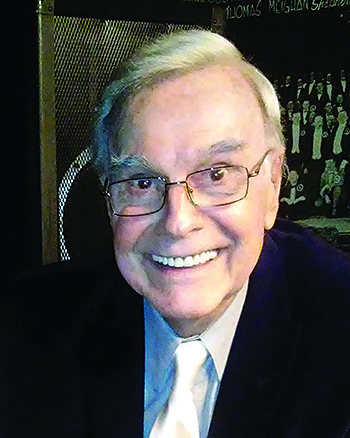
(Photo: Jordan Rhodes is the force behind Papa: The Man, the Myth, the Legend, a film about Ernest Hemingway. Photo courtesy of Jordan Rhodes)