
 How to resolve AdBlock issue?







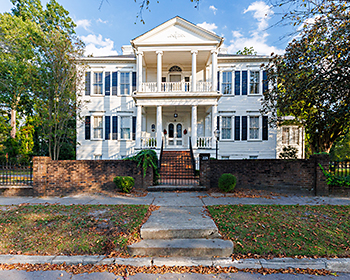
History in Fayetteville does not always announce itself. Sometimes it pours coffee, screens an independent film, opens a gallery, or welcomes a congregation through doors used by generations before it.
Preservation North Carolina will bring those connections into view Saturday, Nov. 14, during its first Historic Fayetteville Ramble. The self-guided event will open a collection of residential, religious, institutional and cultural properties spanning the 18th through 20th centuries, including several spaces not routinely available to the public.
The Ramble runs from noon to 4 p.m., followed by light refreshments and a short program from 4 to 5 p.m. at the MacPherson House Bed & Breakfast. Participants are encouraged to begin at First Presbyterian Church, where check-in will take place. They will receive digital information in advance and a printed program on event day, then may explore the route at their own pace.
Benjamin Briggs, president and CEO of Preservation North Carolina, said Fayetteville was selected because its history can be overlooked amid the rapid growth of the past half-century. Planning the event revealed a city whose architecture remains closely connected to everyday life.
"We came away with a much deeper appreciation for the connections between Fayetteville's past and the city it is today," Briggs said.
That relationship is visible in the variety of stops. Cool Spring Place, also known as Cool Spring Tavern, dates to 1788 and is believed to be Fayetteville's oldest surviving structure. Other destinations include St. John's Episcopal Church and the Kyle House, the Fayetteville Independent Light Infantry Armory and Museum, Cross Creek Cemetery No. 1, the 1897 Poe House and Heritage Square.
The route also moves through downtown businesses that show preservation as an active practice rather than a finished display. The Cameo Art House Theatre, Rude Awakening Coffee House and City Center Gallery & Books occupy historic commercial buildings while contributing to the city's present-day arts and cultural scene.
Briggs said the Ramble was designed to show that preservation is not simply about looking backward. It is also about keeping buildings occupied, relevant and meaningful. Rude Awakening and the Cameo, whose owners received Preservation North Carolina Carraway Awards for their work, prove what can happen when local investment rescues a threatened building and returns it to the community.
"You aren't just looking at buildings; you're meeting the people and experiencing the places that are keeping a community alive," Briggs said.
One of the day's most important stops is St. Joseph's Episcopal Church. Founded in 1873 by Black parishioners of St. John's Episcopal Church, the congregation established its own church and made education an immediate priority through a parochial school, serving African American children when opportunities were limited.
For Briggs, including St. Joseph's helps widen the public understanding of what deserves protection. A complete account of Fayetteville cannot rest only on familiar homes, prominent institutions, or architectural styles. It must also preserve the histories of people who created their own spaces for faith, education, civic engagement, and service.
Property owners, congregations, and volunteers will shape the experience at each stop. Some hosts may guide visitors personally, while owners of private spaces may choose a quieter role. Preservation North Carolina works within each host's comfort level while giving guests an uncommon opportunity to see the interiors that photographs and exterior tours cannot fully explain.
General admission is $25, plus a $2.17 online ticketing fee. Tickets remained available at press time through the event's Humanitix registration page. Comfortable walking shoes are advisable, and guests should review the advance materials for the route and property-specific guidance.
The closing reception at the restored MacPherson House will offer more than a final stop. It will complete the argument the Ramble makes throughout the afternoon: Fayetteville's history survives most powerfully when the city continues to use it.
Old walls alone cannot keep a community's memory. People do that - by worshipping, creating, gathering, investing, and occasionally slowing down long enough to notice what has been beside them all along.
For more information, visit the following websites: Tickets - https://events.humanitix.com/fayettevilleramble and Preservation North Carolina https://www.presnc.org/events/event/fayetteville-ramble/