- Details
-
Tuesday, 27 October 2026
-
Written by Jamie Bishop
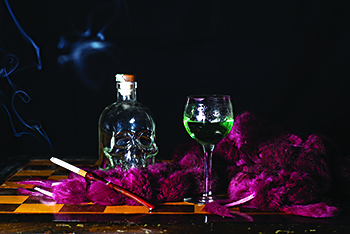
At the Cameo Art House Theatre, a story can change a room before the first line. Dim lights, close seating and a historic screen give the theater an intimate feel, a natural setting for Edgar Allan Poe.
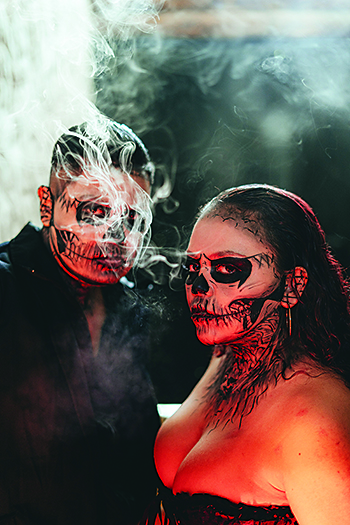
The Edgar Allan Poe Speakeasy: Chapter Two returns to the Cameo on Friday, Nov. 6, and Saturday, Nov. 7, with performances at 6 p.m., 8 p.m. and 10 p.m. The 90-minute production by touring company Midnight Creative pairs four Poe works with four cocktails.
Brian Adam Kline, founding artistic director of the nonprofit Cameo Collective, said the theater can feel “spooky if she wants to.” The Cameo hosted the first chapter more than a year ago. Kline contacted Midnight Creative and asked the company to return.
The new program features “The Pit and the Pendulum,” “The Cask of Amontillado,” “Annabel Lee” and “The Fall of the House of Usher,” paired with cocktails named Swing of Fate, Montresor’s Revenge, Lover’s Lament and Roderick’s Ruin. Performers presented as Poe historians guide guests through the anthology. Prior attendance is not required.
Kline said the Cameo’s approach is simple.
“We dim the lights and allow the storytelling to be the most important part of the night. The drinks shape the experience, but Poe’s language and the performers’ work stay central. Midnight Creative produces the show, Fever manages ticketing, and the Cameo hosts it.”
The partnership fits the Cameo’s next chapter. After a quarter-century under its founding owners, the theater transitioned to the nonprofit Cameo Collective earlier this year. The organization aims to preserve independent film while expanding into live performance, education and special events. Kline hopes to learn from audience response and build more programming of this kind.
“All companies are welcome at the Cameo,” he said.
The intimate room suits Poe’s sealed chambers, wine cellars and doomed houses. As lights fall and the actors take the room, the story becomes a shared experience. The Cameo’s historic atmosphere gives the performance a sense of place.
Fever lists general admission at $55, including entry and four cocktails. VIP front-row admission is $70 and was marked sold out when checked. Kline advises arriving 30 minutes early; seating is general unless a guest has a VIP ticket.
Age guidance needs confirmation before guests buy. Fever’s listing says attendees must be 21 or older with valid ID. Kline said, all ages are welcome and that guests requesting mocktails may not need to show ID. The answers differ, so guests should confirm the current entry policy directly with Fever or Midnight Creative. The listing says mocktails are available upon request and identifies the Cameo as ADA compliant.
Kline said the event is in the first-floor theater, with street parking and the Franklin Street garage nearby. Refund requests go through Midnight Creative. Guests should contact Fever or the producer about late entry and ticket policies.
For the Cameo, the Poe Speakeasy offers a glimpse of what a nonprofit art house can hold beyond the screen: a room where literature, performance, and atmosphere meet, and where a touring company can find a local home. Kline said the theater hopes to make experiences like this part of its future.
Poe’s stories ask audiences to listen for what lies behind the wall. At the Cameo, the darkness is part of the invitation.
- Details
-
Tuesday, 27 October 2026
-
Written by Mahalia Cooks
Prepare to shop until you drop at the Holly Day Fair from Thursday, Nov. 5 to Sunday, Nov. 8 at the Crown Expo Center. The Junior League of Fayetteville, a women’s organization dedicated to supporting women in leadership roles and advancing the local community through scholarships, volunteering and other resources, hosts this yearly holiday shopping event.
The fair began as a way to raise funds for community initiatives while offering thoughtfully made holiday crafts. Over the decades, it has grown into the largest holiday gift and craft show in eastern North Carolina, pulling in thousands of shoppers each year. The proceeds raised from the Holly Day Fair go toward Community Assistance Program grants and other community impact programs run by the Junior League of Fayetteville. Entities they have supported through CAP include the Cape Fear Valley children’s hospital wing, the Two-Six Project and multiple schools, alongside providing scholarships for high school seniors and funding the Cape Fear Regional Theatre through their Community Research Project Development grant.
“We award multiple grants through CAP, it’s our community assistance program, and if you’re a school program or a nonprofit or any type of area entity and need support within your program, you are free to apply for a CAP grant,” explained Juelle McDonald, co-chair of the Holly Day Fair and Fund Development VP. “A portion of that money goes toward the training of women volunteers to support our community, because that’s the mission of the Junior League.”
Hundreds of Holly Day Fair vendors sell everything from jewelry and furniture to pet products and Christmas ornaments, offering a range of price points so that all customers can shop within their budget. The fair’s Food Court offers food vendors such as B&B Outdoors, Dorothy’s Catering and Freddie’s Kitchen for down-home Southern meals and festive desserts. But this isn’t just a hometown affair; you can even buy from out-of-state vendors who’ve come down to the Tar Heel State to sell their wares.
“During my first few years of being involved with the Holly Day Fair, getting to meet some of the vendors and learning where they’re coming from; I think there’s one vendor that comes from California, and I was completely amazed,” said Chelsea Perkins, co-chair of the Holly Day Fair. “That just, to me, shows how impactful this show is.”
Attendees can easily keep track of all vendors, see the event floorplan and create a personal shopping plan through the Holly Day Fair app at https://www.jlfay.org/hdf-mobile-app/.
The Holly Day Fair kicks off at 9 a.m. on Nov. 5 at 1960 Coliseum Dr. Thursday offers early-access Super Shopper hours until noon, with tickets going for $15. Attendees can get in before the large crowds and start filling up their complimentary shopping bags. Each year brings a different theme for these collectable totes, and this year’s theme is “Oh What Fun!”
Sip & Shop — a fan-favorite that typically sells out — will occur at the same time as the Super Shopper event that Thursday morning. With their $30 ticket, shoppers can enjoy unlimited mimosas, food and a swag bag with curated gifts alongside the many other finds they’ll discover at the vendor booths. General admission hours begin at noon and last until 8 p.m.
General admission hours for Friday, Nov. 6 and Saturday, Nov. 7 start at 9 a.m., then switch to 11 a.m. on Sunday.
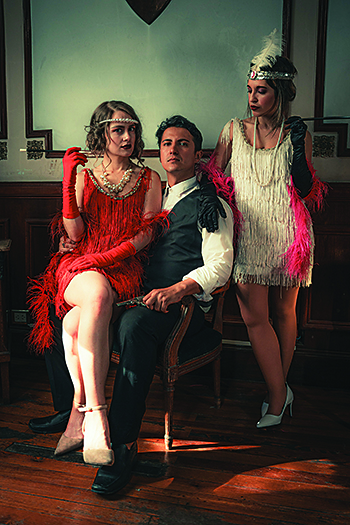
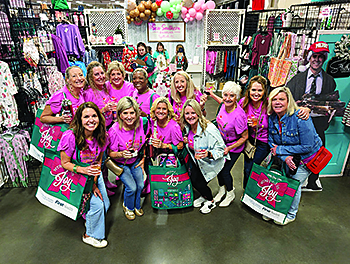
Friday will bring plenty of VIP fun for female shoppers with the second year of Ladies’ Night Out, held from 6 p.m. to 9 p.m. Tickets are $50. Bring your besties for an adults-only night of leisurely, no-rush shopping, including unlimited food and drinks in a separate VIP lounge, a red-carpet welcome with champagne and several other special surprises. Enjoy tunes spun by the DJ, and take pictures in the on-site photo booth so you can cherish your memories of the occasion for many more holiday seasons.
Regarding Ladies’ Night Out, Perkins said, “We want you to have the best experience ever. This is going to be an elevated experience, curated just for these ladies.”
“It’s a new event, so we really do need the community’s support,” said McDonald. “It is a special curated experience, and so we promise you won’t be disappointed.”
While Sip & Shop and Ladies’ Night Out offer something memorable for the adults, the little ones can also have their fun on Sunday by taking a photo with Santa Claus, starting at 2 p.m. The Photos with Santa event costs $15 and welcomes children aged 5 to 11; it includes cookies, a story time session and a meet-and-greet with both Santa and Mrs. Claus.
General admission for each of the four days of festivities is $10. See the prices for all Holly Day Fair events and buy tickets online at https://www.crowncomplexnc.com/events/detail/holly-day-fair-2. If you want to skip the Ticketmaster fees, tickets are also available at the Crown Complex Box Office. Ladies’ Night Out tickets will close out before the event, so get them while you can.
This ambitious event is made possible each year by its numerous donors and sponsors. Just a few of the sponsors for 2026 include Warren Insurance Group, Cape Fear Valley Health, Professional Early Intervention Services, LLC, and the Farmer’s Cat Cafe.
“It’s just a thank-you to our community,” said McDonald. “We couldn’t do it without this community. We thank you, Fayetteville and surrounding communities, and the Junior League of Fayetteville is not thinking that it’s ‘us’ at all; we would be remiss to think it’s us. We know that it’s the community ... We try to make as much profit as possible to give back to the community, and so we’re thankful for those in our community that believe in our mission.”
The Holly Day Fair provides the best two-for-one deal of all: Do all of your holiday shopping over one weekend while having an amazing time with your friends. Plus, the proceeds contribute to improving lives in Fayetteville and communities across Cumberland County.
For any questions about the 2026 Holly Day Fair, reach out to the Junior League of Fayetteville at chair@hollydayfair.com or on the event Facebook page at https://www.facebook.com/hollydayfair.
(Photo: The Junior League of Fayetteville is bringing Ladies' Night Out for a second year in 2026. This adult only event includes food and drink and a red carpet welcome)

 How to resolve AdBlock issue?