
 How to resolve AdBlock issue?







The start of summer in North Carolina means soaring temperatures, and keeping cool is more important than ever as our summers grow hotter. State agencies such as the North Carolina Department of Environmental Quality have shared that over 5,700 heat-related emergency room visits occurred across the state in 2025. However, securing reliable cooling can be difficult for unhoused individuals and those without air conditioning systems.
Cooling Centers across Cumberland County provide a reprieve for individuals who are unable to access AC or need a quick way to cool off and stay safe after being outside.
The following buildings serve as Cooling Centers for the community:
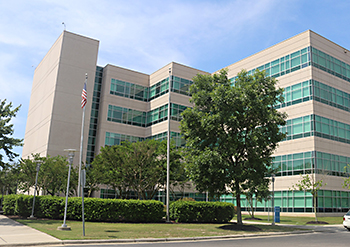
• Cumberland County Department of Social Services’ Auxiliary Lobby: 1225 Ramsey St., Monday to Friday, 7:30 a.m. to 5 p.m.
• Cumberland County Department of Public Health’s First Floor Lobby: 1235 Ramsey St., Monday to Friday, 8 a.m. to 5 p.m.
• Cumberland County Public Libraries: All eight branches are open Monday, Tuesday and Thursday from 9 a.m. to 7 p.m. and Wednesday, Friday and Saturday from 9 a.m. to 6 p.m. Hope Mills, North Regional, Headquarters and Cliffdale are also open on Sundays from 2 p.m. to 6 p.m.
• Fayetteville Area System of Transit (FAST) Main Lobby: 505 Franklin St. The Transit Center’s hours are listed at https://www.fayettevillenc.gov/City-Departments/Transit.
• Fayetteville Cares Day Resource Center: 128 S. King St., Monday to Friday, 9 a.m. to 5 p.m.
• Fayetteville-Cumberland Parks & Recreation Center Lobbies: Locations and operating hours vary.
Amanda Scheck, Emergency Management Coordinator for Cumberland County Emergency Management, notes that Cooling Centers are available during the facilities’ regular hours and will “not be opening early or extending their hours past normal operations.”
Residents can stay updated on when nearby Cooling Centers will open by following Cumberland County’s social media pages or using the interactive map on the Cumberland County website at https://www.cumberlandcountync.gov/emergencyservices/cooling-warming-centers. Maximum capacity limits vary depending on each specific location.
Scheck states that some locations may have hydration resources for residents, but this is up to the discretion of each center.
“Some of them do have hydration stations; they could be as simple as the existing water stations that are at those locations, and some of them may have a hydration area set up specifically for residents seeking cooling,” she said.
North Carolina’s heat season runs from May 1 to Sept. 30. Cooling Centers are offered during times of dangerously elevated temperatures so that residents have easier ways to escape the heat; these buildings only operate as Cooling Centers during Heat Health Emergencies.
Alongside the Cooling Center Map, residents have another way to remain aware of high outdoor temperatures. The Heat Health Alert System, created by the North Carolina Department of Health and Human Services, sends email alerts to individuals who sign up to notify them of when the daily maximum heat index is expected to reach certain thresholds.
The alert system is split into eight climate regions. It is categorized by county and presents specific thresholds for different periods of the summer for higher accuracy. Temperature thresholds tend to be lower at the start of the heat season when our bodies are still adjusting to the heat and then later rise as we become acclimated to the weather.
Signing up allows residents to receive alerts when the following Cumberland County heat index thresholds are predicted in the forecast:
• May 1 to June 21: 99 degrees Fahrenheit
• June 22 to Aug. 11: 105 degrees Fahrenheit
• Aug. 12 to Sept. 30: 101 degrees Fahrenheit
In addition to visiting Cooling Centers, people can keep the heat down this summer through various other methods.
“We are always open to explore and diligently looking for alternatives to ensure that our citizens are safe in every aspect, whether that’s daytime heat or overnight temperatures,” Scheck said.
Scheck recommends staying well hydrated, sticking to shady areas if you have to be outside, wearing loose clothing to help regulate your body temperature and doing yardwork or other strenuous activities in the early morning or late evening if possible.
To receive Heat Health Alerts, register at https://survey.dph.ncdhhs.gov/surveys/?s=J3M84LKNAPN838AA.
(Photo: The Cumberland County Department of Social Services Auxiliary Lobby is one of the areas residents can go when the heat becomes too much. Photo courtesy of the City of Fayetteville)