
 How to resolve AdBlock issue?







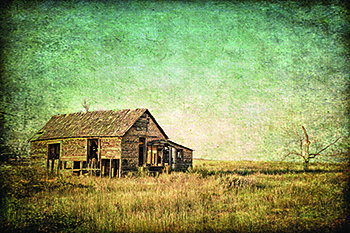
Several years ago, I visited my hometown and drove past the house where I grew up. The street was the same, but a few trees were missing. The rest were much bigger. Everything looked exactly as it had—yet it was all completely different.
The family living there had no idea I was slowing down and looking. And they certainly didn't know what I drove away with — the weight of what had changed, what was lost, what I wished I could hold again — was no lighter than when I turned onto that street.
In one way or another, we all go back. We drive past old houses. We scroll through old photographs. We find ourselves in a quiet moment, mentally walking the halls of something that used to be. And there's an ache in it. Because when you go back, no matter how hard you try, the present won't change.
Frederick Buechner once wrote about a dream he had. In it, he was searching a hotel for a room he'd found on a previous stay — a room that felt perfectly right, like it had been made just for him. He asked the desk clerk how to find it. The clerk said he could — but only if he asked for it by its right name.
The name of the room was Remember.
Buechner described it as the place "where the past lives on as a part of the present, where the dead are alive again, where we are most alive ourselves… and to where our journeys have brought us." The room called Remember is not the room where we change things. It's the room where we understand things — where we sit still long enough to see what was actually happening in the moments we lived through, usually moving too fast to notice.
Here's what I've come to believe: we go back because we're looking for something. Maybe it’s peace. Perhaps clarity. The feeling that we were loved, that we mattered, that the years added up to something worth having. But we keep looking in the wrong place. We look in the physical act of return — the old house, the old photograph, the same memory played on a loop.
What we're actually looking for is already inside us. It's the grace of a God who was present in every chapter of the story we lived. Buechner said it simply: "To remember the past is to see that we are here today by grace, that we have survived as a gift."
The prophet Jeremiah, sitting in the rubble of everything he'd loved, wrote something similarly remarkable. "Yet this I call to mind and therefore I have hope: Because of the Lord's great love we are not consumed." (Lamentations 3:21-22, NIV) He couldn't go back and change what Jerusalem had become. But he could enter the room called Remember. And there — buried under the ruins — he found evidence of mercy.
You can't change the present by going back. But you can change how you carry it forward — by remembering, honestly and humbly, that love was there all along.
Several years ago, I visited my hometown and drove past the house where I grew up. The street was the same, but a few trees were missing. The rest were much bigger. Everything looked exactly as it had—yet it was all completely different.
The family living there had no idea I was slowing down and looking. And they certainly didn't know what I drove away with — the weight of what had changed, what was lost, what I wished I could hold again — was no lighter than when I turned onto that street.
In one way or another, we all go back. We drive past old houses. We scroll through old photographs. We find ourselves in a quiet moment, mentally walking the halls of something that used to be. And there's an ache in it. Because when you go back, no matter how hard you try, the present won't change.
Frederick Buechner once wrote about a dream he had. In it, he was searching a hotel for a room he'd found on a previous stay — a room that felt perfectly right, like it had been made just for him. He asked the desk clerk how to find it. The clerk said he could — but only if he asked for it by its right name.
The name of the room was Remember.
Buechner described it as the place "where the past lives on as a part of the present, where the dead are alive again, where we are most alive ourselves… and to where our journeys have brought us." The room called Remember is not the room where we change things. It's the room where we understand things — where we sit still long enough to see what was actually happening in the moments we lived through, usually moving too fast to notice.
Here's what I've come to believe: we go back because we're looking for something. Maybe it’s peace. Perhaps clarity. The feeling that we were loved, that we mattered, that the years added up to something worth having. But we keep looking in the wrong place. We look in the physical act of return — the old house, the old photograph, the same memory played on a loop.
What we're actually looking for is already inside us. It's the grace of a God who was present in every chapter of the story we lived. Buechner said it simply: "To remember the past is to see that we are here today by grace, that we have survived as a gift."
The prophet Jeremiah, sitting in the rubble of everything he'd loved, wrote something similarly remarkable. "Yet this I call to mind and therefore I have hope: Because of the Lord's great love we are not consumed." (Lamentations 3:21-22, NIV) He couldn't go back and change what Jerusalem had become. But he could enter the room called Remember. And there — buried under the ruins — he found evidence of mercy.
You can't change the present by going back. But you can change how you carry it forward — by remembering, honestly and humbly, that love was there all along.