
https://www.upandcomingweekly.com/


  • 15The North Carolina Division of Motor Vehicles License Plate agency at 3333 N Main St. in Hope Mills has been a part of the community for decades. The agency is responsible for providing the community license plates for their cars, trucks, motorcycles and RVs. They issue handicap plates and placards, and will soon have NC FAST for customers to clear fees for toll roads within the state. They have done this under the direction of Roger Hall for 43 years.
    Now however, Hall is taking a step back from the office. In his place will be Jim Trogdon, a Hope Mills native and former Secretary with the North Carolina Department of Transportation.
    Hall took over the office in 1983.
    “The DMV office in Hope Mills got shut down due to the previous contractor not abiding by several DMV rules,” he said. “At the time, I had an insurance agency on North Main Street in Hope Mills, and heard the DMV was accepting applications to operate the shut down office. I applied and after an interview, was chosen as the new contractor.”
    License Plate Agencies in North Carolina are contracted agencies.
    “The DMV is probably the largest state customer facing organization in government, and this is just a portion,” said Trogdon of his soon to be office. “This is the motor vehicle side, which is separate and it's the only part that is contracted. So the government employees do the drivers’ services but contractors run the license plate agency. This is an opportunity to help people with registration and all of those things that are involved with vehicle services.”
    Trogdon has been involved with transportation in some form or another for all his life. A South View High School graduate, he decided to go to NC State for his civil engineering degree, where he signed up for ROTC. Trogdon became an engineering officer and spent most of his military career with the NC National Guard. He had several combat deployments and was deployed to 24 countries on humanitarian deployments.
    “It was a good opportunity to see the world, and to do engineer missions all over the world,” he said.
    Trogdon returned to NC State for graduate school, after which he got a job with the North Carolina Department of Transportation. He served in that capacity for 27 years, starting out at the entry level and eventually becoming named Secretary of the NCDOT. He retired as secretary in 2020. He was instrumental in legislation concerning I-295.
    “That was part of one of the things I worked on for the region with the DOT: How can we do things like accelerate 295. It had been built all the way to All American, and it was running into some significant funding challenges, and I was able to work on two things which helped,” he said. “One was to be able to start using some bonding programs, so that we could bond those projects and accelerate them instead of waiting ten years. Then we created something called the Strategic Transportation Investments Law, which allowed projects to be selected based on how much traffic they move and how much travel time could be saved, so 295 scored well.”
    The Camden and Rockfish roads improvements were also beneficiaries of that law and its process.
    “That’s what the region needs to support growth,” he said.
    Trogdon isn’t done with transportation yet. This latest venture will see him at the Hope Mills DMV LPA office several times a week. While he currently lives in Pittsboro, his father still lives in Hope Mills, and Trogdon is still very much a part of that community.
    “Memories [are my] favorite things about Hope Mills,” he said. “The tightness of the community, I still know a lot of people who live there. My dad still goes to Hope Mills Methodist Church. I can remember growing up, you couldn’t misbehave in public without a relative calling your parents or grandparents. It’s just a tight community. Today of course it is much bigger, and it’s really an opportunity for the community to grow, evolve and change but still support the needs of the residents who are moving in and those who have been there all their lives.”
    The Hope Mills DMV office sees roughly 700 transactions a day, Trogdon said. That number of transactions speaks to the efficiency of the workers in the office. Trogdon and other LPA contractors, as well as the Drivers License agencies in the state, are working to modernize the systems and make visits to the DMV smoother and quicker.
    But Hall said, the workers at his DMV are already doing a fantastic job.
    “The most rewarding part of this job is knowing you helped an individual who struggled understanding what they did wrong concerning their license plate, and you are able to fix it for them. Our staff continuously receive flowers, candy, lunches, etc. from customers showing their appreciation for the fast and friendly service we provide,” he said.
    For Trogdon, he’s excited to start this new adventure.
    “Me and my wife are honored to serve Hope Mills. We are really excited and we are looking forward to expanding our capabilities and our contributions with this office, giving courtesy and friendly service that all our citizens deserve,” he said.
    The Hope Mills DMV is located at 3333 N. Main St., and is open Monday through Friday, from 9 a.m. to 5 p.m.

    (Photo: The Hope Mills DMV office in June 1983, when Roger Hall took over the contract. Hall will be handing off his contract to Jim Trogdon. Photo courtesy of Roger Hall)

  • 12aBefore algorithms curated playlists and before music became something compressed into earbuds and scrolling screens, there were bands like Chicago groups whose songs did more than entertain. They occupied space in people’s lives.
    Their music drifted through open car windows in the summer. It played softly from living room stereos after midnight. It became woven into weddings, heartbreaks, family cookouts and long drives down unfamiliar highways. For generations of listeners, Chicago was never simply a band. It was memory set to brass and melody.
    Now, nearly six decades after the group first emerged from the turbulent music scene of the late 1960s, Chicago is bringing its catalog of enduring hits to Fayetteville as part of Community Concerts’ 90th anniversary season. The legendary Rock and Roll Hall of Fame band will perform on May 21 at 7:30 p.m. at the Crown Theatre, marking one of the most anticipated stops in this year’s concert lineup.
    For Community Concerts President Michael Fleishman, the significance of the event extends beyond nostalgia.
    “Chicago is one of those rare bands whose music transcends generations,” Fleishman said. “People may come because they grew up with the songs, but the music continues reaching new audiences because it’s timeless.”
    That timelessness is difficult to manufacture and nearly impossible to sustain. Yet Chicago has managed to do both.
    Formed in 1967, the band separated itself early by blending rock music with jazz-inspired horn arrangements and ambitious instrumentation. At a time when popular music was rapidly evolving, Chicago carved out a sound that was simultaneously experimental and accessible. Their music carried the energy of rock, the complexity of jazz and the emotional resonance of pop ballads.
    The result was a catalog that would eventually include classics such as “Saturday in the Park,” “25 or 6 to 4,” “If You Leave Me Now,” “Hard Habit to Break” and “You’re the Inspiration.” Across decades, those songs remained in constant rotation on radio stations, movie soundtracks and playlists passed between generations.
    But Chicago’s staying power has always been tied to more than commercial success. The band became part of the emotional architecture of American life.
    Their music often arrives attached to memory. Listeners hear the opening horns of “Beginnings” and suddenly remember being young again. A piano chord triggers recollections of high school dances, first loves or moments long buried beneath the routine of adulthood. Chicago’s songs do not simply revisit the past; they reopen it.
    That emotional connection is part of what made the band such a fitting choice for Community Concerts’ landmark season.
    Founded during the 1930s, Community Concerts has spent decades bringing nationally recognized entertainment to Fayetteville. In many ways, the organization’s own history mirrors the endurance of the artists it presents. Through wars, economic shifts and dramatic changes in entertainment culture, the nonprofit has remained a steady presence in the city’s artistic life.
    Its 90th season represents both a celebration of longevity and a statement about Fayetteville’s evolving cultural identity.
    “This season is really about honoring legacy while continuing to grow,” Fleishman said. “For years, Community Concerts has worked to make sure people in this area can experience world-class entertainment right here at home.”
    12That accessibility matters in a city often overshadowed by larger entertainment markets like Raleigh or Charlotte. Bringing a band with Chicago’s reputation to Fayetteville signals something larger than a single concert date. It reflects the city’s continuing investment in arts, entertainment and cultural engagement.
    It also reinforces the role live performance still plays in a digital era increasingly defined by isolation and convenience.
    Streaming platforms have made music instantly available, but convenience rarely replaces experience. A live concert still carries something irreplaceable: the collective energy of strangers singing the same lyrics, the vibration of instruments moving through a theater and the temporary suspension of daily distractions.
    For many attendees, the Chicago concert will likely become more than a night out. It will become reunion and remembrance.
    Some audience members will arrive carrying decades of history with the music. Others may be attending because a parent introduced them to the band years earlier. Inside the Crown Theatre, those generations will occupy the same room, connected by songs that have somehow survived changing trends, technologies and eras. And Chicago itself remains remarkably resilient.
    Few bands from their era continue performing at such a high level after nearly 60 years. Lineups evolved. Music culture shifted dramatically. Entire genres rose and disappeared. Yet Chicago endured, continuing to tour worldwide while maintaining the polished musicianship and signature sound that made the band famous. Their longevity reflects discipline as much as talent. Chicago’s music has always balanced technical precision with emotional sincerity, a combination that allows songs to age without losing their impact. Fleishman believes audiences are responding not only to nostalgia but to authenticity.
    “There’s something powerful about hearing music performed live by artists who have dedicated their lives to their craft,” he said. “That connection between performer and audience is something people still crave.”
    As Fayetteville prepares for the performance, the concert arrives at a moment when communities increasingly seek shared experiences again. In a fragmented cultural landscape, live music still possesses the rare ability to gather people together in one place for one common emotional experience. For a few hours, generations will sing the same choruses beneath the theater lights. Some will remember who they once were when they first heard those songs. Others may discover why the music endured long before they were born. That is the quiet power of a band like Chicago.
    The songs remain familiar not because they survived history but because they became part of it.
    Chicago will perform on May 21 at 7:30 p.m. at the Crown Theatre, located at 1960 Coliseum Drive in Fayetteville. Tickets are available through the Crown Complex box office, or by visiting https://www.crowncomplexnc.com/

    (Photos courtesy of Chicago's Facebook page)

  • 11On Saturday, May 16, UNC Pembroke will host a huge, day-long celebration. There will be food, music, dancing, arts and crafts vendors, fun and fellowship all day. What is the cause of all this celebration? The Lumbee Tribe is inviting its members and neighbors to celebrate the historic passage of the Lumbee Fairness Act, which grants full federal recognition to the Lumbee Tribe, a goal that tribal leaders have been working toward for decades.
    The event promises to be a momentous day and will be held on the University’s campus, off of Founder’s Drive in Pembroke, NC. It serves as a formal victory lap for a community that has spent generations seeking the same status afforded to hundreds of other indigenous nations across the United States. Following the landmark signing of the Lumbee Fairness Act late last year, the atmosphere in Pembroke is one of profound anticipation and unbridled joy.
    The road to this moment was paved with decades of legislative hurdles. While North Carolina has recognized the Lumbee Tribe for generations, full federal recognition remained elusive due to the 1956 Lumbee Act. That "termination era" legislation recognized the Lumbee as American Indians but intentionally denied them the federal benefits and sovereign status usually associated with such recognition.
    That "legal limbo," as Tribal Chairman John L. Lowery described it, officially ended on December 18, 2025. President Donald Trump signed the National Defense Authorization Act, which included the Lumbee Fairness Act, officially designating the Lumbee Tribe of North Carolina as the 575th federally recognized tribe in the nation.
    "In that moment, our legal limbo finally ended," Chairman Lowery said, reflecting on his presence at the signing. "The injustice of the 1956 Act has been corrected, a relic of the Indian Termination Era has been erased, and the Lumbee Tribe of North Carolina is now fully and rightfully recognized."
    The shift from state-recognized to federally recognized is far more than symbolic. It opens the door to a wide array of federal resources in health care, education, housing and disaster relief.
    North Carolina Governor Josh Stein noted that the history of the Lumbee long predates the state itself and emphasized that this victory is a win for all North Carolinians.
    "Full federal recognition will allow members access to the federal health care, education, housing, child care, and disaster relief benefits afforded other federally recognized tribes," Stein said in an official press release on governor.nc.gov. "These benefits will, in turn, create economic opportunities for the Tribe and the surrounding community."
    Secretary of the Interior Doug Burgum echoed these sentiments, noting that the move acknowledges a "long and well-documented history of tribal governance" and ensures the Lumbee hold a direct, sovereign relationship with the federal government—a status centered on respect and self-determination (doi.gov).
    The celebration on May 16 promises to be a twelve-hour marathon of culture, running from 9 a.m. to 9 p.m. The Quad at UNCP, a university founded by the Lumbee people in 1887, will provide a poetic backdrop for the festivities. Partnering with Chancellor Robin Gary Cummings and the university, the tribe will transform the campus into a vibrant hub of food, fellowship and gospel singing.
    The day’s schedule is packed with activity, including cultural demonstrations during which elders and youth will share stories of the tribe’s resilience, ensuring the oral traditions of the Lumbee remain central to this new chapter. There will be a mini-powwow, featuring traditional music and dancing. Local vendors will line the walkways selling handmade pottery, pinecone patchwork, and jewelry. There will be guest speakers, including Chairman Lowery, along with other tribal members and key individuals who played an important role in achieving federal recognition.
    Tribal leaders emphasize that while there has certainly been struggle in the past, the focus of the celebration is to help turn the focus to the future. With sovereign status, the Lumbee Tribe now has the autonomy to manage its own programs and resources, providing a higher quality of life for its citizens in Robeson, Scotland, Hoke, and Cumberland counties.
    Saturday's event is more than just a festival; it is a reclamation of identity. For the elders who have spent their entire lives under the shadow of the 1956 Act, this celebration is the fulfillment of a promise made to their parents and grandparents and recognizes the gift that is being presented to the next generation.
    For more information, visit https://bit.ly/4ng2f1B.

  • 10Greater Fayetteville Chamber
    The Greater Fayetteville Chamber, along with the City of Fayetteville, Cumberland County, Fayetteville PWC and many other local partners, stands together in opposition to the Town of Fuquay-Varina’s request for an interbasin transfer certificate to transfer up to 6.17 million gallons per day of water from the Cape Fear River Basin to the Neuse River Basin. The transfer of moving water would reduce river flow, threaten water availability and potentially damage vital infrastructure. It would affect generations to come who depend on water from the Cape Fear River Basin and future economic development.
    Recently, two bills were introduced at the House and Senate levels that would significantly help our cause and we will continue to watch these as they go through the state.
    Rep. Ted Davis of New Hanover County has introduced House Bill 1136, which places a temporary moratorium on new or increased surface water transfers from areas of the Cape Fear River Basin upstream of Lock and Dam #2 in Bladen County, with exemptions for existing or emergency transfers. The moratorium lasts until June 1, 2030.
    According to the bill summary, during this period, the North Carolina Collaboratory at UNC Chapel Hill is tasked with studying the water supply capacity and sustainability of in-basin water uses in the Cape Fear River Basin, cataloguing current water uses, evaluating scientific and economic impacts of interbasin transfers, and analyzing environmental and ecological consequences. The Collaboratory must consult key public and private stakeholders and report its findings and legislative recommendations by July 1, 2029. Funding of $1.5 million is allocated to support this study.
    Another bill introduced to the State Senate known as the 2026 Water Safety Act (SB 1043) also imposes a moratorium, effective until June 1, 2030, on new or increased interbasin transfers of surface water from the Cape Fear River Basin upstream of Lock and Dam #2, with exceptions for existing or emergency transfers and directs the Collaboratory to study the Cape Fear River Basin's water supply yield, water uses, environmental and economic impacts of interbasin transfers and report findings and recommendations by July 1, 2029 appropriating $1.5 million for this study, available through 2028-2029.

    City of Fayetteville
    The Fayetteville City Council has focused on debating a moratorium for data centers and participating in statewide municipal conferences.
    On Apr. 27, Fayetteville City Council board members voted 6-3 to approve a 120-day delay on considering a proposed year-long moratorium on data centers. This decision was met with protests from residents chanting "shame" and carrying signs such as "Data centers make bad neighbors.”
    The decision came during a debate over a proposed $6.4 billion data center on 50 acres along Dunn Road and the current lack of specific zoning regulations for such facilities.
    Also, from May 5-7, several council members attended the North Carolina League of Municipalities CityVision conference in Raleigh. They were able to connect with other municipal leaders to discuss state-level issues.

    Cumberland County
    The Cumberland County Board of Commissioners has looked at major infrastructure projects, including the Crown Complex renovations, and issued several public proclamations.
    On May 4, during their regularly scheduled meeting, the board voted 5-1 to approve TA/Loving Metcon as the Construction Manager at Risk for the multi-million-dollar modernization of the Crown Complex Theatre and Arena. Five proposals were received in March and reviewed by representatives from Cumberland County, SFL+A Architects, Oak View Group and Turner & Townsend Heery, according to county officials.
    In the same session, they voted 5-1 to issue another rebid with modified specifications for a new sound system at the Crown Coliseum. The Board rejected all bids for the Expo Center chiller replacement because they exceeded the project's budget.
    The board also adopted a resolution to lease county property at 412 Russell St. to Coastal Horizons Center, Inc. The public hearing for the 2027 budget will be held on June 1.

    Town of Hope Mills
    An investigative report released on April 24 by the North Carolina Office of the State Auditor uncovered serious financial deficiencies in Hope Mills, most notably a $1.55 million loss in the town's fund balance for fiscal year 2025. This loss, the first in five years, occurred because the town spent $1.7 million in reserve funds—far exceeding the typical $500,000 budgeted for one-time capital costs—to cover routine operational expenses.
    State Auditor Dave Boliek warned that if this trend of using emergency savings to balance the budget continues, the town could completely exhaust its cash reserves by 2028. Beyond budget concerns, the audit substantiated findings of unjustified salary increases for certain employees and weak internal controls that allowed spending to bypass established policies.
    In response to the formal recommendations issued, town officials have committed to a corrective action plan, which includes adopting a new fund balance policy to limit reserve spending to no more than 3% of the total budget.

    About the Greater Fayetteville Chamber
    Advocacy is a cornerstone of the Greater Fayetteville Chamber. Every week, the Chamber dedicates staff to attend City of Fayetteville and Cumberland County meetings as well as monitoring updates on the state and federal levels. We monitor legislation locally, statewide and federally to protect our community’s business interests. With 91% of U.S. adults recognizing a Chamber of Commerce's impact on growth, membership ensures a strong voice shaping policies, driving economic success and building a thriving business community—together. To learn more, visit www.faybiz.com or email jmclaughlin@faybiz.com.

  • 7There is a sentence most Americans have spoken out loud. They said it in classrooms as children, hand over heart, eyes on the flag. They said it at ball games and moments of national grief. Many said it without thinking much about what the words actually meant.
    One nation, under God, indivisible, with liberty and justice for all.
    America turns 250 this year. And that anniversary feels less like a birthday party and more like a reckoning. We have accomplished extraordinary things. We have also never felt more divided. For believers, the deeper question is this: have we forgotten who we are?
    You’re Invited! On Sunday, May 17, as we come together to reaffirm our answer.
    The One Nation Under God celebration at Paradise Acres welcomes everyone who believes that our nation’s foundation is rooted in faith in God. It is neighbors standing together to remember who we are. It is an evening of gratitude and rededication as believers from every tradition recommit this nation to the God who established it and Jesus Christ who sustains it.
    The founders built this nation on a deep conviction that freedom was not something governments invent. It is something God ordains. They understood what many have forgotten. A nation without God at its center cannot hold.
    We have inherited something rare. Most people who have ever lived on this earth did not grow up free. The Americans who came before us bled for those rights. This celebration is a public declaration that we have not forgotten that. That we still believe Jesus Christ is Lord over this nation, and we are asking Him to be.
    The evening includes live music, food, family activities, and special speakers. It runs from 4:30 p.m. to 7:30 p.m. and is open to anyone who loves this country and believes its greatest days are still ahead.
    The ancient words of the Psalmist say it simply and say it best.
    "Blessed is the nation whose God is the Lord." Psalm 33:12
    America's 250th birthday only comes once. Come be part of this historic moment. All proceeds go to the Cumberland County GOP.

  • 6Are you tired of wars and rumors of wars? Does the phrase “Gulf of Hormuz” strike fear in your wallet at the gas station or grocery store? If so, Gentle Reader, kindly read no farther in today’s column. Skip directly to the crossword puzzle. Today’s stain on world literature is going to visit America’s ongoing and seemingly intractable war against Iran.
    First, a bit of history. Iran used to be called Persia for millennia, a period of time for which the memory of man runneth not. Europe and Persia were not good neighbors. The Greeks and the Persians got along like Donald Trump and Jimmy Kimmel. If you don’t want to read about history (and if you don’t, why are you reading this second paragraph?), you can watch a movie called 300 Spartans about the battle between 300 Greeks and a zillion Persians at Thermopylae in which the Greeks saved western civilization by holding off an invading Persian army.
    Despite being unable to defeat the Greeks, Persia kept its name until 1935. It officially changed its name to Iran when Reza Pahlavi, the Shah of Iran, ordered the switcheroo. When you are Shah, you can change the name of your country by whimsical executive order. Don’t believe me? Check out the Gulf of America, the Gulf formerly known as the Gulf of Mexico. There is no business like Shah business.
    Now, back to our story. The good old USA has gotten itself knee deep in the big muddy called the Gulf of Hormuz. Like our wars in the Middle East and Afghanistan, it started out with the slightly shopworn theory called “This Time Will Be Different.”
    It was going to be a short war like Venezuela. Knock off a leader we don’t like. The hearts and minds of the people will follow into the wonderful world of democracy. A little Regime Change makes the medicine go down in the most delightful way. Bombs help, too. Four weeks, six weeks tops, and the Iranians will be cowed into embracing democracy as a new and fun way of life.
    Unfortunately, a funny thing happened on the way to the forum or in this case the bazaar. It didn’t work out like that. The US and Iran are holding each other and the rest of the world hostage in the Gulf of Hormuz. As the Soup Nazi would say if he was in charge of the Gulf of Hormuz: “No oil for you. Come back, one year!” What to do? What to do? It’s the old immovable object meeting the irresistible force conundrum. Who is gonna blink first? Who will cry, Uncle Sam?
    Fortunately, there is a lesson from our old pals the Greeks on how to deal with Iranians. Once upon a time in the Fourth Century, there was a country called Phrygia, which is now called Turkey. The Phrygians did not have a king but needed one. A local Oracle read some chicken guts and announced that the next guy who came into the city riding an ox cart would be king. Soon, a dude named Gordias rode in on his ox cart and was named King. Gordias’ son Midas was so happy, he had the ox cart tied to a post in the royal palace with a bodacious knot that was so tightly tied that no one could untie it. This was known as the Gordian Knot.
    Another Oracle declared that anyone who could untie the Gordian Knot would become king of all Asia. Many men tried, and many men failed to untie the knot. One day in 333 BC, Alexander the Great rode into town. Al learned about the prophecy that whosoever untied the knot would rule Asia. Al tried mightily to untie the knot to no avail. Frustrated, but not being a quitter, Al put on his thinking cap and pondered this knotty problem. Like a reformed alcoholic, Al had a moment of clarity. Eureka! He ciphered that it did not matter how the Gordian Knot was untied, just as long as it was done. Results mattered.
    Al took his sword and like the killing of the Jabberwocky, “One two! One Two! And through and through. The vorpal blade went snicker-snack.” With mighty blows, he cut the Gordian Knot in two. The ox cart was then free to roam about the country unfettered to a post. Al fulfilled the knotty prophecy and went on to conquer Asia. The rest is history.
    How does this story help resolve the Hormuz Conundrum? We have to think outside the knot. Perhaps holding each other hostage will not work. Does anyone have access to the Sword of Damocles? It still seems to be hanging around somewhere overhead.

    (Illustration by Pitt Dickey)

  • 4If Speaker Destin Hall and other leaders of the House of Representatives get their way — and I strongly suspect they will — voters will decide this fall whether to amend the state constitution to limit the growth of property-tax burdens across North Carolina.
    Here’s how the ballot item would read: “Constitutional amendment requiring limits on property tax increases by local governments.” If most voters say yes — and I strongly suspect they will — the General Assembly will then specify by statute how the limits would function.
    Although the details might change, what supportive lawmakers intend to do is cap the growth of local tax collections on assessed property at population growth plus general price inflation. That’s already the rule the General Assembly follows, more or less, when fashioning the state budget. It seems reasonable to most legislators, and to me, to establish a similar speed limit on property taxes.
    Now, my choice of words here is far from arbitrary. When I say that the General Assembly “more or less” caps state spending growth at inflation plus population growth, I mean to underline that the cap applies only to the General Fund. Most state spending now occurs outside the General Fund, as it is either financed by federal revenues and user charges or is funded “above the line,” through revenue diversion, rather than formal appropriation. Neither makes the state spending cap worthless. It still imposes necessary fiscal discipline and helps to explain how North Carolina has reduced the state tax burden over time while also funding core services.
    Similarly, a constitutional “levy limit” on property-tax growth won’t keep counties and municipalities from funding core local services or making capital investments in infrastructure to accommodate future population growth and economic development. It won’t slam the brakes. Rather, it will act as a governor on the accelerator, keeping the vehicle of government from speeding recklessly.
    For example, I believe state lawmakers are likely to apply the growth cap on property-tax revenues to preexisting properties, not new residential, commercial, or industrial development. Tax-policy consultant Jared Walczak calls this option the Brownsville model, after the Texas jurisdiction of that name, and contrasts it with the Boise model (where the levy limit applies to both new and existing property) and the Boston model (where new construction is added to the cap itself).
    My John Locke Foundation colleague Joe Harris prefers the Brownsville model, and I tend to agree. A primary motivation for property-tax reform is to keep current owners, be they households or businesses, from experiencing sudden huge spikes in property values and the tax bills that result from them. At the same time, property-tax collections ought to bear some relationship to expansion and development, so that localities can deliver services commensurate with growing demand.
    The Boise model is too tight, the Boston model often too loose. The Brownsville approach, Harris argues, “offers the most transparent and accurate constraint on tax growth.”
    I know many local officials are upset about the prospect of a constitutional constraint on property-tax burdens. But I would advise them to focus on how it ought to work, not whether to have one. While some policymakers in other states are flirting with the idea of abolishing property taxes altogether — replacing them, wholly or partially, with higher sales taxes — that’s not where North Carolina leaders are going. They seek to retain property taxation as a reliable and relatively efficient means of funding services such as public safety and infrastructure that benefit people in rough proportion to the “stake” they have in the community.
    Given how up in arms some homeowners are about dramatic revaluations, however, and the fact that nearly three-quarters of respondents to a recent Carolina Journal Poll favor the House’s proposed constitutional amendment, local leaders should embrace discretion as the better part of valor here.
    Statewide levy limits aren’t new or weird. They’ve worked reasonably well in other places for decades. I strongly suspect they’ll work well in North Carolina, too.

    Editor’s Note: John Hood is a John Locke Foundation board member. His books Mountain Folk, Forest Folk, and Water Folk combine epic fantasy with American history (FolkloreCycle.com).

  • 24Of all the things I ever wanted to be, I think it was always just me I wanted most to be. Hero worship was never really my thing. I can't recall ever wishing I actually was Eddie Van Halen, or John Maxwell, or Billy Graham, or even Batman. I just wanted to be me, doing some of the things those people did.
    Whether that's a strength or a weakness, I honestly couldn't tell you. It keeps the ground level enough that I don't trip over myself trying to climb up to anybody's pedestal. But every now and then, in the quieter hours, I catch myself wishing I had someone to look up to. And if I had it to do over again, I think I'd let my dad be my hero.
    He was a small man—much smaller than me—and a brilliant what-comes-next artist. I don't even know what you call those drawings he made. Sequential art, maybe. Press a button, a ball rolls down a track, drops onto a lever, flips a spoon into a cup on a scale; the cup sinks, drags a match across sandpaper, lights a candle, and twenty-five steps later, an egg lands cooked on a plate. I was always intrigued. I stopped just short of awe. I wish now I hadn't.
    On paper, he was an unlikely hero—but then, what hero isn't, once you get close enough? Adopted into a family of pharmacists who expected him to fall into line, he forged the date on his birth certificate instead and joined the Navy. Even in rebellion, he didn't run far; they made him a Pharmacist's Mate. He sailed off to Hawaii with his bell-bottoms and his ditty bag, a Kansas kid a long way from any wheat field he knew. Then the sky over Pearl Harbor went black with planes, and they handed him to the Marines as a Corpsman, and the war became something he carried home but never set down.
    Those were the stories I missed. The war stories. The romance stories. The first marriage, the son lost in Vietnam—none of it spoken aloud. Twenty years I lived near a brilliant man full of buried things. A man who once drove fifty miles with the window down because his mother had promised him a hundred dollars to quit smoking, and he meant to show up smelling like he had.
    He died of lung cancer at fifty-seven, shortly after our first son was born. Our last call was mostly gurgling and goodbye. I came to know him best after he was gone—through his Navy buddies, through scraps and stories—and the strangest thing happened. The more I wanted to know my father, the more I wanted to know God.
    Heroes have always been hard for me to come by. I'd still rather be me than anyone else. But I'm finally learning that the small "h" heroes—the quiet, complicated, half-told ones—are usually the ones God uses to point us home.

  • 23There's something remarkable about choosing a career where every single day, you show up and make someone's life better. That's the promise of nursing at Fayetteville Technical Community College; it's a promise thousands of students have answered.
    FTCC's Nursing Division is one of the most respected and rapidly growing programs in the region and for good reason. It stands as the third-largest undergraduate program in North Carolina, with the Registered Nurse pathway growing to more than 400 students.
    In 2025, FTCC’s nursing program led the region, accounting for 62% of all nursing graduates and preparing 122 first-time NCLEX candidates for immediate entry into the workforce. These aren't just numbers. They represent real people stepping into one of the most meaningful careers a person can choose.
    Healthcare isn't just an industry. It's the backbone of healthy communities and that’s why nursing matters now more than ever. According to the U.S. Bureau of Labor Statistics, the need for nurses is growing at a pace that few other professions can match. The BLS projects that the U.S. will need approximately 193,100 new registered nurses each year through 2032 to fill new positions and replace retiring professionals. Right here in our own backyard, that demand is deeply felt in hospitals, clinics, long-term care facilities, and beyond. Cape Fear Valley Health System alone needs 5,000 new hire nurses in the coming year.
    Nurses are the constant; the compassionate hands that hold yours during a diagnosis, the steady voice that explains a treatment plan, the professional who notices something is wrong before anyone else does. Communities thrive when they have enough nurses, and they struggle when they don't. FTCC is committed to making sure Cumberland County and the surrounding region never have to struggle.
    FTCC's Nursing Division is so special because there is a place for everyone and a pathway for every stage of the journey, whether you're just starting out or ready to level up.
    • Certified Nursing Assistant: This is where many incredible healthcare careers begin. CNAs provide essential support in hospitals, long-term care facilities, and home health settings — assisting with daily activities, monitoring vital signs, and, perhaps most importantly, offering genuine human connections to patients who need it most. With median annual salaries ranging from $30,000 to $38,000, it's an accessible, meaningful entry point with room to grow.
    • Licensed Practical Nurse: Through classroom instruction, simulation, and hands-on clinical experiences, LPN students develop the skills for safe and effective patient care across clinics, rehabilitation centers, and long-term care settings.
    Graduates earn a Practical Nursing diploma and are eligible to sit for the NCLEX-PN exam. In North Carolina, LPNs earn an average of approximately $68,000 annually, a stable salary with a rewarding career that truly makes a difference.
    • Registered Nurse – Associate Degree in Nursing: This program is the full journey of blending classroom learning, lab practice, simulation, and diverse clinical rotations to build the clinical judgment and confidence that define great nurses. The curriculum centers on evidence-based practice, safety, and culturally competent care. RNs in North Carolina typically earn between $75,000 and $85,000 annually, depending on experience and specialty.
    One of FTCC's greatest assets is its state-of-the-art simulation center, where learning feels real in an innovative space that mirrors actual clinical environments using advanced mannequins and interactive scenarios. Students practice critical thinking, communication, and teamwork in a safe setting where mistakes become lessons, not consequences.
    Guided debriefing sessions help students reflect and grow, bridging classroom knowledge with the real-world confidence patients deserve.
    FTCC's Nursing Division is built on the belief that great nurses aren't just trained; they're inspired. It’s more than a career; It’s a calling.
    With experienced faculty who mentor students every step of the way, strong clinical partnerships throughout the region, and programs designed to meet students where they are, FTCC makes it possible for anyone with the heart for healthcare to find their place in it.
    People are drawn to nursing because of a personal experience, a desire to serve, or simply a love of science and people. FTCC has the tools to transform that passion into a profession. And when they walk into a patient's room on their first day as a nurse, they’ll know that every lab hour, every simulation, and every clinical rotation was worth it.
    Healthcare isn't just what nurses do; it's who they are. And FTCC is proud to help them become exactly that. You can begin your journey today toward a rewarding career by reaching out to FTCC’s Nursing Division at 910-678-0183 or by emailing the nursing department at nursing@faytechcc.edu.

  • 22Measles is once again making headlines as cases and exposures are reported in parts of North Carolina, including Cumberland County. Health experts say the best way to protect yourself and your family is to stay informed and make sure vaccinations are up to date.
    Nikki Carter, an Infection Preventionist with Infection Control at Cape Fear Valley Health, says measles is much more than a rash.
    “People often think of the rash first, but measles actually starts much like other viral illnesses,” Carter said. “Fever, cough, runny nose and red, watery eyes are often some of the first symptoms people notice.”
    Measles is an acute respiratory virus that spreads very easily from person to person through droplets in the air when an infected person coughs, sneezes or even breathes. It is considered highly contagious because the virus can remain in the air and on surfaces for up to two hours after an infected person leaves an area.
    “People can spread measles before they even know they are sick,” Carter said. “That is one of the reasons it can move so quickly through a community.”
    Early symptoms usually appear seven to 14 days after exposure. A rash usually develops three to five days later, often beginning on the face before spreading down the body. A person with measles is contagious for about four days before[AC1.1] the rash appears through four days after it develops.
    According to the Centers for Disease Control and Prevention, one person with measles can infect 12 to 18 other people who are not immune. While anyone can get measles, some people are at greater risk for serious illness and complications, including children younger than 5, adults older than 20, pregnant women and people with weakened immune systems.
    Complications can range from ear infections and diarrhea to more serious conditions such as pneumonia, bronchitis and swelling of the brain. The good news is that measles is largely preventable through vaccination. The measles vaccine is given as part of the MMR vaccine, which protects against measles, mumps and rubella.
    According to the CDC, one dose of the vaccine is about 93% effective at preventing measles, while two doses are about 97% effective.
    “Most people are already protected because the vaccine has been part of the childhood vaccination schedule for many years,” Carter said. “If you are not sure whether you have been vaccinated, talk with your medical provider.”
    If you think you may have been exposed to measles, contact your healthcare provider or local health department right away. People who are not vaccinated or do not have immunity may need to stay home from work, school and public places for up to 21 days after exposure.
    If you develop symptoms such as difficulty breathing, severe dehydration, confusion or extreme weakness, seek medical care right away. Before visiting a doctor’s office, urgent care facility, or emergency department, call ahead and inform the staff that you may have measles, so they can take steps to protect other patients and staff.
    “Staying informed and staying protected is the best thing you can do for yourself, your family and your community,” Carter said.

  • 20If you are looking for a knee-slapping, toe-tapping comedy with lots of heart, look no further than The Artist Village production of the musical sensation Nunsense. Running three days for four performances, May 15-17, you will not want to miss out on this long-time fan favorite musical that has been leaving audiences rolling in the aisles for over 40 years.
    Artist Village is relatively new to the arts scene in Cumberland County and started as a passion project during the Covid pandemic lockdown. Working primarily in Hope Mills, Teresa Davis and her team are on a mission “to entertain, inform, and educate youth and adult community members; thereby enriching cultural life through the arts” (artistvillagehm.com). Past productions have been performed at a few different locations, including the Hope Mills Recreation Center. Nunsense will be their first production to be performed at Fayetteville’s Arts XL venue at 214 Burgess St.
    Nunsense is a musical comedy about the Little Sisters of Hoboken, who have recently experienced a tragic accident leading to the death of many of their sisters. With a collection of dead bodies in the freezer, the surviving nuns put on a variety show to help raise the funds necessary to bury the rest of their dearly departed sisters. While the premise seems dark, the resulting show is a hilarious revue featuring a variety of musical styles, from country to gospel, even some classic Latin choir arrangements.
    Fans of the original show will recognize some updates in the Artist Village production. The original 1985 version has been updated to a Mega-Musical version, expanding the cast from 5 nuns to 9, and adding two men: Brother Timothy & Father Patrick Virgil.
    The diverse cast features performers of various ages and levels of experience. There are two high school students performing alongside actors with a bit more age and stage experience under their habits.
    Jackie Hill takes the stage as Sister Hubert for the second time, having played the character in the Lumberton Civic Center’s previous production of the show. One of the characters added to the extended Mega-Musical version is Sister Julia, Child of God, played by Kelly Whitback, who has been in a few Artist Village productions. Stephanie Bohn plays Sister Leo, the ballet dancing nun. Bohn currently works as a nurse, but is a classically trained ballerina and, as such, is taking care of her own ballet choreography. Angela Westmoreland plays Mother Superior, which follows her performance as Mother Abbess in Fayetteville Technical Community College’s recent production of The Sound of Music.
    Led by director Jennifer Sell, the cast is reported to have great chemistry.
    As explained by Westmoreland, “There is harmony, even in the comedy.”
    Any play benefits from a cast with great chemistry, but for a show like Nunsense, it is essential and the Artist Village company has struck gold in that regard.
    As the name of the company suggests, it takes a village to produce a play, and the Artist Village production of Nunsense is no different. The nuns’ costumes are on loan from FTCC’s theatre department, who recently used them in their production of The Sound of Music. Being able to stage the show without having to purchase such a volume of costumes means a lot to a company who is currently fully grant-funded, explains Davis. Additionally, performing the show at Arts XL means that the group is a guest in the home of the Arts Council of Fayetteville/Cumberland County and the Fayetteville Symphony Orchestra. Davis says they “have been fantastic with their support” of the company who is currently a transient organization.
    The Artist Village production of Nunsense is truly a shining example of what community theatre is all about: people from all backgrounds and walks of life coming together, with support from across the community, to tell a story that is full of humor, hope, and joy.
    Performances will be held May 15 & 16 at 7 p.m. and May 16 & 17 at 3 p.m.
    Tickets cost $15 for adults, $12 for students, and can be purchased ahead of time at artistvillagehm.com or bought at the door.

  • 19The Golden Hour is a silent Dancing Without Sin dance experience. The sponsors for this event are Book Black Women Inc and 1910 Wine Nest. Feel the joy on May 16, at the Executive Room,230 Donaldson St., from 7 p.m. to 10 p.m. The cost is $25 per person. The silent dance is the experience of line dancing, freestyle movement, and high energy with immersive headphones. The immersive wireless headphones are limited to fifty guests. Each guest will have a personalized music playlist and share the energy of the room. The dress code is yellow tops and denim bottoms. For more information, visit www.dancingwithoutsin.com
    Book Black Women Inc is a cultural production company creating curated live experiences, signature programming, and artist-centered events.
    “The heart of Book Black Women has not changed, but the vision has expanded,” shared Ayana Washington, Founder and Executive Director to the Greater Fayetteville Business Journal.
    Dancing Without Sin Fitness was founded by Stephanie Brown Kegler in July 2015 and has hosted events throughout Fayetteville for the past few years. Kegler has been a trainer since 2009, and noticed during her classes that a group of people was missing. She calls them “The Forgotten Christians.” Dancing Without Sin was created to help give those Christians the space to dance and connect with their spirituality. The dance program focuses on gospel music, Christian hip hop, inspirational pieces and Afro beats. She also holds a session focusing on participants with standing disabilities or in wheelchairs. Kegler calls herself a “movement minister” and uses her dance and exercise classes to help others connect to God.
    Experience your free-style dance at The Golden Hour with hosts of Dancing Without Sin, Book Black Women Inc and 1910 Wine Nest on May 16, at The Executive Room. Advanced registration is required, and tickets can be purchased at https://www.dancingwithoutsin.com/event-details-registration/the-golden-hour
    Feel the joy, and find your frequency.

  • 17There is something powerful about voices raised together in song, especially when those voices are telling the story of a nation. This spring, Cumberland Choral Arts invites the community to experience that power with its “USA 250” concert, honoring America’s 250th anniversary through music and celebration.
    Cumberland Choral Arts traces its roots to 1991, when music director Alan Porter brought together singers from the campus and the surrounding community to perform Mozart’s Requiem during a tribute to the composer. The experience sparked something lasting, laying the foundation for what would become CCA. The organization has grown into a thriving nonprofit with three ensembles. Today, the organization includes a 100-voice symphonic chorus, the auditioned Cross Creek Chorale and the Campbellton Youth Chorus. Sandy Cage, President of the CCA Board of Directors, shared the updated mission “enriches and connects our diverse community through the transformative power of song,” grounded in the values of community, connection, artistry and joy.
    That mission is central to the upcoming performance. While many refer to the anniversary as “America 250,” CCA has chosen “USA 250,” highlighting the language of the Declaration of Independence and grounding the program in the nation’s origins. Cage describes the concert as “part history, remembrance and joyful celebration,” while Artistic Director Curt Kinzey adds that it will feature “a variety of patriotic music celebrating America’s 250th birthday” in collaboration with the Fayetteville Symphonic Band.
    “We selected a variety of music to celebrate the occasion,” Kinzey said. “You will hear Randall Thompson’s 'Testament of Freedom' and Aaron Copland’s 'Lincoln Portrait,'” alongside familiar favorites like “God Bless America,” “You’re a Grand Old Flag,” “This Land Is Your Land” and “God Bless the USA.” The selections span from the Revolutionary era to modern day, reflecting “parts of American history” through music.
    The experience extends beyond the stage. As attendees arrive at Methodist University, they will pass 250 American flags lining the entrance, each placed in honor or memory of military members, first responders and others who have served. Inside, displays will recognize those honorees, adding a personal layer to the evening.
    The concert opens with a color guard from the Sons of the American Revolution and “The Star-Spangled Banner,” setting the tone for a program that blends performance with tribute. A salute to the Armed Forces and an audience sing-along will further engage the community in the experience.
    Kinzey hopes the performance leaves the audience feeling more connected and reflective. Music, he says, has a way of reaching the heart, serving as a soundtrack to a nation’s story and its continued growth. For Cage, the concert carries personal meaning. From childhood memories of 4th of July parades to life as a military spouse, the performance is seen both as a tribute and celebration.
    “There is so much to celebrate as we look back and as we look to the future,” Cage says. “I’m just happy to have a small part in this momentous celebration.”
    CCAs’ “USA 250” concert will take place Saturday, May 16 at 7:30 p.m. in Huff Concert Hall, 5400 Ramsey St., at Methodist University. Tickets cost $20 for adults, $5 for students, and are available online at https://www.cumberlandchoralarts.org/2025/09/30/usa250-may-16-2026-730pm/ and at the door.

  • 16As Cape Fear Regional Theatre winds down its 2025-2026 season, it is going out with a bang, presenting the high-energy, hilarious, and heartfelt musical Crowns. This gospel musical is full of familiar songs and new ones alike, with a small cast of characters telling a timeless story of community, heritage, and identity.
    Crowns tells the story of Yolanda, a young woman who moves back to her family’s home in Darlington, South Carolina, from New York City. She moves in with her grandmother after experiencing a tragic loss. She soon finds herself rooted in the culture of the Black church, where she begins to find, through songs and stories, belonging and hope, even healing.
    The show’s director, Allyson Tucker, sings the praises of the small, tight-knit cast. She says that there are “no words” for the vocal power and blending that the group is able to achieve. Among the 7 principal actors, and alongside a strong cohort of understudies, there is a combination of local Fayetteville talent and some who come from a bit farther away. There are some familiar faces to those in the audience who frequent the theatre, while others are making their CFRT debut. The play focuses primarily on the female characters, with one man playing all the men in the story. Randy A. Davis, who also serves as the show’s choreographer, plays The Man and represents husbands, brothers, and the preacher.
    The crowns referenced in the title refer to the big, beautiful hats that are a staple of Black church culture. A significant aspect of Black church culture is the belief that you appear before God as best as you can, and for the ladies, that includes your hat. As explained by Tuckers, women’s hats are a source of pride without being boastful, and represent a leveling up, that a young woman has earned her place in the community and her right to wear her crown. For performances of Crowns at CFRT, audience members are welcome and encouraged to wear their crowns. Make sure your crown won’t block the view of the other queens (or kings) behind you.
    This season finale show is for everyone. While the focus of the story is on Black history and culture, the core themes of the story are universal: the importance of community and belonging. Tucker says, “We all need to belong, whether it is in a biological family or a chosen one.” She invites everyone, regardless of background, to “come with an open heart and tissues; know that [you] belong; leave the real world outside and imagine a better world.”
    While the story is emotional and has a serious message, it tells the story in a way that is “hilarious, sassy, and unapologetically female.”
    Cape Fear Regional Theatre rates this show as PG. According to their website, “this musical contains themes of grief, racial and cultural identity, and emotionally charged gospel moments; suitable for teens and adults, with parental guidance under 11.”
    Crowns will be performed at 1707 Owen Drive, as the theatre’s renovation project on Hay Street is still ongoing. Tickets are available through the theatre’s website at cfrt.org or by calling the box office at 910-323-4233. Audiences are reminded that CFRT tickets are only sold through their website; tickets sold through third-party sites could be invalid or overpriced. Don’t wait to get your tickets, as performances are already selling out.

  • 15The Fayetteville History Museum is preparing to commemorate the nation’s 250th anniversary with a series of exhibits and public programs designed to connect local history with the broader American story.
    The celebration is part of the lead-up to the United States Semiquincentennial in 2026, marking 250 years since the signing of the Declaration of Independence. In Fayetteville, the museum’s efforts will highlight the city’s colonial roots and its ongoing role in shaping the cultural and civic identity of the region.
    Located at 325 Franklin St. in downtown Fayetteville, the museum will feature rotating exhibits and special programming expected to begin in late spring and continue throughout the year. Admission is free, and the museum is open Tuesday through Saturday from 10 a.m. to 4 p.m., making it an accessible destination for residents, visitors and school groups alike.
    The exhibit lineup will explore key themes tied to early American history, including the Revolutionary War era, the formation of local government and the everyday lives of people who lived through the nation’s earliest years. Organizers say the displays will include historical artifacts, documents and interactive elements designed to bring the past into focus for modern audiences.
    In addition to exhibits, the museum plans to host a range of community events, including guided tours, educational workshops and family-friendly activities. These programs aim to foster deeper engagement with the material, encouraging visitors to consider how national events have shaped Fayetteville’s development over time. The initiative also reflects a broader effort to present a more inclusive view of history. By incorporating multiple perspectives, the museum aims to offer a fuller understanding of the people and experiences that contributed to the nation’s founding and evolution.
    Fayetteville’s historical significance provides a strong foundation for the commemoration. Established in the 18th century, the city played a role in early political and economic life in North Carolina and continues to serve as a hub for military and civic communities. That layered identity allows the museum to draw connections between the past and present, particularly as the nation approaches a milestone anniversary.
    Organizers say the programming is designed to appeal to a wide audience, from students learning about American history for the first time to longtime residents interested in exploring the city’s heritage in greater depth. The museum is also encouraging visitors to engage beyond the exhibits by reflecting on their own family histories and connections to the broader American narrative. Community participation is expected to be a central component of the celebration. By creating opportunities for dialogue and shared experiences, the museum hopes to foster a sense of connection and reflection as the country prepares to mark 250 years of independence.
    The Fayetteville History Museum’s involvement in the semiquincentennial underscores the importance of local institutions in preserving and interpreting history. Through its exhibits and programming, the museum serves as both a repository of the past and a space for ongoing conversation about the meaning of that history today.
    For additional information about exhibit schedules, group visits or upcoming events, community members can contact the museum directly at HattiePresnell@fayettevilleNC.gov or by calling 910-433-1458. As Fayetteville joins communities across the country in preparing for the nation’s 250th anniversary, the museum’s efforts offer a reminder that history is not only something to be remembered, but something to be explored, questioned and carried forward into the future.

  • 12aAs summer settles into Fayetteville, the sounds of live music will soon echo along Cape Fear River as Rock’n On the River returns for another year. What began as a single concert has grown into one of the city’s summer traditions, offering a free, family-friendly space where music and community come together. Now a staple of the local entertainment scene, Rock’n On the River has built its reputation on consistency and variety. The free concert is held at Deep Creek Outfitters at 1122 Person St. on the third Friday of the month throughout the summer. Concerts begin at 6 p.m.
    “Formed in October 2018, thanks to Mac Healy and Healy Wholesale’s donation, it started with one year-end concert,” said Greg Adair, the series’ organizer. “That first show introduced the venue and let people know about a few dates we planned for the following summer.”
    By 2019, the series established its rhythm, setting performances on the third Friday of each month, a strategic choice that helped avoid conflicts with other local events.
    The series has steadily evolved from those early beginnings.
    “We went from three concerts yearly to five by the start of 2022, after COVID,” Adair said. “I wanted to make it bigger and better afterwards.”
    That growth reflects not only the popularity of the event, but the demand for accessible live entertainment in the Fayetteville area.
    “It’s one of the very few options left,” Adair said. “Especially since the scaling back of other venues in recent years.”
    At its core, Rock’n On the River is driven by a simple but meaningful mission.
    “To have a local, family-friendly, free option of entertainment on the Cape Fear River,” Adair said.
    Accessibility has helped the series become more than just a lineup of concerts. It’s a place where families gather, friends reconnect and the community unites.
    “It makes me happy to know that I could bring things together to make people smile for a few hours,” Adair said.
    The sense of community extends beyond the audience and into the structure of the event itself. Adair’s built Rock’n On the River around a network of local partnerships, intentionally limiting sponsorships to Fayetteville-based organizations.
    “Only local partners are used or advertised, and only one partner in each field,” said Adair. “Healy Wholesale is the sponsor of the whole series, and it could not happen without them.”
    Additional partners include local media, businesses and service providers, all contributing to the event’s success while maintaining a strong community-centered identity. The series also partners with Karen Chandler Trust, a nonprofit cancer support organization, with half of the proceeds from the alcohol tent directly helping local individuals and families facing cancer.
    Adair shared that diversity in music is essential to the experience.
    “It’s such a refreshing thing to see a place where people are happy.”
    That spirit of connection and celebration carries into this year’s lineup, which features a mix of rock, pop, southern rock and variety bands designed to appeal to a wide audience.
    “Always mix it up some,” Adair said.
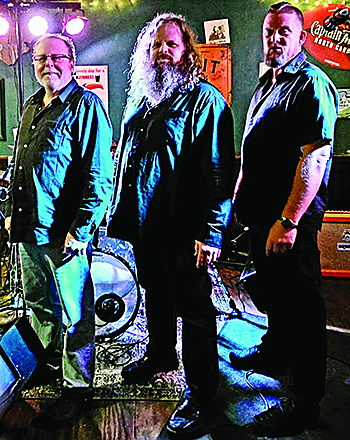
    13The season opens May 15 with a dynamic pairing of Reflections II and Shoot to Thrill, an all-female AC/DC tribute band that has become a crowd favorite.
    “Reflections II is a great three-piece variety band that’ll play a big mix to warm the crowd up,” said Adair. “The girls AC/DC, Shoot to Thrill, is a stellar show. Crowd favorite.”
    Tribute bands play a central role in the series, offering audiences opportunities to reconnect with the music they grew up with.
    “In this venue, the crowds love older bands and can go back to those days by watching these bands emulate the artists,” Adair said.
    That energy continues in June, when Fear State and Mostley Crue take the stage for a night dedicated to high-energy rock.
    “Rock, rock, and more rock,” said Adair. “Fear State primarily does hard rock covers, and Mostley Crue is a really great copy.”
    Come July, the focus shifts to local talent, highlighting the Guy Unger Band and Joyner, Young, Marie & Friends, two well-knowns in the Fayetteville music scene.
    Adair stated it is invaluable to support homegrown performers, like the Guy Unger Band and Joyner Young & Marie.
    “They’ve been fantastic performers and staples in our community for many years and have large followings too.”
    The emphasis on local musicians reinforces the series’ commitment to supporting the community while giving audiences a chance to experience familiar favorites.
    In August, the series leans into a Southern rock theme with Harley & Big Country, followed by ZZ Top Notch, a tribute to the iconic rock band ZZ Top.
    “Southern Rock night,” Adair said. “Harley & Big Country will be a perfect lead-off.”
    The season concludes in September with Krossroadz and Heart Breaker, a tribute act featuring music from Heart and Led Zeppelin.
    “Krossroadz is a newer variety band that will play to many,” said Adair. “The perfect lead-off for Heart Breaker. Great group.”
    When asked what first-time attendees can expect at Rock’n On the River, Adair described the experience as simple but memorable.
    “A great show,” he said, noting that, while the performances mirror the energy of the bands they emulate, the atmosphere remains family-friendly, with onstage language and gestures kept appropriate for all ages. The concerts strike a balance between high-energy entertainment and a relaxed, welcoming environment. Guests can enjoy food from Deep Creek Grill and adult beverages from the Healy tent. Outside food and drinks are not permitted, and non-clear bags will be checked for security by Bear Dewberry to help ensure a safe experience. Many of the traditions and fan-favorite elements have become part of what keeps audiences coming back each year. Behind the scenes, however, bringing the series to life takes considerable effort.

    12“A lot of hard work and long, hot days,” Adair said. “Tons of planning and praying.”
    Sponsors, partners and volunteers are essential to the success of Rock’n On the River.
    “Without them we wouldn’t be doing it,” Adair said. “They are THE engine. Healy Wholesale and Mac Healy ROCK!”
    That same sense of appreciation carries into how he views the role of the concert series in the community.
    “So important. And this one is a winner,” he said. “From the folks that work the venue to the fans, it’s such a refreshing thing to see a place where people are happy.”
    That sense of joy and connection continues to define the experience and is a big reason audiences return year after year.
    As the 2026 season approaches, Adair hopes attendees walk away with more than just memories of a great show.
    “Hope they leave happy, and singing the songs all through the weekend,” he said. For him, the series represents something much deeper than music. “It’s my flagship. My vision. My work,” Adair said. “And it comes together by what we all want for our community. No division, no hate, no turmoil. There are many great people still left in this town, and this is one of the places I get to see them. Here at Rock’n On the River.”
    As the music fills the air along the Cape Fear River once again, Rock’n On the River stands as a reminder that sometimes the simplest moments with good music, good people and a shared space are what bring a community together. Rock’n On the River is a free concert open to the community. Parking is $10. Lawn chairs and blankets are encouraged, but no outside coolers are permitted. For more information and updates, visit https://bit.ly/4edF7y8.

    (Top Photo: Reflections II.  Bottom Photo: Shoot to Thrill.  Photos courtesy of Greg Adair)

  • 10The sound of paddles meeting plastic balls will echo across Rowan Park on Saturday, May 16, but the real impact of the Fayetteville Young Life Paddle Battle Pickleball Tournament will reach far beyond the courts.
    Hosted at 725 W. Rowan St., the tournament invites players of all skill levels to compete in an open doubles format while supporting a growing youth ministry rooted in connection, mentorship and community. Registration is $40 per person or $80 per team, and participants will be placed into beginner, intermediate and advanced divisions. The day begins with round-robin pool play before advancing top teams into a single-elimination bracket. Registration opens at 8:30 a.m. and play begins at 9 a.m.
    Presented by Chick-fil-A Skibo Square and Teasley Ayers CPAs, the event blends competition with a festival atmosphere. Food vendors, music and community engagement will surround the courts, transforming the park into something closer to a neighborhood gathering than a traditional tournament. Every participant will receive a commemorative T-shirt, while winners in each division will earn championship prizes, including custom YETI Ramblers and cash awards.
    Still, to understand Paddle Battle, one has to look past the structure of the brackets and into the purpose behind them. For Dr. Randy Griffin, committee chairman of Fayetteville Young Life and a retired Army chaplain, the tournament is less about winning and more about what happens in between the points.
    “This is not your normal pickleball tournament,” Griffin said. “It’s a community gathering. It’s fun, it’s music, it’s people coming together in a way that feels welcoming and unified.”
    That sense of unity is not accidental. It is foundational to Young Life, an international nonprofit ministry that operates in all 50 states and more than 100 countries. Though its global reach is expansive, Fayetteville’s chapter is relatively new, officially launching in August 2020 after years of groundwork.
    Griffin’s connection to the organization began long before. While serving as a garrison chaplain at West Point, he watched his youngest son become involved in Young Life as a high school student. What started as participation quickly became transformation.
    “It really changed the trajectory of his life,” Griffin said. “He stayed involved through high school and college and eventually went on staff full-time. Seeing that kind of impact up close—it stayed with us.”
    When Griffin and his wife began considering life after military service, they carried that experience with them. Fayetteville, a city defined by its military ties and constant movement, felt like a place that could benefit from the same kind of relational ministry.
    Building it, however, required patience, assembling a volunteer base, forming an adult committee and raising the initial operating budget. By the time Fayetteville Young Life officially launched, it had already become a labor of conviction. Today, the ministry is sustained not only by its volunteers and staff, but also by community-driven fundraising efforts like Paddle Battle.
    “Every Young Life area needs events that help support the mission,” Griffin said. “A lot of places do golf tournaments, but we wanted something different, something that felt more accessible, more engaging.”
    Pickleball, one of the fastest-growing sports in the country, offered that opportunity. Last year’s inaugural tournament exceeded expectations, drawing players and spectators from across the region.
    “It was incredible,” Griffin said. “The turnout, the energy, the way people connected, it was clear we had something special.”
    That success led to a simple decision: make it annual.
    But Paddle Battle was never meant to be just a sporting event. Griffin is careful to describe it as something broader, something intentionally designed to reflect the heart of the organization behind it.
    “As a chaplain, you’re always looking for ways to bring people together,” he said. “That’s what this is. It’s a space where families, service members, and the community can gather and just be together.”
    That philosophy shapes every detail from the open invitation to all skill levels to the layout of the event itself. Courts are only one part of the experience. Around them, vendors set up, music plays and conversations unfold in the spaces between competition.
    It’s that environment Griffin believes leaves the most lasting impression.
    “We want people from all walks of life to feel like they belong here,” he said. “Every background, every story, this is a place where it doesn’t matter. You come, you’re welcomed, and you’re part of something.”
    The proceeds from the tournament reinforce that mission in practical ways. Every dollar raised goes directly into sustaining Fayetteville Young Life’s operations, supporting programs, purchasing supplies and creating opportunities for youth engagement throughout the year.
    “It all goes back into the ministry,” Griffin said. “It helps us continue doing what we’re called to do: showing up for young people in this community.”
    Even with its emphasis on connection, the competition itself remains real. This year, organizers have refined the tournament structure to ensure more balanced matchups, particularly in the advanced division, where Griffin expects a heightened level of play.
    “There’s going to be some serious competition,” he said with a smile. “We’ve made adjustments, and this year the brackets are going to be strong.”
    But when the final point is scored and the prizes are handed out, the lasting takeaway may not be who won. In a city shaped by transition where families arrive, serve and often move on, moments of shared experience can be fleeting. Paddle Battle offers something different: a pause, a gathering, a chance to belong, if only for a day. And for Griffin, that may be the true victory.
    “We hope people walk away understanding that we’re here for the community,” he said. “This is about unity. It’s about creating something meaningful together.”
    Registration closes on May 11. For more information and to register, visit https://nc220.younglife.team/paddlebattle2026.

  • 9Gates Four Golf & Country Club on Irongate Drive in Fayetteville is adding another event to its prestigious lineup. The National Junior College Athletic Association Division I Women’s Golf Championship will be held at the classically designed course in 2028. The Fayetteville Area Convention and Visitors Bureau aided with the club’s winning proposal. Approximately 150 golfers will participate over the week-long event, held May 8-11, 2028. Accompanying coaches, parents, and spectators will not only be supporting women’s golf and junior college athletics in general, but also area hotels, restaurants, and attractions.
    Gates Four opened in 1967. Since 1974, it’s been under the ownership of the Riddle family, starting with the late J.P. Riddle. The family took a deliberately strategic approach to the development of its golfing community. Originally slated for 900 homes, it is just now opening 300 lots in its final phase. Architect Willard Byrd designed the 18-hole course in 1967, and in 2011, it was redesigned by Kris Spence. New bent-grass greens, restored bunkers and pine-tree-lined fairways keep it on the list of top courses. In particular, the U.S. Golf Association-specified greens area consists of a blend of A1/A4 bent grass, providing optimum putting surfaces throughout, no matter the season.
    Kevin Lavertu has been the club’s general manager for 15 years. Originally from Maine and a PGA golf professional, his position affords him the means to make a living while indulging his love for golf. PGA golf pros are certified experts in golf instruction, management and operations. He’s been instrumental in hosting other top golfing events at Gates Four, including the National Association of Intercollegiate Athletics Men’s National Golf Championship, the Cumberland County Golf Championship, plus charity and social golf outings.
    Preparations for the 72-hole tournament will begin two to three months before the event. Cleaning, laying sod, adding sand to the bunkers, designing T-shirts, collecting gifts and arranging a possible tour of Fort Bragg are all on the list of things to do. When the golfers arrive, they will have Sunday to practice, followed by four days of 18-holes each.
    The charitable contribution made by Gates Four is closing its club to members for the duration of the competition. In addition, rules officials and volunteers need to be organized. There seems to be little standing in the way of Gates Four hosting even larger events in the future. The club has previously handled golf competitions with $200,000 purses. Lavertu’s is confident the club, its knowledgeable staff and the community at large can entertain even larger events going forward.
    The NJCAA moves its Division I championship to different locations across the country each year, ensuring it’s fair to all participants and that no golfer has a home-course advantage. The NJCAA is the governing body for two-year college athletics in the U.S. It is the second largest intercollegiate athletic organization in the country behind the National Collegiate Athletic Association NCAA. The NJCAA was founded in 1938, and it includes over 500 member colleges in 44 states with over 70,000 students receiving athletic opportunities in 28 sports.
    During the bidding process, the Fayetteville Area Convention and Visitors Bureau escorted the NJCAA representatives around the area. They saw that Fayetteville had the accommodations and amenities to comfortably serve the influx of people. The military connection was another draw. Lavertu conducted the tour of Gates Four for the NJCAA officials. The conclusion was that the course is attractive, and it offered an every-club-in-the-bag challenge for their golfers.
    Up & Coming Weekly is excited to follow Gates Four’s journey and provide updates to the community about this wonderful event.

  • Did you wince as you paid your property taxes this year?
    I did.
    I am also appealing a revaluation of property our family owns in another North Carolina county, as the appraisal on a next-door lot of almost exactly the same size was valued at less than half of the Dicksons’ appraisal. Fingers crossed on that one.
    That said, a proposal floating around in the North Carolina General Assembly for a state constitutional amendment limiting property taxes is a bad idea and then some. So far, no local government has ever hit the current limit of $1.50 per $100 value, which makes the proposed amendment look like a solution in search of a problem rather than a problem itself.
    Property taxes are imposed locally to pay for local services, most of which we expect to be in place when we need them.
    For example, if someone breaks into my residence, assaults me on the street, or hijacks my car, I definitely want a well-trained, adequately compensated law enforcement officer on duty to handle the situation. If I am injured, I definitely want a well-trained, adequately compensated EMS professional to tend to my injuries. I want garbage pickup and recycling services in my community, as well as parks for recreation and communing with nature. I want firefighters, streets with few potholes, sidewalks, and stormwater management programs. And, although my own precious jewels are long out of formal education, I want good schools for today’s students because education ultimately floats all boats.
    All of these services are supported at least in part by local dollars raised by local property taxes. It is a gross generalization to say that lower taxes will mean fewer services, but it is also true.
    Having been there and done that, I understand why some members of the General Assembly are supporting this constitutional amendment and why those who understand the tactic but do not support it would have a hard time voting against putting such a measure on the ballot in November. The hard, cynical truth is that no one in the history of the world has ever been successful on a platform of “I will never lower your taxes,” and no one wants to lose an election.
    Short of further limiting local property taxes, even though no county has yet reached the current limit, what can be done to ease the very real burden suffered by some property tax payers?
    Various proposals have been advanced for more nuance than provided by North Carolina’s current flat-rate property tax system. Second homes could be taxed at higher rates than primary residences. The current property tax valuation system—the one I am appealing—has obvious issues, as thousands of taxpayers can attest. Perhaps our burgeoning AI industry can help with this. Perhaps it will make it worse, but, at the moment all across the country and in North Carolina, expensive properties tend to be undervalued, and modest properties tend to be overvalued, a situation that generates enormous resentment. We could consider expanding property tax reductions for certain demographic groups like seniors and disabled individuals, including veterans.
    The proposed constitutional amendment is a “one size fits all” vehicle when a more thoughtful and nuanced approach is needed. Individual taxpayers have our own situations, as do individual communities. None of us should be taken in by this “run on” bill, as in “I need a crowd-pleaser piece of legislation to ‘run on’ in 2026.”
    This is a real-world example of “be careful what we wish for because our wish just might come true.” We can and should do far better than this.

    Editor’s Note: Margaret Dickson served in the North Carolina General Assembly for four terms.

  • 8Throughout his presidency and campaigns, there have been three notable attempts on the life of President Donald J. Trump, highlighting the serious threats faced by national leaders. While these events are reported widely, it's important to consider multiple sources and perspectives to understand the full context. Both Democrats and Republicans are engaging in a lively discussion about their roles in the current rhetoric, highlighting their differing perspectives on this crucial issue.
    Is the President directly responsible for the violence directed against him? When it comes to the death threats, my answer is no. However, his political opponents are communicating in ways that could incite individuals who are already on the edge of mental instability to engage in dangerous behaviors. This not only threatens the President but also endangers all citizens.
    This situation is unfolding on a national level, but its impact is also deeply felt in our local politics. We must acknowledge and address these connections to strengthen our community. Despite our varying political beliefs, we are still neighbors and part of the same community, united by shared values and a commitment to understanding one another.
    It is concerning that some members of the community rely heavily on national leaders' guidance rather than considering local perspectives. Democrats are increasingly using race as a divisive issue. Given that discussions around race can evoke strong emotions, the community must be aware of this manipulation. We should promote critical engagement with political rhetoric that encourages citizens to think independently.
    Democrats are understandably reluctant to address the recent federal indictment of the Southern Poverty Law Center due to the party's historical support for the organization. The SPLC is a well-known nonprofit that tracks hate groups and fights against racism. The central allegations against the SPLC include wire fraud, bank fraud, and money laundering. Specifically, it is accused of paying informants within hate groups, such as the Ku Klux Klan, to fabricate and agitate instances of racism to justify its existence. Revelations like these are always difficult to accept, but if they are proven true, there should be no need for a cover-up. It is essential to let the truth come out, regardless of the consequences.
    In a democracy, you are considered innocent until proven guilty. However, a federal indictment carries more weight than just accusations. If the charges against the SPLC are validated, it could reveal important insights into the current state of race relations in America.
    We need to lower the temperature and engage in civil political dialogue. The behavior often seen in Washington, D.C., and Raleigh should not be tolerated. Is it fair to compare America to Nazi Germany? I don't believe so. While we are not perfect, Trump is not akin to Hitler. Making such extreme comparisons is irresponsible and only stirs up division. We are better than this.

  • 4Editor's Note: This last week, the Up & Coming Weekly family lost a special person. Merrilyn Bowman always had a smile on her face and a kind word for those of us in the office.
    Merrilyn was a major supporter of children's literacy and served as the Chair of the Kidsville News! Literacy and Education Foundation. She also served as President of Merrigold Publishing Inc., the publishing company behind Kidsville News!
    She made us all feel special by showing up to our birthday celebrations and holiday lunches, and her support of the UCW team made us all feel valued.
    She will be incredibly missed.
    As the UCW family mourns, we thank the community for your thoughts and prayers.
    Thank you for reading Up & Coming Weekly community newspaper.
    — Aly Hansen, Editor

    Merrilyn Elaine Harrison Bowman, 78, of Fayetteville, died on April 30, 2026 at Cape Fear Valley Medical Center after a brief illness.
    Merrilyn was born in Kyoto, Japan where her father was stationed, but spent most of her life in Fayetteville. She is the daughter of Colonel Merrit and Doris Harrison. She is a graduate of Fayetteville Senior High School.
    She worked with and retired from the North Carolina Cooperative Extension Service, Cumberland County Center. She enjoyed her work with the growers and farmers of Cumberland County and the relationships she made with coworkers over the years.
    Merrilyn enjoyed visits with her sons and grandchildren, the arts, yardwork and reading. She excelled at managing a well-kept home. William (Bill) Bowman was the love of her life. They were married in 1980 in Fayetteville where they made their home.
    She is survived by her husband of 46 years, Bill; son Leonard Thagard Jr. and his wife, Donna, of Raleigh, and their sons, Nicholas and John; son Grady McLeod Bowman and his wife, Kate, and their daughter, Guthrie, of Decatur, Georgia; and her sisters, Gail Joyner of Wake Forest and Kathy Bass of Fayetteville.
    She was predeceased by her parents; her brother, Merrit Harrison Jr.; and her brother-in-law, Worth Joyner.
    A memorial service will be held on Tuesday, May 12 at 11 a.m. at Rogers & Breece Funeral Home, 500 Ramsey Street, Fayetteville North Carolina with Rev. Archie Barringer officiating. The family will receive friends at a reception following the service at Two Brothers Catering located at 806 Katie St. in Fayetteville.
    In lieu of flowers, memorial contributions may be made to Kidsville News Literacy and Education Foundation, c/o Up & Coming Weekly, 225 Ray Avenue, Suite 204, Fayetteville North Carolina 28301.

  • 20The Kentucky Derby is more than just a horse race—it’s a cultural spectacle steeped in tradition, fashion, and Southern charm. Held each year on the first Saturday in May at Churchill Downs in Louisville, the Derby marks the thrilling first leg of the Triple Crown of Thoroughbred Racing. Known as “The Most Exciting Two Minutes in Sports,” the race itself may be brief, but the pageantry surrounding it lasts all day—and often all weekend.
    First run in 1875, the Kentucky Derby was founded by Meriwether Lewis Clark Jr., the grandson of explorer William Clark. Inspired by European horse racing traditions, Clark envisioned an American event that would rival the elegance and prestige of races abroad. Over nearly 150 years, the Derby has evolved into one of the most celebrated sporting events in the United States, blending athletic excellence with rich customs.
    From the singing of My Old Kentucky Home as the horses parade to the gate to the blanket of roses draped over the winning horse, each element carries symbolic meaning. Even the official drink—the mint julep—has become synonymous with Derby Day, with nearly 120,000 cocktails served at Churchill Downs each year.
    One of the most beloved aspects of the Kentucky Derby is the fashion. Whether attending the race in person or hosting a watch party at home, dressing the part is half the fun.
    For women, the statement piece is undeniably the hat. Oversized, colorful, and often adorned with feathers, flowers, or netting, Derby hats are bold expressions of personality. Think bright spring colors, floral prints, lace details, and flowing silhouettes. Dresses are typically knee-length or longer, with a polished yet playful aesthetic.
    Men’s fashion leans toward classic Southern style with a festive twist. Lightweight suits in pastel shades, seersucker fabrics, or crisp linen are popular choices. Pair these with a patterned tie or bow tie, loafers, and—if you’re feeling adventurous—a coordinating hat.
    The key is to embrace elegance while not being afraid to stand out. Derby style is all about confidence, charm, and a touch of whimsy.
    Even if you can’t make it to Louisville, Kentucky, Derby watch parties bring the excitement closer to home. If you’re planning your own gathering, consider incorporating classic Derby elements:
    • Serve Southern-inspired dishes like bourbon-glazed appetizers or tea sandwiches
    • Set up a DIY hat station for guests
    • Create a simple betting game for fun (no real wagering required)
    • Play a live stream of the race and build anticipation leading up to post time
    Decor can include roses, horse-themed accents, and a color palette of red, green, and gold to mirror the iconic Derby aesthetic.

    Local Celebrations
    Across community restaurants, bars, and event spaces are hosting Kentucky Derby watch parties that capture the spirit of the day. These gatherings offer a chance to dress up, socialize, and experience the excitement without traveling far.
    Saturday, May 2
    • Derby Party at Bunkers, 125 Whispering Pines Drive, Spring Lake, at 5 p.m.: Join Bunkers for an unforgettable Derby Day celebration. Indulge in classic Mint Juleps, savor delicious Derby Pie, and snack on pimento cheese sandwiches. Don’t forget to dress to impress— the fanciest hat will win bragging rights and exciting prizes. Gather your friends, place your bets, and prepare for a lively evening filled with great drinks, delectable food, and all things Derby. For more information, visit https://tinyurl.com/bde29jpv.
    • Kentucky Derby Party at Little Heathen's Brewery, 3266 Ray Rd, Spring Lake, at 5 p.m.: Join Little Heathen's Brewery for the fastest two minutes in sports. Savor their delicious beers and refreshing Mint Juleps while you cheer on your favorite horse. As a veteran-owned and family-friendly establishment, they are dedicated to crafting exceptional brews and fostering a unique, welcoming atmosphere for our community. Come hang out, relax, and enjoy the experience. For more information, visit https://tinyurl.com/5btwp8vh.
    The Kentucky Derby continues to captivate audiences year after year because it offers more than just competition—it’s an experience. It’s the thunder of hooves on the track, the sea of extravagant hats, the clink of julep glasses, and the shared anticipation of a two-minute race that feels like a grand tradition.
    Whether you’re a lifelong fan or a first-time spectator, the Derby invites everyone to take part in its unique blend of history, fashion, and celebration.

Latest Articles

  • The Art of Formation
  • Rock’n On the River brings “memory, muscle, music”
  • Colonial ball brings history to life through dance
  • Service Before Self celebrates local heroes with end-of-summer barbecue cook-off
  • Carrying Valor Forward: Medal of Honor Valor Tour connects recipients, reenlisting Fort Bragg soldiers
  • 25th Annual Putnam County Spelling Bee comes to Gilbert
Up & Coming Weekly Calendar
  

Login/Subscribe