https://www.upandcomingweekly.com/


  • 19Every year, the Council for Art Education celebrates Youth Art Month in March. The Council chooses a theme for students to consider while making their artworks, and the theme for this year is “The World Needs Art.” The CAE is a national organization, but this theme hits close to home through the Arts Council’s partnership with Cumberland County Schools on the High School Juried Art Show. The yearly show brings together digital art, sculpture, drawing, multimedia, and painting by students from CCS. To help support students, the works are juried by a panel of judges, and winning artists receive cash awards. As CCS Director of Arts Education Daniel McCloud notes, “This show provides students with a rare, firsthand look at the professional standards of the industry, proving that their creative ambitions are achievable career paths.”
    Cumberland County Schools is finishing a year-long process to develop a new strategic plan that their website says will “provide a safe, positive and rigorous learning environment to prepare lifelong learners to reach their maximum potential.” No doubt art will be an important part of it.
    “The arts at CCS serve as a vital laboratory for critical thinking and cultural literacy, directly supporting our mission to develop well-rounded, empathetic citizens,” McCloud said.
    In a recent study from the National Endowment for the Arts, arts participation among high schoolers provided positive social-emotional responses, and arts course completion was linked with greater academic achievement, including improved graduation rates.
    And sure, art helps art-makers and students, but going to view a gallery also helps the viewers. I certainly experience joy walking into an art gallery, but a new study shows a measurable physical response. A 2025 study from the Art Fund and the Psychiatry Research Trust placed groups into art galleries and measured their hormonal responses while they viewed art. The study found that participants saw a 22% drop in cortisol, more dynamic heart activity, and a 30% drop in inflammatory hormones when participants were looking at art in a gallery space. So, in short, going to a gallery made them feel less stressed and less tired.
    It turns out that the Council for Art Education is right; the world does need art; the stressed-out world, the tired world, the world that needs to notice, support, and admire student work. The world needs art. Thank goodness the students in our community can help bring it to us.
    The High School Juried Art Show runs March 6 through March 29 at the Arts Center Gallery. For more information, visit www.wearethearts.com/exhibits.

  • 17On Sunday, March 8, members and prospective members of the Lafayette Society will gather to celebrate the legacy of the Marquis de Lafayette. A passionate abolitionist, patriot, human rights advocate, French aristocrat, and military officer in the Continental Army, Lafayette’s legacy lives on in his namesake city, Fayetteville.
    “Especially during these times, as things have become increasingly difficult, the acts of kindness that Lafayette showed—I see those in our Fayettevillians,” said Ebony Warfield-Graham, president of the Lafayette Society.
    Founded by Ms. Martha Duell in 1981 with the goal of raising funds for a statue of Lafayette, the Society continues to influence the Fayetteville community over 45 years later. The statue was erected at Cross Creek Park and dedicated in 1983 during Fayetteville’s Bicentennial Celebration. Now, the Society keeps Lafayette’s memory alive through lectures, performances, balls, creativity contests, and more.
    The Annual Luncheon features a lineup of engaging musical and theatrical performances and is the perfect opportunity for both current members and those considering membership to learn more about the Society’s mission.
    This year, Dr. Sonny Kelly, instructor of communication at Fayetteville Technical Community College, will give an excerpt from his performative lecture on the life of James Armistead Lafayette. Known as a professional performer, storyteller, motivator, and scholar, Kelly will bring to life the history of enslaved black man James Armistead Lafayette, who served in the Continental Army during the Revolutionary War under the Marquis de Lafayette. He was later emancipated and took the Marquis de Lafayette’s surname as his own.
    “He’s an amazing performer and amazing speaker,” Warfield-Graham said of Kelly. “He wrote this performance specifically for the Lafayette Society.”
    While the entire performance commemorating James Armistead Lafayette’s life is an hour long, Warfield-Graham says attendees will hear an excerpt.
    Other performances at the Luncheon include an ensemble from the Fayetteville Symphony Orchestra and singing of the French national anthem. Luncheon will be catered by Two Brothers Catering.
    “This is always a treat,” Warfield-Graham reminisced of past luncheons, “Good music, good food and Dr. Sonny Kelly—what more can you ask for?”
    Attendance is usually between 100-125 people. This year’s Luncheon will be held at a new location: 226 The Warehouse. Warfield-Graham said they wanted to experiment with a different feel and setup, as well as have access to city parking in the lot directly across the street.
    “It just makes it easy for everyone on a Sunday,” she explained.
    There are no membership requirements to join the Lafayette Society other than a desire to promote Lafayette’s legacy of patriotism, according to their website. Family memberships are $30/year, individual memberships are $15/year, and student memberships are $10/year.
    “We are, as they say, southern charm, kind, and generous and it shows,” Warfield-Graham said “That’s our goal as the Lafayette Society—to continue to help that shine and show kindness to everyone.”
    The Lafayette Society Annual Luncheon will be held Sunday, March 8, noon to 2:30 p.m. at 226 Donaldson Street. Tickets are available for $40 at lafayettesociety.org.

    (Photo: Attendees come together for the Lafayette Society's annual luncheon in 2025. This year, Dr. Sonny Kelly will be speaking at the event. Photo courtesy of Linda McAlister)

  • 16This spring, the crack of the bat and the cheers of the crowd will mean more than just a night of baseball in Fayetteville. 2 Out Rally, a local nonprofit dedicated to empowering individuals impacted by illicit fentanyl and mental health challenges, is bringing the community together for an exciting Home Run Derby at Segra Stadium, featuring both a qualification round and a finals event.
    The derby is designed to be a fun, family-friendly competition, but organizers say the heart of the event goes far beyond the scoreboard. It is an opportunity to rally around a cause, support the organization’s mission, and celebrate the power of community.
    “For readers who may be new to 2 Out Rally, our vision is to honor the life of Alex Bradford by STRIKING OUT illicit fentanyl and RALLYING for mental health awareness. We envision a world where mental health is a priority, and no family has to endure the heartbreak of losing a loved one to fentanyl,” said Jeremy Bradford, Co-Founder and Vice President of Operations.
    2 Out Rally was established in memory of Bradford’s son, Alex, who died from fentanyl poisoning in March 2022.
    “Alex was a talented athlete who found his greatest joy on the baseball diamond, from tee-ball through his years as a varsity outfielder at Western Harnett High School,” Bradford said.
    After high school, Alex pursued a business degree at UNC Wilmington, but his life was tragically cut short during his sophomore year.
    The organization’s name reflects perseverance and hope, even in difficult moments.
    “2 Out Rally is more than a name; it’s a refusal to quit. It’s the bottom of the ninth, two outs, when everything is on the line and you dig deeper than you thought possible. It’s the moment you choose to fight back,” Bradford explained.
    He added that even when life feels darkest, there is still power to rally. Through the Alex Bradford Memorial Scholarship and community education efforts, the foundation works to build awareness and save lives. There are often heavy stigmas surrounding fentanyl and mental health, but Bradford believes sporting environments provide an opportunity to reach people where they feel safe.
    “This event helps us meet people where they are comfortable,” he said. “These environments allow us to have candid, meaningful conversations with youth and parents about the real-world dangers they face. By breaking down these stigmas in a community setting, we can turn a tough conversation into a life-saving rally.”
    The idea for the Home Run Derby came from a desire to create an event that was exciting, accessible, and meaningful for families across the region.
    “The Fayetteville Woodpeckers approached us to host a Home Run Derby as a fundraiser in honor of Alex and our foundation’s work,” Bradford said.
    The event is especially fitting because baseball was Alex’s passion.
    “Our family spent countless hours in the yard playing home run derby with wiffle balls,” Bradford shared.
    Now, this event will allow others to experience the thrill of hitting a home run on a professional diamond while supporting an important mission.
    This inaugural year will include two stages: a Qualifying Round on Saturday, Feb. 28, followed by a Grand Finale on March 7. The Qualifying Round features three brackets: 13U (hitting from 2nd base toward a 210ft fence), 17U (hitting from 2nd base toward the 300ft stadium wall), and 18+ (hitting from home plate). Each player has two minutes and one 30-second timeout to hit as many home runs as possible. The top four from each division return on March 7 for the Grand Finale during the Woodpeckers’ Special Olympics softball tournament.
    The derby is open to community members who want to participate, volunteer, or cheer on the hitters. Fans attending the qualifiers can also purchase Woodpeckers tickets, visit the gift shop, and even catch a glimpse of Bunker, the mascot. While Fayetteville has no shortage of community events, organizers say this Home Run Derby stands out because it combines high-energy entertainment with meaningful impact.
    “What makes this event unique is it offers fans the rare joy of stepping onto a professional field,” Bradford said. “That feeling of hitting a home run, and the pride of a parent pitching to their child, is an experience we want every family to share. Beyond the sport, it provides a platform to bring awareness to the dangers of illicit fentanyl and the intersection of substance use and mental health.”
    The event is also a key fundraiser for the foundation. A $25 registration donation goes directly toward supporting outreach efforts, educational programming, and Naloxone distribution. Funds raised help 2 Out Rally travel across North Carolina and the United States to raise awareness about illicit pills and the critical need for mental health support. The organization also provides life-saving Naloxone to community members free of charge. To date, the foundation has distributed nearly 1,200 doses.
    “These funds allow us to train community members on opioid crisis response and speak at middle and high schools about fentanyl and mental health,” Bradford explained.
    The organization’s annual Alex Bradford Memorial Golf Tournament has already raised more than $30,000, further expanding their ability to educate and serve communities nationwide.
    As 2 Out Rally continues to grow, its long-term vision remains focused on expanding its reach and impact. Bradford encourages community members to stay involved beyond attending the derby.
    “People can support us by following our social media pages and visiting www.2outrallyfoundation.org to stay updated on our events and learn how to get involved,” he said.
    As the qualification round and finals approach, organizers hope Fayetteville will come out not only for the excitement of baseball, but to be part of something bigger.
    “These topics—fentanyl and mental health—affect everyone, regardless of background, race, or status,” Bradford said. “Come out for the fun of the game, but stay for the message. Join us as we Rally for Mental Health and Strike Out Illicit Fentanyl.”
    With competition, community spirit, and a meaningful mission at the center of it all, 2 Out Rally’s Home Run Derby promises to be a standout event at Segra Stadium, and a reminder of what can happen when Fayetteville shows up for a cause. For more information or to get involved, visit www.2outrallyfoundation.org

    (Photo: A member of 2 Out Rally sets up a booth at a Fayetteville Woodpeckers game in 2025. 2 Out Rally is a local non profit dedicated to eradicating fentanyl and helping with mental health issues. The non profit also honors the life of Alex Bradford. Photo courtesy of 2 Out Rally Facebook page)

  • 14The hills are alive with the sound of music…and so are the halls of Fayetteville Technical Community College, as the Fine Arts Department prepares for its upcoming production of the beloved musical, The Sound of Music. Mark your calendars for March 5 through 14, when the performances will take place at FTCC’s Cumberland Hall Auditorium at 2125 Hall Rd.
    The Play
    The Sound of Music was written by famed musical theatre duo Rodgers and Hammerstein (Carousel, Oklahoma!) and premiered on Broadway in 1959. Its huge success onstage led to the making of the 1965 film starring Julie Andrews and Christopher Plummer. It would go on to become a household favorite for generations.
    The play is based on real people and true events. The von Trapp family escaped the Nazi regime after Germany’s takeover of Austria before World War II, and really were a musical sensation. Although the play takes some creative liberties with the facts of life, the play is informed by Maria’s memoir, The Story of the Trapp Family Singers.
    At the start of the play, Maria is a feisty but faithful young postulant at Nonnberg Abbey when the Mother Abbess decides she should go to serve as governess to a widowed Naval captain with seven children. Her arrival brings music and fun back into the normally strict, quiet house. Love and courage keep the family together as they face difficult choices in the face of political unrest and changes in Austria.
    Fans of the film will hear many of their favorite songs in the play: Do Re Mi, My Favorite Things, and 16 Going on 17 all help to tell the story of the von Trapps. There are some differences between the movie and the stage show. But not to worry, The Sound of Music still has the same beloved story, characters, and music you know and love.
    The Production
    What makes this specific production at FTCC a "must-see" isn't just the script, but the people on stage. Directed by FTCC Theatre Instructor Katie Herring, the production represents a unique collaboration—a blend of college students, staff, and the wider Fayetteville community.
    FTCC Fine Arts provides a platform where people from all backgrounds and levels of experience can come together.
    For the students enrolled in the Associate of Fine Arts programs, specializing in theatre, music, art and entertainment technology, this isn't just a class project. It is a professional-grade laboratory. They aren't just learning lines; they are learning the logistics of a major production, from music and choreography to light cues and stage management.
    For the community members who auditioned, it’s a chance to grace the stage of one of the city’s most accessible artistic hubs. This collaboration creates a cast that feels like a real community, creating connections that only this type of work can provide.
    The two leading roles are played by current FTCC Fine Arts students. Ty’ana Wynn-Taylor plays Maria and is studying Music at FTCC. Nick Campanello plays the strict and serious Captain von Trapp. Campanello recently ended his career in the Army and is currently finishing his Theatre degree at FTCC. There are several other FTCC students in the cast, playing children, nuns, and other ensemble roles.
    Another unique feature of the cast is the involvement of several families. Angela Westmoreland plays Mother Abbess and her son Renny is the younger of the two von Trapp boys, Kurt. Amanda & Elizabeth O’Quinn are another mother and child duo; Amanda plays Sister Margaretta and Elizabeth is the youngest von Trapp, Gretl. Autumn Matthews is Elsa Schraeder and her daughter Heaven portrays Liesl von Trapp, who is 16-going-on-17. Jordan (Ensemble) and Michael Deutschlander (Herr Zeller) are a husband-and-wife duo who are both part of the production, onstage and off.
    The Performances
    One unique aspect of the FTCC’s theatre productions is that they are all free and open to the public. With financial support from the college and FTCC’s Foundation, the Fine Arts program does not rely on ticket sales to fund its work and can therefore offer all its performances for free.
    Seating is offered on a first-come, first-served basis; doors for seating will open 30 minutes prior to the start of each performance. Audience members are encouraged to arrive early.
    The opening night of The Sound of Music is on Thursday, March 5, and will include a pre-show reception to celebrate the occasion. The reception will begin at 6 p.m., giving attendees an opportunity to enjoy some hors d'oeuvres and a beverage, as well as meet some of the cast before they head backstage to prepare for the show, which begins at 7 p.m.
    The other performances are as follows: Friday, March 6 at 7 p.m.; Saturday, March 7 at 2 p.m. and 7 p.m.; Thursday, March 12 at 7 p.m.; Friday, March 13 at 7 p.m.; and Saturday, March 14 at 2 p.m. and 7 p.m.
    Whether you are a lifelong fan who can sing every lyric of "Edelweiss" or someone simply looking for a powerful night of storytelling, The Sound of Music at FTCC promises to be a highlight of the spring season. It’s a story about the strength of family, the power of song, and the bravery required to climb every mountain.
    For more information, visit faytechcc.edu/ftcc-fine-arts-sound-of-music.

     (Photo: The cast and crew of The Sound of Music work through stage directions at a rehearsal for the show. The Sound of Music will be performed at FTCC's Cumberland Hall Auditorium from March 5 through 14. Photo courtesy of FTCC)

  • 13"Accept what life offers you and try to drink from every cup. All wines should be tasted, some should only be sipped but with others, drink the whole bottle."
    —Paul Coelho
    Sip and Learn Wine 101 is a wine experience led by Santina Thomas, Wine and Spirit Education Trust Level 1 Certified Wine Educator. The event will take place at The Sip Room, 106 Hay St. on Feb. 20, during the hours of 6 p.m. to 8 p.m. The event consists of four guided tastings and a charcuterie pairing. The tickets are $48.39 and available on https://www.simplwtix.com/e/sip-learn-101-tickets-251839.
    Wine-tasting evolved from an ancient necessity based on quality checks in Mesopotamia and Egypt to a sophisticated sensory-driven practice, according to Wikipedia.
    A Level 1 Certified Wine Educator (such as WSET Level 1) requires foundational knowledge of wine styles, basic tasting techniques, and food pairing principles, according do the Napa Valley Wine Academy.
    “I am so excited to finally share this moment,” said Thomas. “I am officially launching my first Wine 101 class as a WSET Level 1 Certified Wine Educator. This has been something that I have been working on behind the scenes. I am so proud to bring a wine education experience that’s approachable, fun, informative, no intimidation and no gatekeeping. If you ever wanted to understand wine without being overwhelmed, learn how to taste with confidence, know what you like and why, and enjoy wine in a relaxed social setting. This is just the beginning. I am so grateful to everyone who has been supporting the vision. Let’s sip together and grow together.”
    Attending a wine-tasting offers an immersive, educational, and sensory-driven experience that deepens appreciation for viticulture while providing a fun social outing. Attendees can learn about sipping a glass of fine wine and enjoying their evening in a warm, cozy, and intimate location. Wine tasting has the benefits of an immersive experience, learning about wines and food pairings and creating new friends.
    Sip a February evening at the Sip and Learn Wine Experience led by Santina Thomas on Feb. 20 at The Sip Room. For more information, visit https://www.thesiproomnc.com/home#block-6634ce08f35cf97a543ef13e

  • 12Community and celebration are coming together in a way Fayetteville has not experienced in nearly two decades. On Sunday, Feb. 22, residents will gather for a lively Sunday Funday event at The Sand Trap Lounge before heading to the Crown Theatre for the nationally touring production of Menopause 2 The Musical: Cruising Through The Change.
    This collaboration marks the first time in nearly 20 years that Up & Coming Weekly community newspaper has partnered with an out-of-town promoter—signaling a new chapter for community-driven entertainment in Cumberland County.
    The partnership brings together The Sand Trap Lounge, the Crown Theatre/Oak View Group, event promoter Roberts Group Live, and Up & Coming Weekly in a coordinated effort to expand Broadway quality entertainment offerings in the region. This event reflects the type of creative cooperation that is essential in the Fayetteville area, where marketing and promotion are challenging.
    Unlike other North Carolina metropolitan areas, Fayetteville does not have a local television station. Without a TV station, the community lacks a true media nucleus dedicated to covering local news, events, arts, and entertainment. This creates significant challenges for local businesses and out-of-town promoters trying to market and brand themselves effectively—making community partnerships even more essential when bringing major productions to local audiences.
    Crown Coliseum General Manager Seth Benalt is an integral part of this partnership. He has spent years building relationships with show promoters and strengthening grassroots outreach to connect Cumberland County residents with performances that resonate with the community. He oversees the management of the 10,000-seat Coliseum, Arena, Theatre, and Expo Center, focusing on venue operations, event experiences, and strategic partnerships.
    The Roberts Group Live is promoting the Menopause 2 production and has created a unique collaboration with Up & Coming Weekly, which founder Bill Bowman describes as a “hyper local publication” focused on local news, views, entertainment, arts and culture, and profiling the people and businesses that shape the region. This partnership represents a milestone for Up & Coming Weekly, which has served Fayetteville, Fort Bragg, and Cumberland County as a free community newspaper for 30 years. The publication is distributed every Wednesday at more than 350 locations across the county and Fort Bragg.
    The pre-show Sunday Funday gathering will take place from noon to 2:15 p.m. at The Sand Trap Pub, 1514 Purdue Drive. The Sand Trap is a well-established neighborhood bar that has been part of Fayetteville’s social scene for more than three decades.
    Guests can expect gourmet food catered by Two Brothers Catering, a wine tasting, music, and dancing in a relaxed atmosphere that encourages social interaction and community engagement. Gifts and door prizes from community-minded businesses—including Renaissance Day Spa, Rocket Fizz, and Hinkamp Jewelers—will also be part of the celebration.
    Hinkamp Jewelers has served Fayetteville and the surrounding areas for decades and remains a family-owned business with deep community ties. Owner Wally Hinkamp, who took over in 2000, continues the family tradition of supporting local events and organizations.
    Natalie Spencer, owner and creator of Renaissance Day Spa and Alternative Wellness, also brings a strong community presence to the event. The award-winning Purdue Drive location is the original home of the spa, designed to balance tranquility with social connection. Natalie recently opened a new location on Skateway Drive featuring an enclosed outdoor patio, landscaped gardens, ponds, fountains, and an outdoor lounge designed as a retreat for relaxation and luxury.
    Following the festivities at The Sand Trap, guests will travel to the Crown Theatre for the 3 p.m. performance of Menopause The Musical 2. The sequel to the long-running hit continues the story of four women who first met while shopping and now set sail on a cruise. The production blends humor and familiar songs to explore friendship, aging, and shared life experiences.
    The show has developed a strong following among women and multigenerational audiences. Mothers, daughters, and friends often attend together, creating an entertainment experience that doubles as a shared social outing. Its combination of comedy, music, and relatable storytelling has helped build a national fan base.
    Bringing a nationally touring production to Fayetteville provides both cultural and economic benefits. Events at the Crown Complex attract visitors, support local restaurants and businesses, and strengthen the region’s reputation as a destination for entertainment and community gatherings. This collaboration also highlights the role of local media in connecting residents and businesses with opportunities for engagement. Up & Coming Weekly is a strong advocate for this grassroots approach to successful marketing.
    The Sunday Funday event and theater performance are being promoted through radio and community outreach, reinforcing the importance of coordinated local marketing efforts. The initiative reflects a unified approach among partners working to expand entertainment and business opportunities in the region.
    Tickets for the Sunday Funday celebration and the performance are available as a package for $75 on Eventbrite at https://bit.ly/4rzBG8c. More information is available at 910 391 3859.
    The Sunday Funday celebration will take place Sunday, Feb. 22, from noon to 2:15 p.m. at The Sand Trap Lounge, followed by the 3 p.m. performance at the Crown Theatre. The event offers residents an opportunity to enjoy an afternoon of socializing, entertainment, and community engagement—while showcasing a model for future marketing collaborations in Cumberland County.
    See you there!

    (Photo: Menopause The Musical 2: Cruising Through ‘The Change’® New Hope 2023 Cast from left to right: Kimberly Ann Harris, Teri Adams, LaDonna Burns, and Katie Karel. The production will be part of Sunday Funday. Photo by Mark Garvin)

  • 11Get ready to take a journey through the soulful sounds of multi-award-winning Stevie Wonder for the 7th annual Lift Every Voice and Sing: A Musical Journey through Black History event, presented by the Cumberland Choral Arts.
    A vocal experience unlike any other, Lift Every Voice takes audience members on a journey through Black history with Black musicians. Friendship Missionary Baptist Church, located at 400 Campbell Avenue, will host this year’s event on Saturday, Feb. 28 at 7:30 p.m. Tickets are $20 and $5 for students. They can be purchased online at https://secure.givelively.org/event/cumberland-choral-arts/lift-every-voice-and-sing-the-music-of-stevie-wonder.
    While February is the designated month for Black history, the impact of Black ingenuity can be seen and felt every day. The sound of America has been heavily influenced by the groundbreaking music and lyrics of Black artists and continues to shape current trends on the airwaves. The seed for Lift Every Voice and Sing: A Musical Journey Through Black History was born in 2008, when founder Brenda Vandervort-Miller moved to the area and attended several Black History events. She realized that while there were plenty of events that focused on history and celebration, none actually approached it from a musical perspective.
    In 2019, as she was watching Beyoncé’s Homecoming performance, inspiration hit.
    “Hearing her sing Lift Every Voice and Sing, I had a ‘light bulb moment’.... I grabbed my iPad and created a tentative program, which eventually became the first Lift Every Voice and Sing: A Musical Journey Through Black History. Our first show was performed on February 22, 2020. We're now 6 years and 7 shows in,” she reflected.
    Vandervort-Miller, a native New Yorker, found her voice early and has worked under some of the industry's most prominent teachers and mentors, such as Ms. Claudia Cummings. Her accolades are many and include her time as a principal with the Festival Theatre of New York and The Opera Company of the Highlands, the second recipient of the Cumberland Oratorio Singers Award, and the first recipient of the Methodist University Hall of Fame award for outstanding achievement in the arts.
    After her graduation from Methodist University, Vandervort-Miller spent her time in New York City on the stage, taking on roles like Carmen Jones, Queenie (in Show Boat), and as part of the ensemble in The Magic Flute. She’s also had the distinction of being chosen as the Mezzo Soprano Soloist in Handel’s Messiah at West Point Military Academy.
    When she returned to North Carolina, she didn’t slow down. She joined the Cumberland Choral Arts and has made it her second home. Since her return, she not only founded Lift Every Voice and Sing: A Musical Journey Through Black History, but she has also featured as the Mezzo Soprano Soloist for CCA’s productions of Handel’s Messiah, Britten’s Rejoice in the Lamb, Mendelsohn’s Midsummer Night’s Dream, and the 30th anniversary production of Mozart’s Requiem.
    Vandervort-Miller and Cumberland Choral Arts work tirelessly to bring this once-a-year production to life.
    “I am truly thankful to my Cumberland Choral Arts family and the Board of Directors for their continued support of LEVAS. I'd also like to thank the music director for our show, Chris Colon, and the other performers: Corey Leak, Monique Butler-McLeod, Dr. Denise Payton, Jared Payton, Jamele Lrato, Deidra Baldwin, and Joy Vandervort-Cobb. They are each immensely important to the success of our show, and I couldn't do this without them,” Vandervort-Miller commented.
    A family-friendly event, LEVAS is more than singing.
    “Our shows are educational, approachable, and fun! We strive to create a relaxed, light-hearted show that will have our patrons leave feeling uplifted and inspired to learn more about the music or artists we honor,” she remarked.
    The theme each year is the choice of Vandervort-Miller, something she doesn’t take lightly, choosing artists and themes that oftentimes go underrepresented and are lesser known. In addition to the regular program, LEVAS will be paying tribute to legendary Gospel singer Richard Smallwood.
    Stevie Wonder is a household name and carries a whole generation in his heart. His songs can be heard in movies, commercials and music lovers' car radios. His lyrics are a familiar sound and can get anyone singing along.
    “Stevie is a music icon and a pillar of the Black community. He's contributed so much not only to our community, but to American culture, as an activist for social justice and for the handi-capable community, in addition to his music. I feel that it is important to shine a light on his accomplishments,” Vandervort-Miller said of this year’s choice.
    Cumberland Choral Arts has been a vital part of this community since its inception in 1991.
    “A 1991 performance of Mozart’s Requiem, commemorating the 200th anniversary of the composer’s death, brought together a group of local singers under the baton of Mr. Alan M. Porter, the chair of the Music Department and Director of the Fine Arts Division at [what was then called] Methodist College. The ensemble enjoyed singing together so much that they became the genesis for the Fayetteville-based mixed adult community choir, the Cumberland Oratorio Singers, now known as Cumberland Choral Arts. Dedicated to bringing classical choral works to the greater Cumberland County area, the group has expanded its repertoire to include jazz, opera, spirituals, standards, and music from the stage and screen,” Vandervort-Miller said.
    For more information on Cumberland Choral Arts, visit https://www.cumberlandchoralarts.org/.

    (Photo: The voices of Cumberland Choral Arts will Lift Every Voice and Sing on Saturday, Feb. 28. Photo courtesy of Cumberland Choral Arts Facebook Page)

  • 9Each February, through its Victim Advocacy Volunteer Training, The Phoenix Center gives community members a meaningful way to be part of its mission. This program is designed to prepare everyday people to stand beside survivors of sexual violence. While the training provides practical skills, it also helps to bring clarity to the deeper mission of an organization that has stood beside survivors in Cumberland County for nearly five decades.
    The organization was founded in 1976 and operated by Rape Crisis Volunteers of Cumberland County. The Phoenix Center, located at 519 Ramsey St., was developed from a shared realization among local healthcare providers, law enforcement, and mental health professionals that survivors needed stronger, more compassionate support.
    “There has been a gap in services between initial services by law enforcement and medical professionals and available services in the community,” said Deanne Gerdes, executive director of the Rape Crisis Volunteers of Cumberland County.
    From the beginning, this organization was built to fill the gaps, not just in crisis moments, but throughout the long process of healing. Today, the Phoenix Center serves a broad and often vulnerable population.
    “The Phoenix Center primarily serves all victims of sexual assault, which includes victims of domestic violence, human trafficking, stalking, computer crimes, and any other sex-related crime,” Gerdes said.
    “The mission of RCVCC is to achieve zero tolerance for the crime of sexual violence and to reduce its trauma,” Gerdes explained. “We strive to reach this goal through community-wide education programs to promote awareness about sexual assault and the issues related to the crime, and by providing compassionate, professional services to the victims and survivors of sexual assault.”
    Together, these services create a compassionate network of care that meets survivors where they are. The Phoenix Center offers both men and women 24/7 crisis line support and hospital advocacy to counseling, support groups, and courtroom support. Survivors are never left to navigate trauma alone. The February Victim Advocacy Volunteer Training plays a critical role in sustaining that support system.
    “The goal of all our training is to give volunteers the knowledge and skills to work with victims,” Gerdes said.
    The training is open to anyone in the community who wants to help.
    “Anyone who is interested in working with and helping victims through the process of surviving a sexual assault should consider attending,” she said.
    Participants learn foundational advocacy skills, crisis response strategies, and trauma-informed care principles that prepare them for real-world situations. The curriculum follows a structured agenda; the heart of the training lies in preparing volunteers to show up with empathy, professionalism and emotional intelligence.
    Volunteer advocates are a vital extension of The Phoenix Center’s mission, showing up when survivors are often at their most vulnerable and in need of steady, compassionate support. Whether sitting beside someone in a hospital room or answering a call in the middle of the night, these advocates help ensure no survivor has to navigate the aftermath of trauma alone.
    “Volunteer advocates support victims by going to the hospital to ensure victims’ rights are acknowledged, answer any questions, provide resources and explain all procedures,” Gerdes explained. “Our volunteer advocates also answer crisis calls 24/7 in order to give staff some time off.”
    That presence creates both immediate and lasting impact, bringing comfort to survivors in moments of fear and uncertainty. Trauma-informed advocacy remains central to the organization’s philosophy.
    “In order for a victim to start a process of healing, it is important that we all recognize the trauma at the beginning so that the person has a chance to become a survivor,” Gerdes said.
    This approach changes care from simply responding to a crisis to restoring dignity and hope. The goal is to help individuals move forward not only as those who have experienced harm, but as survivors supported in reclaiming their strength, voice, and identity.
    Volunteers play a meaningful role in that transformation.
    “Most importantly, volunteers are there for the victims,” Gerdes said. “Secondly, volunteer advocates give staff the ability to walk away and take a breath.”
    The work is not easy, and the organization does not shy away from that truth.
    “It can be hard work,” Gerdes said, “but it can also bring in the most rewarding thing people ever do.”
    For those interested in becoming part of the mission, The Phoenix Center offers multiple ways to get involved. If interested in volunteering or just learning about the agency and how each of us can support victims, you can call The Phoenix Center at 910-485-7273 or email kberg@rapecrisisonline.org.
    “In 2026, we proudly recognize a remarkable milestone: 50 years of dedicated service by Rape Crisis Volunteers of Cumberland County, a cornerstone of support, healing, and empowerment for survivors of sexual violence in our community,” Gerdes said. “Since its beginnings in the mid-1970s, this nonprofit has stood unwaveringly beside individuals affected by sexual assault, offering compassionate assistance and a powerful voice for change”.
    What began as a volunteer-driven effort to address gaps in crisis care, the organization has become a trusted provider of free, confidential services, including a 24-hour hotline, hospital advocacy, counseling, support groups, court accompaniment, community education, and survivor-centered support.
    “Over five decades, Rape Crisis Volunteers of Cumberland County has been more than a service provider; it has been a lifeline,” Gerdes said. “Through countless phone calls answered, hospital rooms, court appearances supported, and educational programs delivered, the organization has helped transform trauma into empowerment for thousands of individuals and families.”
    As the organization honors its 50th anniversary, it also honors the people behind the mission. “We celebrate the volunteers, staff, board members, and community members who have worked tirelessly to advance safety, dignity, and justice for survivors,” Gerdes said.
    Through its February training and year-round services, The Phoenix Center reminds the community that healing doesn’t happen alone. It happens through people, volunteers who show up, listen without judgment, and stand beside survivors when it matters most. Fort those interested in becoming a volunteer, the February training sessions will be held Feb. 24 and 25 from 8 a.m. to 5 p.m. Sign-ups are encouraged at https://bit.ly/4qz50uK
    For more information, email admin@rapecrisisonline.org or call 910-485-7273.

    (Photo: The Phoenix Center celebrates a group of advocates who graduated from the advocacy victim training course in 2024. Photo courtesy of the Phoenix Center's Facebook page)

  • The Methodist University Board of Trustees announced today that Methodist University President Stanley T. Wearden, Ph.D., will retire effective June 30, 2027. Wearden, 72, will have served 8.5 years as president at MU and is announcing his retirement more than a year in advance to allow the Board ample time to actively plan for a transparent and stable succession.
    “I am still enjoying the challenges and rewards of this work,” Wearden said in a statement to the MU community. “While I am still healthy and deeply committed to MU, it is nonetheless time for me to transition to a productive but less stressful retirement, with time for family, travel, adventure, and hobbies, while continuing to seek ways to make a meaningful contribution to the world.”
    In his time at MU, Wearden has put together a strong leadership team that, along with talented students, faculty, staff, alumni, and a host of friends and partners of the University, has accomplished much in the past eight years.
    Just a few of the many accomplishments include:
    • Improved student success, as measured by retention rate, persistence rate, and graduation rate.
    • Building MU Online, with nearly 300 students in 30 programs that are perfect for working adults, active-duty soldiers, veterans, and their families.
    • Partnerships with six community colleges and creating/funding the A-to-B Scholarships for their graduates to attend MU, increasing our number of transfer students and improving affordability.
    • Years of effort, now coming to fruition, with the opening of the new Methodist University Cape Fear Valley Health School of Medicine. The agreement between MU and CFVH is structured to last and will continue to be binding for any future leaders of the two organizations. The school’s first class is scheduled to begin this summer (July) and is already elevating MU’s reputation both regionally and nationally.
    “Dr. Wearden has certainly laid a strong foundation for Methodist University – and the community it serves – to flourish in the future,” said MU Board of Trustees Chair Tim Richardson. “He has been a consistent example of professionalism, wisdom, sound strategic planning, execution, and strength. Our University and community owe him an abundance of gratitude.”
    Richardson said the Board will be sharing its next steps in the presidential search very soon, and Wearden is looking forward to building on the University’s already strong momentum.
    “I am excited about the next 17 months,” Wearden said. “We have a lot to do in that period, during which MU will continue moving toward an even higher level of excellence.”

    (Photo: Methodist University's president, Stanley T. Wearden, announced his retirement. His final day at the university will be June 30, 2027. Photo courtesy of Methodist University)

  • 7In a significant shift to local civic engagement, the Fayetteville City Council voted to amend Policy 120.09, moving the traditional public forum to a new standalone session held on the first Monday of each month. Under the newly approved schedule, council work sessions will begin at 3 p.m., followed by official announcements and the public forum at 6:15 p.m.
    The council also unanimously decided to demolish and rebuild Fire Station No. 4 following an independent report by Applied Building Sciences, which identified systemic structural failures. Council directed staff to prepare demolition plans for the unfinished $9 million facility on Bragg Boulevard.
    In other actions, council members authorized the city to apply for a FY2025 Choice Neighborhood Implementation Grant that would support the redevelopment of mixed-income housing, approved a contract to convert Tokay Park into three tennis courts and ten new pickleball courts and authorized two infrastructure contracts for the Arran Lakes West Dam Overtopping Protection Project and for the Fire Station No. 9 relocation.
    The council also formally adopted the 2026 State and Federal Action Plans, which outline the city’s advocacy priorities for infrastructure, safety and economic growth discussed at the City annual strategic planning retreat on Feb. 4. At the retreat, the council and staff established priorities for the new fiscal year including continuing a comprehensive approach to safety, focusing on enhancing economic growth opportunities, evaluating and expanding transportation and transit options and increasing park and recreation opportunities for youth.
    At their Feb. 6 work session, the council approved proposed solutions for the Buckhead Creek and Beaver Creek One Watershed Studies. The projects, estimated at over $219 million combined, aim to increase stormwater capacity and restore streams.
    Council members also directed staff to research costs for a citywide public awareness campaign focused on firearm safety and responsible gun storage and to research implementing a senior technology learning program at city recreation centers using existing IT equipment.

    Cumberland County
    On Feb. 12, the Cumberland County Board of Commissioners voted to move to a six-year property tax revaluation cycle beginning in 2031, followed by a four-year cycle in 2035. The formal resolution is scheduled to be presented during the March 2 Regular Meeting.
    While state law requires a maximum of an eight-year cycle, many counties have moved to shorter, four or six-year cycles. In North Carolina, 57 percent of counties have adopted a four-year reappraisal cycle in order to maintain tax equity and manage market growth.
    The board also approved a request from the Cumberland County Fire Chiefs Association to modernize and upgrade the County’s existing Mobile Incident Command Unit “to ensure continuity of operations and maintain effective incident command capabilities,” according to County staff.
    A total of $500,000 was approved for upgrades to the Cumberland County Mobile Incident Command Post backup unit. According to county staff, Congress recently appropriated $994,595 to support the acquisition of a Mobile Incident Command Post, and the Board further unanimously authorized an allocation of up to $2.1 million using available American Rescue Plan funds.
    The Board approved the draft 2026 (FY27) Federal Legislative Agenda, outlining the county's advocacy priorities for the coming year.
    The federal legislative agenda included water and sewer infrastructure to extend safe, regulated public water to contaminated areas, advocating for I-685 to route through Cumberland County with a connection point at I-295 and supporting the passage of the Farm Bill with provisions that protect and expand SNAP, rural development and food security initiatives.
    At their regularly scheduled meeting on Feb. 3, the board focused on legislative requests and public safety protocols. Commissioners approved a $98.5 million request for state lawmakers, prioritizing $50 million for water/sewer infrastructure, $30 million for education, including a new E.E. Smith High School and $10 million for water studies.
    The board also updated its ordinance to ensure commissioners are directly notified of and must act upon any State of Emergency proclamations.
    In other county news, a new series called Coffee with the Commissioners will begin in Spring Lake in the Grady Howard conference room of town hall on Wednesday, Feb. 18
    at 6 p.m. The community is invited.

    National Civics Bee®
    The National Civics Bee®, a nationwide initiative led by the U.S. Chamber of Commerce Foundation, will allow middle school students (6th, 7th and 8th grades) to participate for the first time in North Carolina this year and Fayetteville through the Greater Fayetteville Chamber was chosen as a regional site. Applications for students officially are open and due to the widespread impact of the recent winter storm, including school closures, postal service delays and power and internet outages, a one-time extension of the 2026 National Civics Bee essay submission deadline was granted. The new deadline was Feb. 17.
    For more information about the program, including educator resources and how to participate in the 2026 competition, visit www.faybiz.com/civicsbee.

    About the Greater Fayetteville Chamber
    Advocacy is a cornerstone of the Greater Fayetteville Chamber. Every week, the Chamber dedicates staff to attend City of Fayetteville and Cumberland County meetings as well as monitoring updates on the state and federal levels. We monitor legislation locally, statewide and federally to protect our community’s business interests. With 91% of U.S. adults recognizing a Chamber of Commerce's impact on growth, membership ensures a strong voice shaping policies, driving economic success and building a thriving business community—together. To learn more, visit www.faybiz.com or email jmclaughlin@faybiz.com.

    (Photo: The groundbreaking of Fire Station 4 on Bragg Blvd., took place on Aug. 30, 2022. Since then, the project has seen delays and setbacks. An independent report from Applied Building Sciences suggests the building needs to be torn down and started over. Photo courtesy of Fayetteville Fire Department's Facebook page) 

  • 6Last week was the most fraught time of gift-giving of the year. Did you and your significant other survive Valentine’s Day with your relationship intact? Did you provide a gift that proved you were worthy of sleeping indoors? Gifting at Valentine’s Day is exponentially more difficult than Christmas or even birthdays.
    One false step and you could be in the back yard sleeping with the Racoons. For the sake of making you feel better about your romantic shortcomings, today we shall consider the tragic love story of Phaedra and her stepson Hippolytus.
    However your Valentine’s Day turmoil turned out, it had to be better than Phaedra (who we will call Fay and Hippolytus who we will call Hippo). Greek mythology is full of wild and crazy family antics. Like marriages of folks in West Virginia and Kentucky, love affairs in Greek Mythology require elaborate diagrams of family trees to sort them out.
    Here is the background. Try to follow along. King Theseus kidnapped Hippolyta, the Queen of the Amazons. Whoopee was made with her, resulting in Theseus’ son Hippo.
    Theseus was a major dude, helping Hercules steal the Queen of the Amazons' utility belt and killing the Minotaur. Theseus subsequently fell for Fay and married her. Hippolyta was not amused at being dumped. She led a group of Amazons to attack Theseus’ wedding reception. In the melee of this original Red Wedding, Theseus killed Hippolyta.
    Unfortunately, Fay fell in love with her stepson, Hippo. This scenario has led to numerous versions of stepmom/stepson interactions on certain adult websites. (A guy told me about this.) Fay tried to seduce Hippo to no avail. Hippo had sworn to preserve his virginity forever in honor of Artemis, the Goddess of chastity and childbirth, among other areas. When Hippo turned Fay down, she was sorely vexed.
    Remember the old saying about Heck hath no fury like a woman scorned? That wasn’t the half of how Fay felt after Hippo’s rejection. She was substantially unhappy.
    There are two versions of what happened next.
    Version one: Fay knew if Hippo told his daddy, Theseus, about Fay hitting on him, there would be big trouble. Knowing the best defense is a good offense, Fay lied to her hubby, telling him that Hippo had tried to rape her. Theseus believed her accusation.
    He had been previously given three wishes by Poseidon, the Sea God. He used one of his wishes to curse Hippo to death. One day, Hippo was minding his own business while racing his chariot along the shore like folks used to do at Daytona Beach. It was a lovely day. Nothing could spoil it. Uh Oh! Poseidon sent a Sea Monster out of the ocean up onto the beach. This was no friendly sea monster like Cecil the Seasick Sea Serpent.
    No siree, Bob. This was a high-efficiency, full-throttle, torque-heavy, supercharged, mean, ugly, and nasty Sea Monster.
    The Sea Monster freaked Hippo’s horses. They stampeded, breaking the chariot into pieces. Hippo got tangled up in the reins and was dragged to a gooey death. Like all bad things done in the dark, Fay’s lies eventually come out in the light. She couldn’t stand the heat and hung herself.
    Version Two: Hippo is still a follower of Artemis, the Virgin Goddess. He swears he will never love or marry to honor Artemis. He also refuses to worship Aphrodite, the Goddess of Love. Aphrodite gets wind of this apostasy and decides to punish Hippo. She puts a curse on Fay to make her fall in love with Hippo. Fay knows hers is a love that dares not speak its name. She falls into a deep depression, refusing to leave her bed or eat. Fay eventually confides in her nurse about being sweet on Hippo.
    The nurse tells Hippo, attempting to save Fay’s life. Hippo again rejects Fay.
    Fay knows she will face consequences now that the story is out. She plans to commit suicide and writes a letter to Theseus falsely accusing Hippo of seducing her. She hangs herself, holding the poison pen letter in her cold, dead hand. After Theseus reads the letter, he calls in his wish from Poseidon, resulting in the Sea Monster scaring Hippo’s horses, causing Hippo’s death on the beach.
    Gentle Reader, don’t you feel better now about your own Valentine’s miscues? Your mistakes pale in comparison to Greek Mythology.
    You did not create a ravenous Sea Monster at Myrtle Beach. The Schadenfreude produced by this column will cure your depression resulting from Valentine’s Day errors. It’s cheaper than Rexulti and has no scary side effects.
    You’re welcome.

    (Illustration by Pitt Dicky)

  • 4With the 2026 primaries rapidly approaching, you may well live in a jurisdiction where Democrats or Republicans are actively contesting nominations for Congress, state legislature, or local office. All voters can, of course, play a role in setting the table for this year’s U.S. Senate contest. 
    Are you up on these races? Even for political junkies, keeping up with it all can be a challenge. And it’s about to get harder. If present trends continue, North Carolina will have added enough new residents by 2030 — and other states will have lost the requisite residents — for us to gain a 15th seat in the U.S. House of Representatives.
    I’m all for North Carolina securing more influence over national policymaking (our expanded congressional delegation would also mean bigger clout in presidential primaries and the Electoral College). On the matter of House seats, however, my preferences are far more radical. A one-seat gain is paltry. I think North Carolina should gain 39 seats.
    That is to say, I think the House of Representatives is far too small. When the Founders created the institution in 1787, they apportioned one member for every 33,000 residents of the new United States. A key framer of the Constitution, James Madison, proposed that once the House reached 200 members, it ought to grow automatically to maintain a ratio of one member for every 50,000 constituents. If districts grew significantly more populous than that number, he argued, the resulting U.S. House would be too elitist and its individual members would lack “proper knowledge of the local circumstances of their numerous constituents.”
    While Madison’s congressional-apportionment plan never came to fruition, the chamber did grow periodically throughout the early decades of the republic. Since expanding to 435 voting representatives in 1913, however, the U.S. House has grown increasingly unrepresentative. 
    House districts currently contain an average of 761,000 people. When the current cap was instituted in 1913, districts averaged 211,000 constituents. If that were the ratio now, the House would have approximately 1,572 members. North Carolina would hold 50 of those seats today, a delegation that would grow to 53 seats or more after 2030.
    Sound preposterous? I admit that expanding the chamber so quickly might be hard to pull off. A bigger House would differ from the current institution not just in degree but in kind, with significant changes in organization, staffing, and operations. In 2021, a team of scholars proposed a more gradual approach: adding 150 seats. In that scenario, North Carolina would have 18 seats today and as many as 21 seats after 2030.
    Why expand Congress? Many wise reformers have offered many sound arguments over the years. It would restore a clearer distinction between the House and Senate. It would enhance local representation and constituent service. It would diversify the chamber in a variety of ways. And it would reduce the extent to which House districts are gerrymandered to favor a particular party or incumbents of either party.
    That last point deserves emphasis. As North Carolina’s history makes abundantly clear, the temptation to engage in creative political cartography extends across party lines and is exceedingly difficult to resist or constrain. I’ve fought for redistricting reform my entire adult life, and will do so again in advance of the 2030 Census. But I also admit that neither a “nonpartisan” commission nor judicial oversight will ever be a foolproof defense against abuse, and even reformers sometimes disagree about whether “good” maps maximize proportionality (the extent to which district-by-district outcomes reflect statewide tallies of partisan preferences) or competitiveness (the number of seats that could change hands from cycle to cycle, which may well produce wildly disproportionate outcomes).
    Vastly increasing the number of U.S. House districts won’t eliminate gerrymandering. But legislative districts are, on the whole, more competitive than congressional districts. And in states and countries with lower ratios of constituents to representatives, gerrymandering is less effective.
    In this one area of government, I submit that bigger is, indeed, better.
     
    Editor’s note: John Hood is a John Locke Foundation board member. His books Mountain Folk, Forest Folk, and Water Folk combine epic fantasy with American history (FolkloreCycle.com).
  • 20Fayetteville Technical Community College students give back to the community today while preparing for the careers of tomorrow.
    Therapeutic Massage Program
    FTCC’s Therapeutic Massage program offers 660 hours of comprehensive training designed to prepare students for successful careers in salons, spas, and healthcare settings. The program provides in-depth instruction in anatomy, physiology, and clinical massage techniques, equipping students with the skills and knowledge required for licensure as massage therapists in North Carolina. As part of their hands-on training, students provide massage services to the community through the FTCC massage clinic. The massage clinic operates on Mondays from 4:30 p.m. to 7:30 p.m. and Wednesdays from 9:30 a.m. to 1 p.m. Massage services are affordably priced, with updated rates of $20 for FTCC students, staff, and faculty, and $25 for the public. To schedule or modify a massage appointment, please call 910-678-0148.
    Cosmetology Programs
    FTCC offers an array of academic programs and low-cost services under the Cosmetology umbrella. All Cosmetology students – including those in our bilingual English/Spanish program – need to gain hands-on practice to hone their skills. We offer a variety of hair, nail, and skin care services to the public in the mornings, afternoons, and evenings. Appointments are highly recommended and can be made by calling 910-678-0160. Pricing varies by service, and all services are performed by students under the supervision of licensed instructors. Current FTCC employees and students, as well as senior adults, receive an additional discount. The FTCC Cosmetology Services Education Center is located at 2713 Fort Bragg Road.
    Barbering
    FTCC's Barbering program includes a minimum of 1528 hours of training, which qualifies students to take licensure exams through the NC Board of Barber & Electrolysis Examiners. The program lasts about one calendar year, during which students learn to market themselves through social media and engage with practicing barbers in the local community. Low-cost, cash-only barbering services are available to the public on a walk-in basis Monday through Thursday, from 8 a.m. to 3 p.m. and on Fridays from 8 a.m. to 11 a.m. in room 150 of the FTCC Continuing Education Center, 220 Hull Road. Call 910-678-0148 for more information.
    Dental
    To enhance the educational process of students, FTCC provides dental hygiene services to the public at the FTCC Dental Hygiene Clinic. Due to the educational setting, protocols may be unique from a private dental practice. Each appointment lasts a full 3 hours and includes bitewing X-rays, medical history screening, blood pressure screening, head and neck cancer screening, and prophylaxis scaling.
    Treatment Costs for Dental Prophylaxis are $5 per scheduled appointment. Dental Sealants are $5 per tooth (or $20 maximum fee), panoramic radiographs are $10, and full mouth radiographs are $10.
    Appointments for the Fall are available Tuesdays and Thursdays, 8:30 a.m. and 1 p.m., and in the Spring, daily at 8:30 a.m. and 1 p.m. Summer appointments are available Tuesdays and Thursdays, 8:30 a.m. and 1:00 p.m. Call 910-678-8254 to schedule a dental appointment.
    Prospective students and clients/patients can find more information about all FTCC’s community service program areas here: https://www.faytechcc.edu/campus-life/community-resources/ftcc-personal-care-services/.

  • 19It all comes down to rhythm. Whether we’re talking about our health, our habits, even our faith—everything thrives on rhythm. Think about fitness for a moment. You don’t build strength by hitting every machine in the gym on day one. You don’t lose weight or grow healthier by starving yourself for a week. That might look impressive for a moment, but it does more damage than good. By the end of the week, you’re not more fit—you’re frustrated and sore, and you might have a craving for lasagna and cupcakes.
    Real growth is steady. It’s shaped by rhythm—the kind you can sustain. Health is formed when we consistently make choices that feed it. You learn which habits contribute to strength and which ones drain it. You find your pace, your pattern, your rhythm.
    Faith isn’t any different. You don’t build a faith that lasts by burning bright for a weekend. We’ve all been through a motivational speech or moment only to find ourselves back at the same point by Wednesday. You build faith that lasts by finding the rhythms that lead you back to God again and again. You get to know the things that strengthen faith: time in prayer, time in the Word, time in quiet reflection. You get to know God -- the One who is the object of that faith. Study His character. Learn His habits. Take a long look at His track record. You’ll see a faithful God inviting you to live faithfully.
    But many believers never quite build that rhythm. In the opening chapters of Living by the Book, Bible teacher Howard Hendricks tells the stories of people who never learned how to study Scripture. Their reasons are familiar: “I don’t know how.” “I don’t have time.” “It’s boring.” Others say, “It’s not relevant,” or “It’s too hard to understand.” And plenty will admit, “I’m just not a reader.” The Bible can seem too big, too old, or too complex to tackle.
    But the truth is—the problem isn’t with the Bible. It’s with our approach to it.
    Hendricks taught that spiritual growth, like physical health, starts with rhythm. He called it a lifelong habit of observation, interpretation, and application. In other words, you don’t just read the Bible, you study it. You don’t just collect information—you apply what you learn. Step by step, day by day, truth begins to take root.
    Think of it like this: imagine claiming to be married to someone you only talk to every three months. The relationship wouldn’t last long, would it? Yet many of us treat God that way—checking in occasionally but never establishing any sense of rhythm.
    You don’t drift into health, and you don’t drift into faith. Both require rhythm. So start small. Be consistent. And remember—lasting faith isn’t built in a moment. It’s built in rhythm, over a lifetime, with a God who never stops showing up.

  • 18Many of us start the year feeling inspired and ready to make positive changes. That early excitement can make it easy to set big goals and imagine a healthier, more balanced life. But the real challenge comes later, when the energy of January fades, and daily routines take over. Psychology Today reports that about 80% of people have let go of their resolutions by February, underscoring the importance of commitment and consistency.
    Change does not happen all at once. It builds slowly through small steps, steady effort, and support from others.
    That is why simple actions and realistic plans can make such a big difference. Even small progress can help build confidence and create a feeling of forward movement. Try these helpful tips to motivate yourself as the year goes on:
    • Know your “why,” because having a personal reason for your goal helps you stay motivated when things get hard. When your reason matters to you, it’s easier to stick with it.
    • Break your goal into small steps so it feels easier to manage. Simple actions like walking ten minutes a day, writing a little bit at a time, or cleaning one shelf can build steady momentum that leads to bigger changes.
    • Write your goals down so they feel real and stay in front of you. A journal or short list can help you see what you want to do and what you’ve already finished.
    • Celebrate your wins, even the small ones, because every bit of progress counts. Taking a moment to notice your effort helps build good habits and keeps you feeling encouraged.
    When we have people who listen, encourage our progress, and stay by our side, change becomes much easier. LIFE St. Joseph of the Pines understands how important reliable support is when people work toward new goals. Our PACE program brings together medical and social support professionals who take time to learn what each participant hopes for, what challenges they face, and what truly matters to them.
    As the new year unwinds, many of us are looking for support that will encourage growth and change. LIFE St. Joseph of the Pines offers a supportive partnership that helps seniors grow at their own pace and feel confident in every step forward.
    Interested in learning more? Call us at 910‑429‑7223 or visit lifestjosephofthepines.org.

  • 16Last year, Fayetteville experienced the vision of LeJuane “El’Ja” Bowens come to life with the inaugural D’Jilla Weekend, an immersive artistic weekend full of spoken word, music, and the release of El'J Dilla: Poems Inspired by the Music of J Dilla. This book of poetry has an accompanying J’Dilla playlist and a foreword written by the one and only Ma Dukes, the legend's mother.
    “Last year, Ma Dukes officially sanctioning the release of El’J Dilla: Poems Inspired by the Music of J Dilla, did more than validate the work—it rooted it in legacy. That blessing shifted everything. It let the community know this wasn’t just a tribute, it was stewardship. Because of that moment, Dilla Day Fayetteville, NC, is coming together with deeper intention, wider trust, and stronger partnerships, along with being the first official Dilla Day event for North Carolina,” said El’Ja.
    “Artists, venues, and supporters are showing up knowing this event honors J Dilla’s spirit the right way—with care, creativity, and community at the center. The sanction opened doors, but more importantly, it raised the standard. This year’s event isn’t just inspired by Dilla; it’s aligned with the values Ma Dukes has always protected—authenticity, respect, and love for the culture.”
    This year’s event promises to be an expansion and elevation of last year's. Dilla Day: Fayetteville Weekend is a four-day weekend that encompasses the vibe of J’Dilla, captures the spirit of creativity, and celebrates a music legend. Festivities begin on Thursday, Feb. 19, and conclude on Sunday, Feb. 22. Events this year will be a mix of free and ticketed.
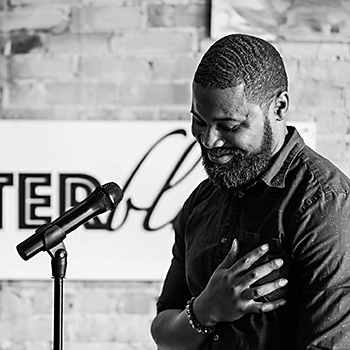
    J’Dilla weekend 2026 kicks off with T.A.P at Winterbloom Tea at 7 p.m. The Dilla Day Edition will feature award-winning poet and slam coach, Letitia Brown. T.A.P. is an open mic for poets, musicians, vocalists, and any creative with something to say. Sign-ups start at 6:30 p.m. for those who want to take the “stage.” This is a free event.
    Friday is the $1000 J’Dilla Poetry Slam at The Sweet Palette, hosted by the incomparable Grammy-winning poet, Steph Love.
    Twelve poets will compete in 3 rounds, and only one poet will come out on top. Second, third, and fourth place won’t walk away empty-handed. Cash prizes will be handed out to the top 5 poets of the night. Durham’s hottest DJ, DJ Jimmie V, will be on the ones and twos, keeping the vibe going between rounds and poets in the zone. This is a free event, doors open at 7:30 p.m., and the show starts at 8:00 p.m.
    Saturday, the vibe and beats continue with two events. Sample This: Writing and Music Workshop at 11 a.m. starts the day at the Capital Encore Academy located at 126 Hay Street. This is a free workshop for anyone interested in writing or beat-making, featuring Emmy-winning poet Boris “Bluz” Rogers and music producer, Supa Trav. Saturday night is Dilla Day Fayetteville: Dilla Sessions, the highlight of the J’Dilla weekend. Get ready for a night of music at the Arts Council of Fayetteville/Cumberland County’s newest addition, Arts XLR, located at 214 Burgess St. On the turntables for the night is DJ Prodigee, keeping J’Dilla classics in the mix.
    The night starts with a Beat Battle, as some of the best producers go head-to-head, showing off their skill and mastery of the music catalogue. Rizzy takes the stage for a special performance, followed by Dasan Ahanu and The Eloquent Band, a unique and dynamic blend of live music, poetry, and hip-hop. This is a ticketed event. To purchase tickets visit, https://bit.ly/49YBhq5
    Sunday wraps up the weekend with Dilla Brunch at The Sip Room. This brunch will honor the legend, with Ma Dukes as the guest speaker, DJ Yodo in attendance, and a fantastic spread of delicious bites. Brunch will be served from noon to 3 p.m. This is a ticketed event. Tickets can be purchased at https://bit.ly/3ZipT27
    El’J had plenty of help making this year’s event happen.
    “This year, Dilla Day Fayetteville is powered by the support of 20+ sponsors who believe in honoring culture the right way. We’re especially grateful to Equal Space for Peace, 7 Directions of Service, Poetry-n-Motion LLC, the James Dewitt Yancey Foundation, and the Fayetteville Heckler, whose commitment to community, creativity, and legacy helped make this celebration possible. Their support goes beyond sponsorship—it’s an investment in culture, education, and the future. And they’re just a few of the many partners who stepped up to ensure Dilla Day Fayetteville continues to grow with intention and respect,” he said.
    Dilla Day 2026 is a can’t-miss event, from the first event to the last, each one was curated to bring the spirit of J’Dilla to Fayetteville. This is far from the last Dilla Day: Fayetteville Weekend. El’Ja has a vision for the future, noting, "This is a community in motion, and I’m grateful to be part of it. I see Dilla Day Fayetteville becoming a cultural landmark—an annual tradition people plan for and travel to. As it grows, I see expanded programming: workshops, panels, beat showcases, and youth engagement, all rooted in Dilla’s spirit. The goal isn’t just growth, but longevity—building something that remains authentic, community-centered, and intentional. A living legacy that honors the culture with respect, education, and love, while positioning Fayetteville as a place that truly understands how to celebrate hip-hop history,” El’Ja said.
    “I also want to acknowledge the artists, DJs, poets, speakers, and vendors who showed up with their whole selves and trusted the vision. And finally, Fayetteville—for showing up, for listening, and for holding space.

    (Photo: El'Ja Bowens is hosting Dilla Day Fayetteville, a celebration of J Dilla. Photo courtesy of El'Ja Bowens' Facebook Page)

  • 15Cross Creek Cemetery #1 is the oldest public cemetery in Fayetteville. Owned by the city of Fayetteville and founded in 1785, its sacred grounds hold the stories of Fayettevillians from days gone by. On Feb. 27, the eve of the 250th Anniversary of the Battle of Moore’s Creek Bridge, a local historian will guide visitors on a tailored tour of the cemetery.
    Visitors will hear about the extraordinary lives of Revolutionary war soldiers buried or memorialized there and the ones who waited on the home front. The cemetery’s iconography and architecture provide additional glimpses into the past. One retaining wall that runs along the southern boundary of the cemetery is believed to be the oldest piece of construction still standing in Fayetteville today, according to DistiNCtly Fayetteville.
    Fayetteville’s Lafayette Trail, a self-guided tour that commemorates American Revolutionary War hero the Marquis de Lafayette’s two-day Fayetteville visit in March of 1825, includes two stops on the cemetery grounds. Stop 10 highlights the Phoenix Masonic Lodge Number 8, and stop 11 highlights the grave of Isham Blake.
    During his two-day tour of Fayetteville, the Marquis de Lafayette visited Phoenix Masonic Lodge Number 8. The Greek Revival structure, built in 1793 and rebuilt in 1858, is one of the oldest lodges in the state still in existence. Isham Blake served as one of General Lafayette’s bodyguards at the Siege of Yorktown in 1781. According to DistiNCtly Fayetteville, “the Siege of Yorktown was an American victory by a combined assault of American and French forces led by General George Washington, Marquis de Lafayette, and French General Comte de Rochambeau, over a British Army commanded by General Lord Cornwallis. This surrender caused the British government to negotiate an end to the War. After the War, Blake became a productive and respected citizen of Fayetteville.”
    Other noteworthy figures buried or memorialized on the cemetery grounds include United States Representative J. Bayard Clark, United States Secretary of the Navy James C. Dobbin, Lieutenant Governor of North Carolina and United States Representative Charles Manly Stedman, and Revolutionary War Soldier Isaac Hammond.
    Isaac Hammond, who was stationed at Valley Forge along with the Marquis de Lafayette during the winter of 1778, served in the Fayetteville Independent Light Infantry. According to Commemorative Landscapes of North Carolina, Hammond was “a free black barber in Fayetteville, was [the Fayetteville Independent Light Infantry’s] first fifer for over 30 years. During the Revolutionary War, he enlisted in the 10th Regiment of the North Carolina Continental Line.”
    Throughout the history of the cemetery, it saw significant vandalism, leading to the installation of an eight-foot wrought iron fence around its perimeter. Additionally, deterioration led to major restoration efforts completed in 2017, at which time the city hired an artisan to reset headstones and repair cracks in monuments.
    Now, the cemetery stands as a testament to the enduring legacy of those who occupy its sacred grounds. To learn more, attend Cross Creek Cemetery #1 American Revolutionary Tour. The free tour will be held on Friday, Feb 27, from noon to 1 p.m. Moderate walking is required, and parking is available along N. Cool Spring Street. Learn more at fayettevillenc.gov.

    (Photo: The Fayetteville History Museum will be holding a tour at Cross Creek Cemetery #1 on Cool Spring Street. The museum holds tours at the cemetery several times a year. Photo courtesy of the Fayetteville History Museum's Facebook page)

  • 12“I feel like a big page in my life was turned starting in 2020—bigger than any other page I ever remember,” Grant contemplated. Of all the changes between her last Fayetteville concert in 2010 and her upcoming Feb. 20 concert, changes heralded by the COVID-19 pandemic stand out in her mind. They left her more invested in her passions than ever, and now, on the cusp of a special announcement.
    2020 wrote unexpected chapters into lives across the nation and world. For Grant, it was both a challenge and an opportunity. It was also the first in a series of abrupt events.
    Over the last six years, Grant has undergone open heart surgery for a congenital heart defect, suffered a head injury from a bike accident that required a long recovery and left her with memory recall issues, and had several additional surgeries. Yet, she keeps moving forward with measured intention, and Feb. 20 marks more than her return to Fayetteville.
    “I am starting to promote some new music, and Feb. 20 is the day that the second song from that project is going to come out,” Grant shared. “We're also going to announce the name of my new record.”
    One song from the record, “The 6th of January (Yasgur’s Farm)” is already available on streaming platforms. Grant says the second song is titled “The Me That Remains,” and attendees at her Fayetteville concert will be among some of the first to hear the new release live.
    The challenges and opportunities of 2020 started with quarantine orders. Only two shows into that season’s tour, Grant’s remaining shows were canceled.
    “For somebody whose livelihood and work is done in spaces where people gather, that was a huge change,” she recalled. On the other hand, the upended plans and extended quiet time gave Grant space to rediscover the beauty and therapeutic quality of songwriting.
    “Songs don’t just fall out of the sky,” she said of her new album. “You have to sit in the quiet and go ‘What do I have to say?’” She doesn’t consider herself a prolific songwriter and instead tends to write inspired by lived experience. The process requires practicing contemplation, a natural fit with the pace of life Grant already prefers. “I try to live in the present,” she shared. With life’s rhythms upended by the pandemic, she leaned further into contemplation.
    “You know, I started writing when I was 15, and I just did it to help process my thoughts and to remember different experiences,” she shared. Those early songwriting sessions were what she calls the “juvenile version” of her current creative process. Following quarantine, surgeries, and accidents, she spent time in recovery, even noting that post-pandemic, everyone seemed to be in recovery-mode. Grant found herself laying hold of the same songwriting toolkit from her youth, but this time, intentionally. “Oh my gosh, this is good medicine!’” She remembers thinking as she immersed herself.
    “I write a song when something has impacted me—an experience or a conversation,” Grant pinpointed. That heartfelt impetus not only underscores her songwriting but also keeps her collaborating. “The best part for me was just writing the songs—or finding the songs—and the experience of creating the music together in community with other musicians,” she said. “You just realize the power of music again, and it’s such a good thing.”
    Grant says she’s noticed not only her own, but other people’s thought processes changing since 2020. She thinks people started reevaluating their priorities.
    13“I don’t think any of us take anything for granted anymore,” she explained. “We realize the things that matter and the things we kind of have to fight and stand up for.”
    Her own priorities have redoubled towards helping people be “in real time.” The goal is to encourage and energize her audience. She sees a connection between cellphones and anxiety, and wants to ground listeners in the unfiltered experience of live music.
    “I tell people, when you buy a concert ticket, you’re paying for every mistake you hear. This is real people trying their best and sometimes it's a swing and a miss, but it’s real,” she shared. “If nothing else, it’s two and a half hours that we’re not looking at a screen. You’re not going down some rabbit hole that’s going to make you compare yourself to somebody else.”
    Part of preparing a concert program includes “deep-diving” into prior concert catalogs and paying attention to which of her songs are most listened to. Knowing some fans attend her concerts every time she’s in town, she wants to make sure they never hear the same concert twice.
    “Maybe 10 songs need to be the same, but the other 14, they should change,” she explained. Each song is thoughtfully chosen so that, according to Grant, audience members think, “Oh my gosh, I haven’t heard that one!” or “That reminds me of high school!”
    “I feel so grateful that somebody takes their hard-earned money and their valuable time—I mean, time is really our currency—and they say ‘I want to spend an evening with you and your music,’” Grant said.
    From the audience, fans sense her intentionality.
    “I had no idea how much energy, talent, and audience appeal she had,” said Michael Fleishman, attractions director for Community Concerts, the Fayetteville nonprofit that facilitated her 2010 and upcoming concert. “I remember thinking [in 2010], ‘We’ve got to have her back.’”
    Community Concerts, founded in 1935, is Fayetteville’s oldest art organization. Fleishman noted that Grant’s 2010 visit coincided with the nonprofit’s 75th season. Her 2026 visit coincides with their 90th season.
    “Here we are at another landmark season,” he shared. “The audience is in for a real treat.”
    Working closely with the Crown Complex, Community Concerts continue their long-standing legacy of bringing history-making artists to the Fayetteville area.
    “We work together to make every show we can a first-class event,” said Fleishman of the Crown Complex. Gary Rogers, director of marketing at the Crown Complex, called Grant’s concert “a rare chance to experience a legendary artist in an intimate setting,” and celebrated the shared commitment to high-quality, diverse artistry that keeps the Crown Complex and Community Concerts in partnership.
    Fleishman recalled the many artists Community Concerts has brought to Fayetteville over the decades. He says they cherish the touching memories made with each other, and Grant is no exception.
    “Of all the artists I've met over the years, she’s right at the top of the list in terms of being a genuinely good person. I can’t say enough nice things about her,” he enthused. “You’re looking at a 6-time Grammy winner and a show I guarantee you’ll love.”
    After a night of music, Grant hopes people walk away feeling energized on the inside and hopeful through hardship.
    “If a song can help you wrap your arms around your own life, it can help you see yourself in the context of your community and the world,” she shared. “It can remind us of things we don’t necessarily talk about all the time, like the love that undergirds all of life.”
    Amy Grant performs “Take a Journey Through Songs, Stories, and Memories” Feb. 20 at the Crown Theater. Tickets can be purchased at https://www.crowncomplexnc.com/events/detail/amy-grant or by calling the Crown’s box office at 910-438-4100. The Crown Coliseum is located at 1960 Coliseum Dr.

    (Photos courtesy of Oak View Group and Community Concerts)

  • 11Inside a modest cement-block building on Griffin Street, just minutes from downtown Fayetteville and not far from the city’s main social service corridors, is NC Food Commissary. A new commissary kitchen, NC Food Commissary is quietly redefining what faith-driven work can look like in the local food economy.
    Located at 813 Griffin St., the facility operates as a licensed commercial kitchen for food trucks, caterers, bakers and small food businesses that need a legal base of operations. But for Chris Thiessen, one of the project’s founders, the space represents something deeper than compliance or entrepreneurship.
    The commissary, she says, grew out of a calling.
    Thiessen originally envisioned launching a food truck with the simple goal of feeding people in need. That plan stalled when she discovered a critical barrier: North Carolina law requires mobile food vendors to operate from an approved commissary, and none existed locally to support that vision. Rather than abandon the idea, Thiessen followed what she describes as a clear redirection.
    The building on Griffin Street became the answer.
    What now exists is a standalone commissary, the first of its kind in Cumberland County — equipped with a full cooking kitchen, two prep kitchens, secured dry storage, refrigeration, freezer options and classroom space. From a regulatory standpoint, it fills a long-standing gap for food entrepreneurs across Fayetteville and neighboring counties who previously had to borrow space, rely on limited church kitchens, drive to Raleigh, or operate under the radar. From a spiritual standpoint, Thiessen views it as an act of obedience.
    Throughout the three-year process of securing the building, navigating permits and building out the space, prayer was central. One of the project’s partners, who also served as her pastor, prayed over the entire facility, every room and corner, before operations began. Thiessen believes that foundation matters.
    She speaks openly about patience being one of the greatest lessons the process required. Doors did not open quickly, and plans often shifted. But she describes a steady pattern of confirmation through conversations, partnerships and timing that reinforced her belief the project was unfolding as intended.
    The commissary operates as a for-profit business, but it is paired with a nonprofit ministry, NC Meal Train Ministry, which anchors the faith-based mission of the space. The two entities function together: the commissary provides infrastructure for businesses, while the nonprofit ensures that food and opportunity circulate back into the community.
    Through NC Meal Train Ministry, surplus food prepared by vendors from catered events or unsold service days can be redirected rather than wasted. Participating businesses receive credits toward kitchen time or deductions facilitated through the nonprofit, while prepared meals are funneled to existing food pantries and individuals already serving Fayetteville’s unhoused population. Rather than creating new outreach programs, the ministry strengthens networks that are already active on the ground.
    The location of the commissary reinforces that mission. Griffin Street sits near major service centers, including areas where residents seek identification, employment resources and emergency assistance. Thiessen says being physically close to need has shaped how she understands the work happening inside the building.
    Plans are also underway for a community garden behind the facility, further tying food production to service. The garden, like the kitchen, is meant to be practical rather than symbolic, a tangible extension of care in a city where food insecurity remains visible.
    Inside the building, the ministry often takes a quieter form. Many food entrepreneurs who contact the commissary arrive with talent but little understanding of licensing, insurance, tax obligations or pricing. Thiessen, whose background is in accounting and administrative work, spends much of her time guiding them through those early steps. She does not complete the work for them, but she connects them to free state and local resources, small-business advisors and regulatory offices that many do not know exist.
    That guidance, she believes, is part of the ministry itself. Helping someone build a legitimate, sustainable business means helping them support their families and, in turn, serve the community through their work.
    The commissary also includes classroom space that will be used for food-safety instruction, business education and regulatory training, including upcoming requirements for propane use at festivals and mobile operations. Classes are planned to be bilingual to ensure accessibility. While these offerings address compliance, Thiessen emphasizes that education is also about confidence, helping people move beyond fear and uncertainty.
    Growth is already being considered in phases. The current site is designed to support up to 35 businesses initially, with expansion possible through added storage or a second location if demand continues. Still, Thiessen measures success less by numbers than by faithfulness to the mission.
    She is currently praying over what will eventually fill a large blank wall near the entrance, something that quietly signals the spiritual foundation of the work being done there. The goal is not to make the space overtly religious, but unmistakably intentional.
    The commissary’s grand opening and ribbon cutting, hosted by the Fayetteville Chamber of Commerce, is scheduled for Feb. 19 at 1 p.m. at the Griffin Street location. Thiessen says the celebration will reflect the spirit of the project itself, communal, inclusive and shared.
    In a city where food trucks and pop-up vendors have become a defining part of local culture, the commissary stands as unseen infrastructure: prep tables instead of stages, storage shelves instead of spotlights. Yet for Thiessen, its purpose is clear.
    The work, she says, is bigger than business. And for now, she remains committed to following where it leads
    For information about NC Food Commissary membership, you can visit the website, www.ncfoodcommissary.com, or by phone at 910-807-7850.

    (Photo courtesy of NC Food Commissary's Facebook page)

  • 10The Fayetteville Symphony Orchestra invites audiences to experience an evening of vibrant sound, artistic exploration, and urban-inspired energy with “A Night on the Town,” taking place on Saturday, Feb. 28, at Seabrook Auditorium on the campus of Fayetteville State University. Doors will open at 6:30 p.m., with the concert beginning at 7:30 p.m., promising a dynamic night of orchestral music that bridges classical traditions with modern influences. Tickets for the concert may be purchased online at https://www.fayettevillesymphony.org, by contacting the FSO office at 910-433-4690, or at the door on the evening of the performance.
    At the heart of February’s program is Nightlife, a genre-blending concerto for double bass by Kebra-Seyoun Charles, who will also perform the work as soloist. Charles, the 2022 Sphinx Competition winner, brings a fresh and deeply personal voice to the stage, drawing inspiration from their experiences living in New York City.
    The concerto’s two movements flow seamlessly through baroque textures, gospel rhythms, waltz-like elegance, and jazz-infused improvisation, creating what Charles describes as a musical playlist that captures the pulse and diversity of urban life.
    Charles has appeared on prominent stages around the world, including Jazz at Lincoln Center, the Kagoshima Jazz Festival, the Aspen Music Festival, and the Library of Congress. Their career reflects a dual dedication to performance and composition, as well as a broader mission to foster inclusivity within classical music.
    During their visit to Fayetteville, Charles will also lead a masterclass at Fayetteville State University, offering students and musicians a rare opportunity to engage directly with a contemporary composer-performer.
    “This concert really embodies the spirit of curiosity and artistic growth that has defined this season,” said Jessica Munch-Dittmar, Executive Director of the Fayetteville Symphony Orchestra. “As we near the close of Maestro Stefan Sanders’ remarkable tenure, 'A Night on the Town' is a powerful moment to gather as a community, experience something new, and honor the impact this orchestra continues to have on Fayetteville.”
    The concert holds additional significance as it marks the second-to-last performance of Maestro Stefan Sanders’ farewell season, concluding his nine-year tenure as Music Director of the FSO. Sanders’ final season has celebrated innovation, collaboration, and community engagement—hallmarks of his leadership with the orchestra. The Symphony’s 2025–2026 season finale will feature the iconic music of John Williams, while Sanders will also conduct the FSO’s Side-by-Side concert with the Fayetteville Symphony Youth Orchestra and a special performance at the Cape Fear Botanical Gardens in March.
    "A Night on the Town" is the Symphony’s fifth concert of the 2025–2026 season, and a fitting celebration of artistic energy, community connection, and a legacy of musical excellence. More information about this concert and the FSO’s many free events and performances can be found at https://www.fayettevillesymphony.org/.

    (Photo courtesy of Fayetteville Symphony Orchestra's Facebook page)

  • 9For all his 64 years, Jim Watts has always been an active guy. He lives on 65 acres in Bladen County and has never had a problem with the extensive walking and heavy lifting needed to look after that much land.
    So, in August of 2023, it was a shock to find out that he’d need quadruple bypass surgery.
    Like a lot of heart patients, Watts had initially dismissed his chest discomfort as a byproduct of anxiety during a stressful time. But when it became harder to ignore, he went to the emergency room.
    “They took very good care of me,” he said. “They ran all the tests, and everything looked good. My blood pressure was fine; my heart rate was fine. Nothing to indicate a problem.”
    When he mentioned he was going through a stressful time, the doctor agreed it may just be anxiety. But he advised Watts to follow up with his primary care doctor and a cardiologist, just to be sure. Those visits turned up nothing of concern, Watts said—until a CT cardiogram ordered by cardiologist Selvaratnam Sinna, MD.
    “When he saw the results of that,” Watts said, “the first thing he asked me was, ‘How far can you walk without having to sit and rest?’ I thought that was an odd question because I felt like I was pretty much the picture of good health.”
    The angiogram showed otherwise. With some diminished blood flow now apparent, Watts was scheduled for a heart catheterization to investigate further.
    “So I went in there with anticipation of doing the heart cath,” Watts said, “maybe needing a stent or something like that, but that was it.”
    But after that procedure, he woke up to more surprising news. The catheterization revealed four significantly blocked arteries, and he would need bypass surgery. After taking in the troubling news, Watts began listing all the things he would need to go home and take care of first.
    “And they said no,” he recalled. “They said I needed to stay in the hospital until the surgery because, in my condition, I really could have a heart attack at any time.”
    Cardiothoracic surgeon, Robert E. Maughan, M.D., performed the procedure, which reroutes blood around the blocked arteries to improve heart function. Watts said the days after waking up are still a blur, but he remembers an excellent staff that kept him informed and encouraged.
    “The staff there in the ICU was absolutely invaluable,” he said. “They were awesome. There were some fantastic people who took care of me.”
    After his discharge from the hospital, Watts said, the real work was in the weeks ahead. To stay motivated through his long recovery, he kept a specific goal in mind.
    “I have an annual hunting trip to South Dakota where we go and hunt pheasant,” he said. “And before the surgery, I wanted to know if I'd be able to go to the pheasant hunt in October.”
    That gave him less than 12 weeks before the trip. It was a bold ambition, but Watts knew his previous level of fitness would help to propel him.
    “By the end of September, I was walking four miles a day,” he said. “It started with a lap around my yard, and then adding more laps, and then actually getting out and walking up and down the road.”
    While he was undaunted by the physical challenges of recovery, Watts said he was surprised by the psychological stumbling blocks.
    “It was very scary to realize that even with no symptoms, feeling just fine, I was that close to having a very serious heart attack,” he said. “And to go from lifting recliners one day to then having trouble standing up, it felt like I went from almost being invincible to being a weakling. That was hard.”
    His physical progress helped to lift his spirits, Watts said, and at low points he tried to focus on the goal of getting to South Dakota. Then, about a week before the trip, he was cleared to join his friends on the hunt.
    “It's always a very special trip because the area we go to is unlike anything I’ve ever seen in this area,” he said. “You can see for miles and miles, and it’s just a beautiful landscape.”
    Scenery like that has taken on new meaning for Watts since his surgery, and even working in his own yard feels a little different.
    “I’m doing the same things I was before, but just enjoying it more,” he said. “I appreciate the sunset so much more now.”

    (Photo courtesy of Cape Fear Valley Health)

  • 8The Lafayette Society is proud to announce that they are now accepting entries for the 2026 creativity contests. The Lafayette Society Creativity contests serve to encourage and promote excellence in creative expressions that express an appreciation for Lafayette’s timeless principles of liberty, equality, and tolerance. All contest entries, in all categories, should emphasize one or more of Lafayette’s timeless principles. Contest entries may, but are not required to, also highlight the 250th Anniversary of the Declaration of Independence.
    The artist or author retains copyright of the submitted work. However, the artist or author grants the Lafayette Society the right to publish their entry, in any form, in perpetuity, by virtue of entering the Lafayette Society Creativity Contest. These uses may include, but are not limited to, fundraising opportunities which support the Lafayette Society’s mission.
    The competition is open to current or former residents of Cumberland County and Fort Bragg/ Fort Liberty, as well as students currently attending a school, college, or university based in Cumberland County or on Fort Bragg/ Fort Liberty.
    The guidelines to submit a piece for the contests are:
    • One submission per individual, group, or team.
    • All work must be the work of the listed artist(s) and or author(s).
    • Proper credit should be given to all artist(s) and or author(s).
    • The Lafayette Society assumes no responsibility or liability for the content of any submitted materials.
    • Artists and authors are free, but not required, to provide a brief written explanation of their work in the text of the submission email.
    • All entries must be submitted with a signed release form.
    Awards will be given to the three top winners in each category. First place will receive $500, second place wins $300, and third place will take home $100.
    The deadline for all entries in all categories is Feb. 14.
    For the video competition, the contest is open to all forms of videos. The video must be under four minutes in length, and the rating should be PG13 or lower. Submission must be hosted on YouTube with a direct link sent to the email creativity@lafayettesociety.org.
    For the Poetry Competition, the contest is open to all forms of poetry. Submission must be submitted through the email creativity@lafayettesociety.org.
    The Visual Art Competition is open to visual art in all two-dimensional art categories including but not limited to digital art, graphic design, photography, painting, and drawing. Entries must be submitted electronically through the email creativity@lafayettesociety.org.
    If the work was not created digitally, the artist(s) should submit a high-quality image of submitted work (no distracting background or uneven lighting) to creativity@lafayettesociety.org. Artist(s) should also submit an image identification (name of artist, title of work, media, scale, date completed) to creativity@lafayettesociety.org.
    Do you have questions? If so, please contact the Lafayette Society at creativity@lafayettesociety.org

  • 7Michael Nagowski, chief executive officer of Cape Fear Valley Health, will retire this summer after 18 years leading the region’s largest health system, which includes Cape Fear Valley Medical Center, Highsmith-Rainey Specialty Hospital, and hospitals in Bladen, Hoke, Harnett, and Johnston counties.
    Nagowski, 60, announced his retirement to the 19-member CFVH board of trustees on Friday.
    “I’m excited I will get to spend time with my family,” he told CityView. “It’s with mixed emotions, but I’m excited.”
    The board immediately voted to appoint Dan Weatherly, CFVH’s chief operating officer since 2015, as interim CEO.
    Nagowski’s retirement, effective July 1, comes as the health system prepares to welcome its first residency students to the Methodist University Cape Fear Valley Health School of Medicine, located behind Cape Fear Valley Medical Center. The milestone follows years of expansion under his leadership, including the $33 million Medical Education Center & Neuroscience Institute, opened in 2023, and a $110 million Valley Pavilion expansion in 2025 that added two floors and 100 beds.
    While proud of the system’s growth, Nagowski said the credit belongs to the physicians, nurses, and staff.
    “I’m most proud of our team,” he said. “They’re the ones who show up every day, 365 and 24-7.”
    ‘He Left an Indelible Mark’
    As news of his retirement spread, health care leaders praised Nagowski’s leadership and impact.
    “Mike Nagowski has been a tremendous asset to our region and community, particularly to health care, and has transformed Cape Fear Valley Health in a way few leaders ever achieve,” said Dr. Sam Fleishman, CFVH’s chief medical officer. He described Nagowski’s leadership as grounded in authenticity, humility, and a deep commitment to people.
    Fleishman said Nagowski possessed “a rare gift for building meaningful relationships,” connecting with people sincerely and personally. His presence—marked by a gregarious laugh, humor, and an ability to put others at ease—helped build trust and strengthen collaboration across the system.
    “We are deeply grateful for all that Mike has done to elevate the quality of care for the people we serve,” Fleishman said. “His impact will be felt for generations through the systems he built and the culture of excellence and trust he fostered.”
    A Transformational Leader
    Susan Dees, CFVH’s chief nursing executive, said Nagowski’s vision guided the system’s growth and strengthened its role in the community.
    “He believed in this health system and shared that vision with us. His passion and dedication set a high standard for all,” she said.
    Retired gastroenterologist Rakesh Gupta, who helped recruit Nagowski in 2008, said Nagowski’s leadership reshaped health care across Cumberland and surrounding counties.
    “He is without doubt an incredible driving force who has been truly transformational,” Gupta said. “We would not have accomplished this degree of expansion, the residency program, and now the medical school without his vision and dedication.” Gupta called him “a once-in-a-lifetime health care leader” whose legacy will endure.
    “Our community owes him a huge gratitude,” he said.
    Cumberland County Board of Commissioners Chair and CFVH trustee Kirk deViere echoed that sentiment, noting that influence extended beyond hospital walls.
    “Throughout his entire time in our community, I have had the privilege of working alongside him,” deViere said. “Under his leadership, we have seen tremendous growth in our health system’s capacity and reach.”
    DeViere emphasized Nagowski’s commitment to workforce development, citing partnerships with Fayetteville Technical Community College, Fayetteville State University, Methodist University, and others.
    “His dedication to improving health care access and outcomes for our region has been unwavering,” he said. “His legacy of service, innovation, and workforce development will continue to benefit Cumberland County for years to come.”
    Compassion, Innovation, and Philanthropy
    Sabrina Brooks, vice president of the Cape Fear Valley Health Foundation, credited Nagowski with elevating the role of philanthropy in the system’s growth.
    “For the past 12 years, I’ve had the privilege of working alongside Mike,” Brooks said. “His leadership guided our hospital through extraordinary growth and transformation while always focusing on improving the lives of the patients and communities we serve.”
    She said his belief in the power of generosity strengthened the foundation, expanded partnerships, and inspired donors to invest in health care excellence.
    “Programs, facilities, and initiatives that will benefit southeastern North Carolina for generations were made possible because of his vision,” she said.
    Brooks described his legacy as one of compassion, innovation, and unwavering commitment to local health care.
    “We extend our deepest gratitude for his many years of dedicated service,” she said. “We wish him the very best as he retires.”
    Bill Kirby Jr. can be reached at billkirby49@gmail.com or 910-624-1961.

    Editor's note: This article has been edited from its original for space considerations. To read the article in full, visit https://www.cityviewnc.com/stories/michael-nagowski-longtime-cape-fear-valley-health-ceo-announces-retirement/

    (Photo: Michael Nagowski has been the CEO of Cape Fear Valley Health for 18 years. He has been a part of creating the Methodist University Cape Fear Valley Health School of Medicine and expanding services across the CFVH health system. Photo courtesy of Cape Fear Valley Health)

  • 6The 2026 Election Primary begins this week. Unlike municipal elections, these races are partisan: Democrats are on one side, Republicans on the other, and unaffiliated voters must choose which primary they wish to participate in. The ballots will include options for voting on candidates from the local board of commissioners up to the U.S. Senate.
    Former U.S. Speaker of the House Tip O'Neill wisely stated, "All politics is local." This insightful remark highlights the significant role that community issues play in political decisions. Engaging at the local level is crucial for fostering meaningful change and progress. While variations of this phrase date back to 1932, U.S. elections have become increasingly nationalized in recent decades. In the context of the current polls, all politics has become national, even at the local level.
    When politics becomes predominantly national, it influences how voters act at the local level. Instead of focusing on the qualifications of local candidates and their potential to improve daily life, voters often prioritize national agendas and partisan ideologies, which can overshadow local concerns.
    Should we prioritize whether our local candidates genuinely align with the ideologies of the WOKE left or the MAGA right? It's crucial to consider which perspective will truly serve our community's best interests. All contests on the ballot are essential, especially the Cumberland County Board of Commissioners.
    Local boards of commissioners play a vital role in daily life, serving as the primary legislative and policy-making bodies for county governments. They manage local budgets, set property tax rates, approve land-use plans, and oversee essential services, including public health, emergency services, and infrastructure. Ultimately, the elected officials who serve on these boards are significant in their communities.
    In the Democratic primary, there are four open seats on the Board of Commissioners: two for District 1 and two at-large. In District 1, one incumbent is seeking reelection, facing four challengers, and in the at-large seats, two incumbents are seeking reelection, facing four primary challengers. National politics isn't likely to play a role in the primary, but it will in the general election. No one has filed opposition to District 1 primary winners; however, two Republicans have filed for the at-large seats and will square off against the two Democratic survivors in November.
    No one knows for sure, but it is expected that the popularity of the leading candidate on the ballot will influence candidates in lower positions. In this scenario, it is likely that former Democratic Governor Roy Cooper will affect turnout for local Democrats, and his Republican opponent, who will probably receive an endorsement from Trump, will influence down-ticket Republicans.
    Many of us are hoping for a strong primary election. The county commissioner races are crucial. This election should focus on what is best for Cumberland County, rather than a WOKE versus MAGA debate.

Latest Articles

  • Woodpeckers win 2026 Carolina League Championship
  • Learning to Fall
  • Seniors invited to health, wealth event at FBFCU
  • Sweet Valley Ranch offers new Harvest Fest
  • Artist Village puts a wickedly funny spin on history
  • Enjoy Oktoberfest merrymaking at Fort Bragg
Up & Coming Weekly Calendar
  

Login/Subscribe