
 How to resolve AdBlock issue?






 On Saturday evening, Jan. 17, the Fayetteville Symphony Orchestra will invite audiences to celebrate the nation’s birthday through the lens of its music. Presented at 7:30 p.m. in the warm, resonant setting of St. John’s Episcopal Church, The Road to America 250 is a chamber concert that looks ahead to the 250th anniversary of the founding of the United States.
Rather than a grand orchestral spectacle, this program offers something more intimate: a carefully curated journey through American musical history, performed by a string quartet and a wind quintet alternating unconducted works. Doors open at 6:30 p.m., and the one-hour concert will be presented without intermission, allowing the music to unfold seamlessly from start to finish.
This concert is specifically designed for listeners who enjoy small ensembles, close proximity to the performers and the storytelling power of music history. In an intimate venue like St. John’s Episcopal Church, every phrase, breath and bow stroke becomes part of a shared experience. The program spans more than a century of music, from the late 19th century to works written as recently as 2020, reflecting the evolving voices and identities that have shaped American composition.
At the heart of the program is music by American composers who represent a wide range of backgrounds, styles, and artistic goals. The evening opens with the third movement, “Juba Dance,” from Florence Price’s Symphony No. 1. Florence Beatrice Price (1887–1953) was a pioneering figure in American classical music and remains one of its most important rediscovered voices. Born in Little Rock, Arkansas, Price later moved to Chicago during the Great Migration, where she became a central figure in the Chicago Black Renaissance.
In 1933, the Chicago Symphony Orchestra premiered her Symphony No. 1 in E minor at the Chicago World’s Fair, making her the first African American woman to have a symphonic work performed by a major American orchestra.
The “Juba Dance” movement draws on African American dance rhythms and spiritual traditions, blending them seamlessly with classical symphonic form. Lively, rhythmic, and full of character, it captures Price’s ability to merge cultural heritage with formal European structures.
Though her music was largely neglected for decades after her death, a chance discovery of her manuscripts in 2009 reignited global interest in her work. Today, her compositions are regularly performed by major orchestras, and her presence on this program feels both celebratory and deeply appropriate for a concert honoring American history.
Another cornerstone of the evening is Samuel Barber’s String Quartet, Op. 11, second movement, “Molto Adagio,” better known in its later orchestral arrangement as Adagio for Strings. Barber (1910–1981) was one of the most celebrated American composers of the 20th century, admired for his deeply emotional, lyrical style. Unlike many of his contemporaries who pursued radical modernism, Barber embraced a Neo-Romantic approach rooted in traditional harmony and expressive melody. His Adagio has become one of the most recognizable pieces in all classical music, associated with moments of collective mourning and reflection. It has been performed at the funerals of presidents, featured in films such as Platoon, and used countless times in television and popular culture.
Hearing the Adagio in its original string quartet form offers a particularly intimate experience. Without the massed sound of a full string orchestra, the music feels personal and exposed, as if the listener is invited directly into Barber’s emotional world. It stands as a testament to the enduring power of simplicity and sincerity in American music.
The program also highlights contemporary American voices, including Hit the Bricks by Nicole Chamberlain. Chamberlain is an American composer and flutist based in Atlanta, Georgia, known for her imaginative storytelling and inventive use of extended techniques. Her music often incorporates unconventional sounds—sometimes described playfully as “weird sounds”—to create vivid imagery and narrative.
A prolific composer, she has written extensively for the flute and won the National Flute Association’s 2017 Flute Choir Composition Competition for her piece Chivy. Her background is as multifaceted as her music; before becoming a full-time musician, she worked as a web animator and graphic designer. Hit the Bricks reflects a modern American voice that is bold, creative, and unafraid to blur boundaries between sound, story, and technique.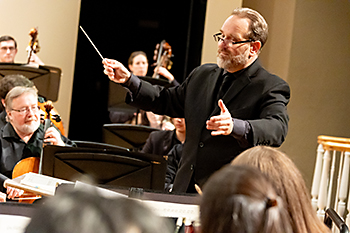 Another fascinating work on the program is Echoes for String Quartet by Bernard Herrmann (1911–1975). Herrmann is best known as one of the greatest film composers in history, celebrated for his collaborations with Alfred Hitchcock on films such as Psycho, Vertigo, and North by Northwest. His music revolutionized film scoring through its use of short, repeating motifs, unusual orchestration, and intense psychological focus. While many listeners associate Herrmann primarily with the silver screen, Echoes reveals his voice in a purely concert setting. The piece reflects his gift for atmosphere and tension, demonstrating how his cinematic instincts translate powerfully into chamber music.
The wind quintet portion of the program features Roaring Fork by Eric Ewazen (born 1954), one of today’s most respected American composers for winds and brass. Ewazen’s music is known for its lyricism, tonal warmth, and vivid sense of place. Roaring Fork is inspired by the Roaring Fork River and the surrounding Rocky Mountains in Colorado, and the music reflects that landscape through sweeping melodies and rich textures.
Ewazen, a longtime member of the faculty at The Juilliard School, has written extensively for wind and brass instruments, and his works are beloved by performers for their idiomatic writing and expressive possibilities. This piece adds a sense of expansiveness and natural beauty to the program, reminding listeners of the diverse landscapes that shape the American experience.
The concert concludes with the first movement, “Allegro ma non troppo,” from Antonín Dvorák’s String Quartet No. 12 in F Major, Op. 96, commonly known as the “American” Quartet. Though Dvorák (1841–1904) was Czech by birth, his life and career were deeply intertwined with the United States during a pivotal period. Born near Prague as the son of a butcher, Dvorák began his musical life humbly as a violist.
He struggled for years to gain recognition until the legendary composer Johannes Brahms discovered his work and helped him secure publication. Dvorák ultimately became a national icon in his homeland, symbolizing Czech cultural identity and later serving as director of the Prague Conservatory.
In 1892, Dvorák moved to New York City to lead the National Conservatory of Music, a position that placed him at the heart of American musical life. During his time in the United States, he became deeply fascinated by African American spirituals and Native American music, arguing passionately that these traditions should form the foundation of a truly American classical style. His belief that American composers should look to their own cultural roots was both progressive and influential.
Dvorák’s most famous works reflect this cross-cultural dialogue. His Symphony No. 9, From the New World, written in America, remains one of the most beloved symphonies ever composed; its slow movement features the famous English horn melody later adapted into the spiritual-like song “Goin’ Home.” His Cello Concerto in B minor is widely regarded as the greatest concerto ever written for the instrument, while the Slavonic Dances pulse with the energy of Czech folk rhythms. His opera Rusalka includes the iconic aria “Song to the Moon,” cherished by sopranos worldwide.
The “American” String Quartet was composed during a summer holiday in Spillville, Iowa, and captures Dvorák’s impressions of the American landscape and spirit. The work reflects his mastery of melody and orchestration, featuring pentatonic scales that give the music an open, folk-like sound, syncopated rhythms borrowed from dance traditions, and a Romantic emotional range that moves effortlessly from pastoral warmth to profound longing.
As the closing work on the program, it serves as a fitting reminder that American music has always been shaped by global voices, cultural exchange, and shared human expression.
Road to America 250 is more than a concert; it is a musical journey through time, identity, and expression. From Florence Price’s groundbreaking achievements to Samuel Barber’s timeless lyricism, from Bernard Herrmann’s psychological intensity to the contemporary creativity of Nicole Chamberlain and Eric Ewazen, the program paints a rich and nuanced portrait of American music.
Tickets can be purchased on the Fayetteville Symphony Orchestra’s website at https://www.fayettevillesymphony.org/2025-2026-season/ or by calling the box office at 910-433-4690. In the intimate setting of St. John’s Episcopal Church, located at 302 Green St., audiences will experience these works up close, celebrating not only the country’s birthday, but the diverse voices—both native-born and immigrant—that continue to define it.
Fayetteville Symphony Orchestra presents "Road to America 250"
- Details
- Written by Sheila D. Barker