
 How to resolve AdBlock issue?







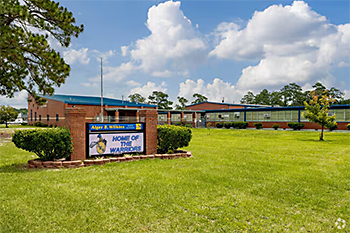 The Cumberland County Board of Education voted March 10 to rescind several student reassignment and facility decisions it approved on Feb. 9, reversing course after weeks of criticism from parents, educators, and community leaders.
Board members rescinded votes affecting Ramsey Street High School and Alger B. Wilkins High School, while also approving recommendations to reverse a planned calendar change for E.E. Miller Elementary School and halt the demolition and property transfer of the former Pauline Jones Elementary School campus.
The decision means E.E. Miller Elementary School will remain on its current year-round calendar rather than transitioning to a traditional schedule before the 2027–28 school year. The board also approved rescinding its decision to demolish the Pauline Jones buildings and transfer the property to Cumberland County. That means the campus will continue to be used by the district.
Several of the reversals followed recommendations from the board’s Auxiliary Services Committee, which unanimously voted on March 3 to ask the full board to reconsider the February decisions after hearing concerns from parents and community members.
Outside the board meeting at South View High School, residents, students, and parents gathered holding handmade signs and wearing school pride T-shirts representing several affected campuses. Some students held posters reading “We’re Here to Protect the Nest” and “Byrd Is Not the Alternative.”
In recent weeks, community members organized meetings and public comment campaigns across the county in response to the district’s proposals to close or consolidate schools, including gatherings in Spring Lake opposing the possible closure of Manchester Elementary School.
Also March 10, the board approved revisions to the district’s 2026–27 school calendars, including updates to the traditional, year-round and Cumberland Polytechnic High School calendars.
Board Reverses Ramsey Street Relocation
In one vote on March 10, the board rescinded its Feb. 9 decision to reassign and rename Ramsey Street High School to the Douglas Byrd Middle North building before the start of the 2026-27 school year.
Instead, the board approved relocating Ramsey Street High School to the former Pauline Jones Elementary School campus.
The motion passed 6-3. Board members Jacquelyn Brown, Greg West, Susan Williams, Terra Jordan, Delores Bell, and Jackie Warner voted in favor. Deanna Jones, Judy Musgrave, and Mary Hales voted against the motion.
Before the vote, Musgrave said she opposed the change based on feedback from the community.
“Well, the only thing that I say about it is that the teachers, the students, the community—they don’t want that,” Musgrave said. “And so my vote would be a no for that.”
Alger B. Wilkins Reassignment Revised
The board also voted 6-3 to rescind its February 9 approval to relocate Alger B. Wilkins High School to available space within Douglas Byrd High School.
Under the revised plan approved Tuesday, Alger B. Wilkins High School will instead be reassigned to the Douglas Byrd Middle North building.
Board members Brown, West, Williams, Jordan, Bell, Warner voted in favor with Jones, Musgrave, and Hales opposing.
Jones said she opposed the move because she does not believe Alger B. Wilkins should be relocated at all, adding that the board had not fully considered the potential impact on students.
“I don’t think Alger B. Wilkins needs to move at all,” Jones said. “With that special group of kids, they need to be where they’re at. We’re not looking at what the consequences are, including mental health and we always talk about the mental health of the students.”
Hales also raised concerns about the move, describing the school as a supportive environment for many students.
“Alger B. Wilkins is a safe haven for a number of our students,” Hales said. “When we talk about our children and their successes, it should include every single student in the Cumberland County school system.”
Jordan, who supported the revised plan, said she recommended the alternative relocation over concerns that Alger B. Wilkins students would struggle sharing space inside Douglas Byrd High School.
“I knew they could not go into Douglas Byrd High School and be successful in that building,” Jordan said.
Moving the program to the Douglas Byrd North building, she said, would allow students to maintain “their own identity” and provide “a safe space for our children to be in.”
‘This Decision Is Not About Buildings’
Several teachers who spoke during public comment—many wearing shirts representing their schools—urged the board to consider the academic and emotional impact of school closings and consolidations on students already facing significant challenges.
Brianna Grullon, an English teacher at Douglas Byrd High School, said the district should carefully examine the equity implications of combining schools that already serve high concentrations of students of color and economically disadvantaged students.
“This decision is not about buildings,” Grullon said. “It is about fairness. It is about opportunity.”
“When schools that are already majority-minority and overwhelmingly economically disadvantaged are combined, the result is deeper concentration and greater isolation,” she added.
Nicole Rivers, an English teacher at Douglas Byrd High School and a 2021 Sandhills Regional Teacher of the Year finalist, said the proposal would place additional strain on students already facing economic challenges.
“Our students should not have to carry the weight of a decision that tells them their needs and potential come second to somebody’s budget,” Rivers said.
“Alger B. Wilkins is not just a school, but a carefully constructed community meant to support students who would otherwise fall through the cracks,” she added.
Gabriel Stumbaugh, a seventh-grade social studies teacher at Anne Chesnutt Middle School, said closing schools because of aging facilities ignores years of delayed maintenance decisions.
“I don’t believe this is truly just a funding issue,” Stumbaugh said. “It is a management issue.”
“If maintenance wasn’t addressed proactively in the past, the solution shouldn’t be closing the school and disrupting the lives of the people who learn and work there every day,” he said.
Melissa Henecke, a counselor with Cumberland Academy 6-12, the district’s virtual school, urged the board not to relocate the school’s in-person hub to a traditional high school campus.
“The building is not just an address,” Henecke said. “It is the anchor of our program’s identity and community.”
“For a virtual school, in-person touch points are everything,” she added. “Many families chose this program specifically because their children struggle in large traditional school environments.”
Tamika Kelly, president of the North Carolina Association of Educators and a longtime Cumberland County educator, said consolidation decisions can have ripple effects across school communities.
“These decisions have impacts that are beyond financial,” Kelly said. “They are disruptive.”
“They are disruptive to the learning journeys of the students, especially those with the most needs,” she added. ‘This Is a System Failure’
Several elected officials and community leaders also addressed the board, raising concerns about the broader impact school closures and relocations could have across Cumberland County.
Spring Lake Mayor Kia Anthony spoke in opposition to the proposed closure of Manchester Elementary School, calling it part of a pattern of disinvestment affecting the town.
“This is not a failure of our children, our families, or our community,” Anthony said. “This is a system failure.”
“Communities do not grow stronger by losing schools,” she added. “Families do not move to towns that keep losing neighborhood schools and calling it progress.”
Former Cumberland County Commissioner Charles Evans also urged the board to reconsider school closures in what he described as a majority-minority district.
“Closing public schools in a majority-minority district risks increasing inequity, disrupting learning, and destabilizing communities,” Evans said.
“Public schools are more than classrooms,” he added. “They are safe spaces, meal providers, meeting centers and sources of pride in many neighborhoods.”
Rev. Mary Owens, a retired educator and alumna of Anne Chesnutt High School before it became a middle school, spoke about the school’s historical significance.
“The legacy of Anne Chesnutt High School should not die,” Owens said.
“When we were there, it was separate, but it was never equal,” she added. “But those teachers gave us the audacity to dream.”
Board Members Defend Consolidation Effort
Following the votes, several board members addressed the district’s broader facilities plan and the criticism it has generated in recent weeks. West defended the initiative, saying the district’s recommendations were based on two independent facility studies conducted over three years at a cost of about $1.2 million.
West also pushed back against claims that the proposals were motivated by race.
“Race was not used or mentioned in the facility reports, nor should it have been,” West said. “The analysis focused on the age, condition and efficiency of the buildings.”
West said the goal of the plan is to move students and staff out of aging facilities and into newer learning environments while reducing long-term maintenance costs.
“No child—regardless of race—should be expected to learn in 1950s-era buildings that require millions of dollars in repairs when better options are available,” West said.
West said the broader initiative could eliminate more than $31 million in deferred maintenance and generate millions of dollars in annual operating savings that could be reinvested in students and teachers.
But other board members questioned both the pace and the priorities of the consolidation effort. Jones said the district should focus more attention on academic performance before pursuing major structural changes.
“We need to be concerned about 27 low-performing schools,” Jones said. “That’s where our focus needs to be.”
Hales said the district must also consider how past maintenance decisions contributed to the current situation.
“Our structures were not taken care of down through the years like they should have been,” Hales said. “And the majority of those structures were housing minority students.”
Hales said the district should focus on supporting students and communities rather than closing schools.
“We do not need to move these schools,” she said. “We need to be concerned about the success of our children.”
Musgrave said she believes the board must keep its focus on students and the district’s legal obligation to provide a sound basic education.
“I want to keep the main thing the main thing,” Musgrave said. “And that’s children first.”
The next Cumberland County Board of Education meeting is scheduled for April 14.
School board backtracks on consolidating campuses
- Details
- Written by Dasia Williams, CityView Today