
 How to resolve AdBlock issue?







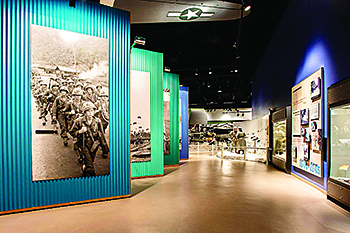
The Airborne & Special Operations Museum prepares to introduce new stories, artifacts and experiences while improving the exhibits Fayetteville has come to value.
“New and improved” is a phrase people place on products all the time, even though, at first, the words may seem to contradict each other. How can something be both new and improved?
It can when something familiar is brought into a new era with added features and thoughtful updates while keeping the parts people have come to value. That is exactly what the Airborne & Special Operations Museum is preparing to do.
The downtown Fayetteville museum opened in 2000 and has now spent 26 years preserving and presenting the history of the nation’s airborne and special operations forces. During that time, new stories have emerged, new artifacts have been acquired and the way museums connect visitors to history has continued to evolve.
The first phase of renovations will focus on the World War II gallery, which will be gutted and redesigned. James Bartlinski, director of the museum, said the updated space will include new audiovisual features, interactive experiences and additional stories that allow visitors to connect with the history in more personal ways.
New interactive elements are planned for the lobby, including an activity designed to help children understand how a parachute works. The redesigned spaces will also give the museum more opportunities to bring individual stories forward rather than relying only on broad descriptions of military units and missions.
Bartlinski shared the example of a former prisoner who escaped and was found by members of the 101st Airborne Division. The division informally took him in, and he later assisted as an interpreter. Stories like his give visitors an opportunity to connect with the people who lived the history, not only the units and operations connected to it.
The museum will also introduce newer acquisitions that strengthen the stories surrounding its collection.
One example is a restored tracked vehicle used by the First Special Service Force. Bartlinski said the museum plans to place it within a diorama connected to the unit’s service in Italy, allowing visitors to understand the artifact within a fuller historical setting.
“You’ll see a lot of the same artifacts,” Bartlinski said, “but we’ve also had new artifacts that have come in that can tell a story better.”
Bringing something new to the museum, however, does not mean removing everything visitors already recognize.
Some of the museum’s audiovisual equipment dates to the 1990s and no longer works.
“People go through and they see monitors with nothing on them,” Bartlinski said.
Other parts of the museum, including exhibit panels and uniforms, are beginning to show the effects of more than two decades of use. The renovations will update that technology, refresh existing displays and improve how familiar artifacts are presented.
For those who have visited before, one of the most familiar sights appears before the first gallery: the paratrooper suspended above the atrium.
He will remain in place.
The mannequin and uniform may be refreshed after more than two decades of exposure to light, but the iconic image welcoming visitors into the museum will not disappear.
“When they come in, it’s not the same,” Bartlinski said. “It’s going to be a brand-new museum inside.”
The renovations will be completed in phases, allowing museum leaders to focus on each area while limiting disruptions to daily operations. They intend to remain open as much as possible, although some atrium work may temporarily change how visitors enter or move through the building.
The project also raises an important question: Who pays to transform a federal museum when Army funding does not cover the complete cost?
The Airborne & Special Operations Museum is housed in a Fort Bragg building and operates as part of the U.S. Army museum system. Bartlinski and the museum staff work through the U.S. Army Center of Military History, overseeing the exhibits, protecting their historical accuracy and managing the day-to-day visitor experience.
The Army paid for the phase one design concept, but turning that design into a physical exhibit requires another part of the partnership.
The nonprofit ASOM Foundation raises the money needed to hire the fabrication and installation companies that will bring the design to life. It also serves as the museum’s marketing and outreach arm, hosting events, engaging the community and building support for the stories museum staff are responsible for telling.
Margaret Britten, the new executive director of the ASOM Foundation, said her predecessors raised nearly $8 million through state funding, corporate gifts, individual donations and major gifts.
Britten said the Foundation believes it has enough to support phase one unless costs or other circumstances change. Additional fundraising will be necessary for phases two and three as costs continue to rise.
Britten said the museum’s mission resonates with donors because nearly everyone in the Fort Bragg community knows someone connected to airborne or special operations service.
“They just want to support the airborne and special operations community and ensure those stories are going to be told forever,” she said.
Britten also wants residents to understand that supporting the museum does not require writing a large check.
“If everybody in this community gave $5, we could absolutely update phase two, maybe even phase three,” she said, illustrating how smaller gifts can collectively make a difference.
The Foundation offers several ways to contribute, including its friendship program and sponsorship opportunities.
Through its Field of Honor initiative, community members may purchase a $35 flag in honor of an active-duty service member, National Guard member, veteran or fallen service member. Proceeds support both the ASOM Foundation and the Cool Spring Downtown District. The flags are being sold through Aug. 15, and will go up for display on Sept. 11. The flags stay up until Veterans’ Day, Nov. 11. They can be purchased by visiting https://www.asomf.org/event/2026-field-of-honor/
Fundraising, however, is only one part of Britten’s vision. After joining the Foundation, she repeatedly heard that some residents had not visited the museum in years because little had changed.
“People were just not coming back in because there was nothing new to draw them back,” she said.
Britten plans to respond through events, stronger storytelling, community partnerships and new ways of sharing the museum’s collection, including stories connected to artifacts that are not currently on display.
“I think my number one priority is just trying to have our community engaged again in the museum,” she said.
One upcoming opportunity will be a free remembrance ceremony on Sept. 11 at 8:32 a.m., marking the 25th anniversary of the terrorist attacks. The museum will also feature an exhibit recognizing the impact of the wars that followed on the airborne and special operations community.
The ceremony is one way the Foundation plans to bring the public back inside while the larger renovation takes shape.
ASOM is preparing to become new and improved.
The Airborne & Special Operations Museum is already familiar to Fayetteville residents and visitors from across the country, but the experience taking shape inside will be one they have not seen before.
The goal is not to erase the museum Fayetteville remembers. It is to make it worth discovering again.
(Photo: Exhibits at the Airborne & Special Operations Museum has thoughtfully arranged exhibits, honoring those who have served. Photo courtesy of Airborne & Special Operations Museum Foundation)