
 How to resolve AdBlock issue?







More than 23 years ago, Amyn Abduk-Khaliq arrived at Myrover-Reese Recovery Homes as a homeless veteran searching for a fresh start.
He found more than shelter. With structure, guidance and people willing to stand beside him, Abduk-Khaliq built a life in recovery. He earned bachelor’s and master’s degrees, served Fayetteville State University for 15 years and retired in 2024. He continued working in the community and in recovery programs. In August, he was elected to the Myrover-Reese board of directors.
His return from resident to caretaker of the mission is the kind of homecoming that cannot be captured by an occupancy number.
Myrover-Reese will celebrate its 65th anniversary and National Recovery Month from 11 a.m. to 2 p.m. Saturday, Sept. 19, at 560 Wilkes Road in Fayetteville. The free, drop-in gathering will include a live band, food trucks, games, a bounce house and opportunities to explore the grounds.
“Everybody is invited to come out,” said Melissa Reid, the organization’s resource development coordinator. “We just want people to come and look at the campus.”
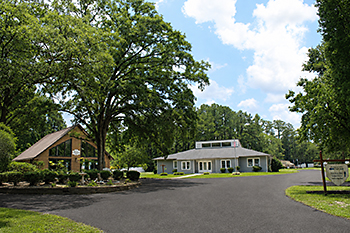
Visitors can see a side of Myrover-Reese that is easy to miss from the road: wooded acreage, a nature trail, a greenhouse and places designed to make reflection and healthy routines part of daily living. Residents’ rooms and identities will remain private. Recovery requires community, but it also deserves dignity.
“It’s a very serene, beautiful campus,” Reid said.
The peaceful setting serves a serious mission: to provide a safe, supportive and structured environment for people seeking recovery from alcohol and other drugs. The organization operates residential programs for men and women and has the capacity to house 42 people. Its services include 24-hour supervision, substance-use and relapse-prevention education, connections to outpatient treatment, peer-support meetings and help preparing for employment, education, and independent housing.
The work began in 1961, when North Carolina communities had few formal options for people leaving treatment and trying to rebuild their lives. Jimmy Myrover and Pat Reese, two local men in recovery, joined members of Alcoholics Anonymous in establishing what the organization describes as the state’s first halfway house for recovering alcoholics.
“We had no money, just a lot of love and faith,” Reese once said, according to the organization’s history.
Fayetteville answered with food and donations during the home’s fragile first years. The organization took the Myrover-Reese name in 1971 to honor its founders. What began in one house grew into a network rooted in local families, volunteers, and donors. The names carried by its homes reflect those enduring community ties.
“Sixty-five years here in this community is a testimonial to the work that they do,” Reid said.
Today, two men’s homes on the Wilkes Road campus serve veterans and civilians. A women’s program operates in the historic Fellowship Home in the Massey Hill neighborhood. A new women’s residence is being built on the main campus, with completion anticipated by the end of the year, Reid said.
The move will place women closer to shared services and the larger recovery community while creating room to rethink how the existing house can support the next stage of independent living. A grant from the Women’s Giving Circle will help furnish the new home’s kitchen and interior spaces.
Myrover-Reese also works closely with the Department of Veterans Affairs. Veterans can receive case management and referrals for medical and dental care, education, employment, legal needs and housing. Those practical connections matter because sobriety is not sustained by determination alone. A safe address, a job, health care, and trustworthy people can become the scaffolding around a new life.
The greenhouse and Veggies for Vets effort add another layer to that support. Developed with Off-Road Outreach, the project is intended to bring fresh produce, purposeful work, and service together. The anniversary gathering will give guests a closer look at the greenhouse and the campus nature trail.
Community support also comes through the Myrover-Reese Thrift Store at 1336 Clinton Road. Reid said store revenue helps sustain the recovery programs. Shoppers can find furniture, clothing, household goods, books, and other donated merchandise. People can help by shopping, volunteering or donating usable items; the store also offers donation pickup.
The organization welcomes financial gifts and frequently needs toiletries, twin bedding, cleaning supplies, paper products and nonperishable food. Volunteers can also share practical skills, including reading, writing and basic computer instruction.
Those contributions keep open a door that has stood for 65 years. Behind it are people doing the slow, courageous work of rebuilding trust, routines, and hope.
Abduk-Khaliq once walked through that door needing help. Now he has returned to help guide it. His journey gives the anniversary its clearest meaning: Recovery is not the end of a person’s story. Given time, support, and a place to begin again, it can become the chapter from which everything else is written.
For more information, to seek services or to support Myrover-Reese Recovery Homes, visit mrrh.org or call 910-779-1306.