
 How to resolve AdBlock issue?







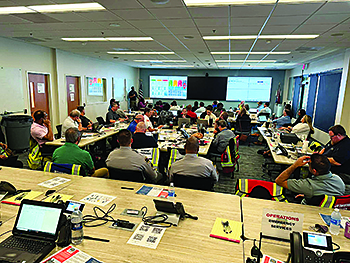
Fayetteville coordinator Laura Smith helps prepare residents, coordinate resources as emergencies unfold and connect neighbors with support during recovery.
Modern technology can warn us before we know what is coming, alert us as danger approaches and help us make sense of what happened afterward. On Oct. 11, my phone gave the warning its familiar soundtrack: beep, beep, beep. A tornado warning.
It can be tempting to check your location, dismiss the alert and think the storm is headed somewhere else. For some Fayetteville residents, that warning marked the beginning of a very different afternoon.
At 12:03 p.m., the National Weather Service confirmed a tornado over Fayetteville. Smith said the initial report described an overturned tractor-trailer near Walmart on Skibo Road. As more reports of damage arrived, the fire chief asked her to join the response. Officials were assessing a damaged hotel roof and what residents and city departments might need.
Would people need another place to stay? Was a shelter needed? Would transit or public safety departments need additional resources? Smith joined the unfolding response to help coordinate those needs and keep city operations moving.
The City of Fayetteville’s Office of Emergency Management prepares for emergencies before they happen, coordinates with departments and outside partners as they unfold, and helps connect residents with support afterward. Its work includes severe weather, hazardous materials incidents, infrastructure failures and technological disruptions.
“The Office of Emergency Management is really about making sure that the city of Fayetteville is prepared for the unexpected,” Smith said.
A road closure or other disruption can affect more than traffic. Smith said a closed major route could disrupt transit service and nearby businesses, so planning includes finding ways to keep residents moving and services operating until a problem is resolved.
At the city, Smith is an “office of one.” Coordination is central to the role. During the storm and its aftermath, she checked in with departments, utilities and partners, including Fayetteville Public Works Commission and Duke Energy, and worked with the National Weather Service to assess the tornado’s path. Volunteer organizations such as Baptist on Mission and Team Rubicon also joined recovery efforts. The goal, Smith said, is to help people return to normal—or “some sense of normalcy”—as quickly as possible.
That work includes planning and practice long before the next storm. Smith works with city and county partners on exercises and after-action reviews, which help teams identify gaps and improve how they work together. Tabletop exercises let staff discuss how they would respond to a scenario; full-scale exercises give responders and partner agencies a chance to practice in the field.
For Smith, the work is personal. She worked in Cumberland County 911 dispatch during Hurricane Matthew and Hurricane Florence. During Florence, she said, she felt “the call” to move into emergency management. After the Oct. 11 tornado, she went into affected areas to talk with residents. Those conversations helped her understand their needs and consider where the City could improve.
Smith said she developed the City’s self-reporting tool to help residents share what they were experiencing. The City’s Office of Emergency Management page links to the form as “Report an impact.” Residents can use it to report nonemergency storm impacts such as property damage, flooding, debris, road obstructions, utility hazards and impacts to City services. The reports help the City build a fuller picture of an incident and where support may be needed. Residents can find the tool at FayettevilleNC.gov/OEM and request progress updates using a tracking number.
After the Oct. 11 tornado, Smith used reports to help route requests to the appropriate City department, county or state resources, or volunteer organizations. The City cannot enter private property to remove trees, she said, but volunteer groups may be able to help cut debris and move it to the roadside. For residents who need hands-on help with fallen trees or yard debris, the City has also directed people to call United Way 211. Emergencies or immediate danger should be reported to 911.
ReadyFay is the City’s preparedness campaign. It offers guidance for emergency plans and supply kits and is separate from the self-reporting tool. Smith recommends a three-day emergency kit for every person in the household, with essentials such as medications, toiletries, clothing and food. Families should plan for pets, check on elderly neighbors, choose an out-of-area contact, agree on a meeting place and practice the plan. Residents can find preparedness information at FayettevilleNC.gov/ReadyFay. Cumberland Alerts, operated by Cumberland County, is a separate system for emergency notifications.
For all the plans, training and checklists, Smith said Fayetteville neighbors “always come together to help their neighbors.” Seeing that response, she added, “restores a little bit of faith in humanity.”
(Photo: Laura Smith participates in a tabletop emergency-management exercise. Photo by Noticed by Nick Photography.)