
 How to resolve AdBlock issue?






 For 44 years, the Fayetteville Dogwood Festival stood as one of our community’s most cherished traditions—an event that brought families together, showcased local talent, and projected Fayetteville’s best self to the region. Its decline did not happen overnight, nor did it happen during the years when the festival was thriving under strong leadership. If one traces the roots of its unraveling, many point to a pivotal moment more than a decade ago—one that set the stage for the festival’s long, painful slide.
A Turning Point: Politics Enters the Picture
According to accounts shared publicly over the years, the festival’s troubles began when then–mayor pro tem, Mitch Colvin, criticized Executive Director Carrie King and the Dogwood Festival Committee for what he described as insufficient racial and ethnic diversity in the festival’s entertainment lineup. Some in the community interpreted these comments as politically strategic, coming at a time when he was positioning himself for a mayoral run.
The festival, however, had long been recognized for its broad appeal and balanced programming. To many residents, the accusation that it was “too white-oriented” did not reflect the reality they experienced. Yet the pressure that followed was unmistakable. City leaders issued an ultimatum: diversify the festival or risk losing more than $100,000 in municipal support.
That moment marked the beginning of a shift—one that many longtime supporters now view as the first crack in the foundation.
The Golden Era: 2006–2018
Before that turning point, the Dogwood Festival was not merely successful—it was exceptional. Under Carrie King’s leadership from 2006 to 2018, the festival reached heights unmatched by any other event in the region.
Between 2006 and 2016, King and a dedicated committee of volunteers transformed the Dogwood Festival into the Gold Standard of Southeastern festivals. In 2008 alone, the International Festivals and Events Association honored the festival with five major awards, including Best Website, Best Press/Media Kit, Best Sponsor Solicitation Package, Best Ad Series, and Best Radio Promotion.
Up & Coming Weekly was proud to play a leading role during that period as a major media sponsor.
A decade of consistent excellence culminated in 2018 when the Southeast Festivals and Events Association named the Dogwood Festival the “Best Event in the Southeast.” That recognition required top performance across all categories—state, regional, and international. Diversity was one of those categories. The festival passed every test.
Fayetteville had a showcase event. A point of pride. A regional draw. A symbol of what this community could accomplish when united.
A Narrative Takes Hold—and Damage Follows
Despite its statewide accolades, the festival became entangled in a narrative emerging from City Hall that painted it as racially imbalanced. That label, many believed unfounded, cast a negative shadow over the popular event and the community. What followed was a series of missteps, leadership gaps, and decisions that weakened the festival’s structure and reputation.
Leadership Miscalculations and Missed Due Diligence
After King’s departure, the organization struggled to regain its footing. A series of executive director hires reflected a lack of due diligence and a misunderstanding of Fayetteville’s unique community landscape:
• 2018: Malia Allen — A history of failed local businesses and no proven event-planning track record.
• Sarahgrace Mitchell — Young, inexperienced, and entering an already fragile situation in a unique and unfamiliar community.
• Jim Long Jr. — Another appointment made without adequate vetting.
• Kaylynn Suarez — Energetic and creative, but facing a damaged brand, rising costs, and misleading and insufficient mentorship.
Suarez has publicly warned that the festival may not survive without increased city support. Rising production costs, many dictated by the city itself, have pushed the organization to the brink. Festival Park rental fees, police and security costs, waste management, and cleanup expenses have all increased substantially. City Support Withers as Other Events Take Priority
The city’s financial commitment to the Dogwood Festival has dwindled dramatically. In 2025, the City of Fayetteville allocated $275,000 for community celebrations under the “Desirable Place to Live, Work and Recreate” initiative. The Dogwood Festival, Fayetteville’s oldest and once most celebrated event, was not included.
Instead, funding went to other events such as Juneteenth, New Year’s Eve, and the Fourth of July—all produced by the Cool Spring Downtown District, which notably did not include the Dogwood Festival among its priorities. The message was unmistakable: the Colvin and the city no longer viewed the Dogwood Festival as essential to Fayetteville’s cultural identity.
The Dogwood Festival was once Fayetteville’s “everyone’s festival”—a unifying event that transcended politics, demographics, and divisions. If the community now prefers multiple niche events over one shared tradition, then perhaps it is time to be honest about that. But the community deserves transparency, not excuses.
Many longtime residents remember when leaders such as Wilson Lacy, Tom Bacote, W.T. Brown, and Floyd Shorter championed the greater good. Their legacy stands in stark contrast to the fractured landscape we see today.
The Hard Truth: Without City Support, Nothing Else Will Hold
Suarez argues that vendors and community support remain strong. Others disagree. But one reality is undeniable: if the City of Fayetteville does not value the festival, neither will sponsors, media partners, or the public.
And if the festival truly draws more than 250,000 visitors and generates up to $20 million in economic impact, it raises a fair question: why would the city, Cool Spring Downtown District and the Fayetteville Convention and Visitors Bureau not want to capitalize on that?
Fayetteville should value and protect this 44-year-old tradition. But doing so requires two things:
1. A city willing to invest in what once made Fayetteville shine.
2. A Dogwood Festival organization with strong leadership, fiscal responsibility, and a clear vision.
An operating budget that has dropped by more than $100,000 is not a sign of a healthy event. It is a warning. The Dogwood Festival can be restored—but only if the city and the organization commit to rebuilding it with honesty, competence, and respect for the community it once served so well.
Thank you for reading Up & Coming Weekly.
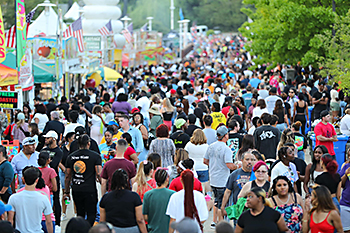
(Top Photo: Crowds gather near Festival Park for the Dogwood Festival. The festival has been a long standing, beloved tradition in the Fayetteville community. Photos courtesy of the Dogwood Festival)