https://www.upandcomingweekly.com/


  •  10On Sunday, March 22, music and nature will come together for a unique family-friendly experience at Cape Fear Botanical Garden. Presented by the Fayetteville Symphony Orchestra, this special afternoon concert invites audiences of all ages to enjoy live orchestral music in the beautiful outdoor setting of the garden while exploring the connection between music and the natural world.
    The event begins at 3 p.m. with a performance by the Fayetteville Symphony Youth Orchestra, showcasing the talents of young local musicians. At 4 p.m., the full Fayetteville Symphony Orchestra will take the stage for a concert inspired by the pastoral tradition in classical music. Throughout the performance, Music Director Stefan Sanders will offer engaging commentary from the stage, helping audiences better understand the music and its connection to nature.
    To further enhance the experience, nature-inspired imagery will be projected on a large screen during the concert. These visuals will complement the music, creating a multi-sensory performance that invites audiences to reflect on the beauty and power of the natural environment.
    The afternoon is designed specifically for families and young music lovers. Interactive activities will begin at 2:30 p.m. before the concert, and resume after the performance until 5:30 p.m. During these times, children can participate in hands-on craft activities led by the education team at Cape Fear Botanical Garden. Kids will also have the opportunity to visit an orchestral “instrument petting zoo,” where musicians will guide them in exploring different instruments. Children will be able to see, touch, and learn about instruments up close, making the world of orchestral music feel accessible and exciting.
    One of the highlights of the day is a special craft activity inspired by the Recycled Orchestra of Cateura, an internationally known ensemble from Paraguay that performs using instruments made from recycled materials. Children will create their own rainmakers using recycled supplies, encouraging creativity while also highlighting the importance of sustainability.
    The handmade rainmakers will become part of the concert experience itself. Young attendees will be invited to use their instruments during a special moment in the performance to help create gentle thunderstorm sounds alongside the orchestra. This playful, immersive element enables children to actively participate in the music while learning how sound reflects the natural world.
    By combining live orchestral music, hands-on learning, and the beauty of a botanical garden, the event offers a welcoming introduction to classical music for families and first-time concertgoers. It also provides the community with an opportunity to gather and experience the arts in an inspiring outdoor setting.
    Tickets are limited and must be purchased online at https://shop.capefearbg.org/SelectEvent.aspx?eventID=1000138. Admission is $25 for adults ($20 for garden members), $12 for college students with a valid ID, and $10 for children ages 12 and under. With engaging activities, beautiful surroundings, and an uplifting musical program, this afternoon promises to be a memorable celebration of music, creativity, and nature.

  • 8The Cumberland County Board of Education voted March 10 to rescind several student reassignment and facility decisions it approved on Feb. 9, reversing course after weeks of criticism from parents, educators, and community leaders.
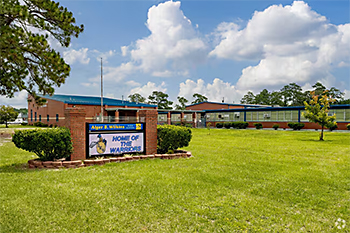
    Board members rescinded votes affecting Ramsey Street High School and Alger B. Wilkins High School, while also approving recommendations to reverse a planned calendar change for E.E. Miller Elementary School and halt the demolition and property transfer of the former Pauline Jones Elementary School campus.
    The decision means E.E. Miller Elementary School will remain on its current year-round calendar rather than transitioning to a traditional schedule before the 2027–28 school year. The board also approved rescinding its decision to demolish the Pauline Jones buildings and transfer the property to Cumberland County. That means the campus will continue to be used by the district.
    Several of the reversals followed recommendations from the board’s Auxiliary Services Committee, which unanimously voted on March 3 to ask the full board to reconsider the February decisions after hearing concerns from parents and community members.
    Outside the board meeting at South View High School, residents, students, and parents gathered holding handmade signs and wearing school pride T-shirts representing several affected campuses. Some students held posters reading “We’re Here to Protect the Nest” and “Byrd Is Not the Alternative.”
    In recent weeks, community members organized meetings and public comment campaigns across the county in response to the district’s proposals to close or consolidate schools, including gatherings in Spring Lake opposing the possible closure of Manchester Elementary School.
    Also March 10, the board approved revisions to the district’s 2026–27 school calendars, including updates to the traditional, year-round and Cumberland Polytechnic High School calendars.
    Board Reverses Ramsey Street Relocation
    In one vote on March 10, the board rescinded its Feb. 9 decision to reassign and rename Ramsey Street High School to the Douglas Byrd Middle North building before the start of the 2026-27 school year.
    Instead, the board approved relocating Ramsey Street High School to the former Pauline Jones Elementary School campus.
    The motion passed 6-3. Board members Jacquelyn Brown, Greg West, Susan Williams, Terra Jordan, Delores Bell, and Jackie Warner voted in favor. Deanna Jones, Judy Musgrave, and Mary Hales voted against the motion.
    Before the vote, Musgrave said she opposed the change based on feedback from the community.
    “Well, the only thing that I say about it is that the teachers, the students, the community—they don’t want that,” Musgrave said. “And so my vote would be a no for that.”
    Alger B. Wilkins Reassignment Revised
    The board also voted 6-3 to rescind its February 9 approval to relocate Alger B. Wilkins High School to available space within Douglas Byrd High School.
    Under the revised plan approved Tuesday, Alger B. Wilkins High School will instead be reassigned to the Douglas Byrd Middle North building.
    Board members Brown, West, Williams, Jordan, Bell, Warner voted in favor with Jones, Musgrave, and Hales opposing.
    Jones said she opposed the move because she does not believe Alger B. Wilkins should be relocated at all, adding that the board had not fully considered the potential impact on students.
    “I don’t think Alger B. Wilkins needs to move at all,” Jones said. “With that special group of kids, they need to be where they’re at. We’re not looking at what the consequences are, including mental health and we always talk about the mental health of the students.”
    Hales also raised concerns about the move, describing the school as a supportive environment for many students.
    “Alger B. Wilkins is a safe haven for a number of our students,” Hales said. “When we talk about our children and their successes, it should include every single student in the Cumberland County school system.”
    Jordan, who supported the revised plan, said she recommended the alternative relocation over concerns that Alger B. Wilkins students would struggle sharing space inside Douglas Byrd High School.
    “I knew they could not go into Douglas Byrd High School and be successful in that building,” Jordan said.
    Moving the program to the Douglas Byrd North building, she said, would allow students to maintain “their own identity” and provide “a safe space for our children to be in.”
    ‘This Decision Is Not About Buildings’
    Several teachers who spoke during public comment—many wearing shirts representing their schools—urged the board to consider the academic and emotional impact of school closings and consolidations on students already facing significant challenges.
    Brianna Grullon, an English teacher at Douglas Byrd High School, said the district should carefully examine the equity implications of combining schools that already serve high concentrations of students of color and economically disadvantaged students.
    “This decision is not about buildings,” Grullon said. “It is about fairness. It is about opportunity.”
    “When schools that are already majority-minority and overwhelmingly economically disadvantaged are combined, the result is deeper concentration and greater isolation,” she added.
    Nicole Rivers, an English teacher at Douglas Byrd High School and a 2021 Sandhills Regional Teacher of the Year finalist, said the proposal would place additional strain on students already facing economic challenges.
    “Our students should not have to carry the weight of a decision that tells them their needs and potential come second to somebody’s budget,” Rivers said.
    “Alger B. Wilkins is not just a school, but a carefully constructed community meant to support students who would otherwise fall through the cracks,” she added.
    Gabriel Stumbaugh, a seventh-grade social studies teacher at Anne Chesnutt Middle School, said closing schools because of aging facilities ignores years of delayed maintenance decisions.
    “I don’t believe this is truly just a funding issue,” Stumbaugh said. “It is a management issue.”
    “If maintenance wasn’t addressed proactively in the past, the solution shouldn’t be closing the school and disrupting the lives of the people who learn and work there every day,” he said.
    Melissa Henecke, a counselor with Cumberland Academy 6-12, the district’s virtual school, urged the board not to relocate the school’s in-person hub to a traditional high school campus.
    “The building is not just an address,” Henecke said. “It is the anchor of our program’s identity and community.”
    “For a virtual school, in-person touch points are everything,” she added. “Many families chose this program specifically because their children struggle in large traditional school environments.”
    Tamika Kelly, president of the North Carolina Association of Educators and a longtime Cumberland County educator, said consolidation decisions can have ripple effects across school communities.
    “These decisions have impacts that are beyond financial,” Kelly said. “They are disruptive.”
    “They are disruptive to the learning journeys of the students, especially those with the most needs,” she added.

    9‘This Is a System Failure’
    Several elected officials and community leaders also addressed the board, raising concerns about the broader impact school closures and relocations could have across Cumberland County.
    Spring Lake Mayor Kia Anthony spoke in opposition to the proposed closure of Manchester Elementary School, calling it part of a pattern of disinvestment affecting the town.
    “This is not a failure of our children, our families, or our community,” Anthony said. “This is a system failure.”
    “Communities do not grow stronger by losing schools,” she added. “Families do not move to towns that keep losing neighborhood schools and calling it progress.”
    Former Cumberland County Commissioner Charles Evans also urged the board to reconsider school closures in what he described as a majority-minority district.
    “Closing public schools in a majority-minority district risks increasing inequity, disrupting learning, and destabilizing communities,” Evans said.
    “Public schools are more than classrooms,” he added. “They are safe spaces, meal providers, meeting centers and sources of pride in many neighborhoods.”
    Rev. Mary Owens, a retired educator and alumna of Anne Chesnutt High School before it became a middle school, spoke about the school’s historical significance.
    “The legacy of Anne Chesnutt High School should not die,” Owens said.
    “When we were there, it was separate, but it was never equal,” she added. “But those teachers gave us the audacity to dream.”
    Board Members Defend Consolidation Effort
    Following the votes, several board members addressed the district’s broader facilities plan and the criticism it has generated in recent weeks. West defended the initiative, saying the district’s recommendations were based on two independent facility studies conducted over three years at a cost of about $1.2 million.
    West also pushed back against claims that the proposals were motivated by race.
    “Race was not used or mentioned in the facility reports, nor should it have been,” West said. “The analysis focused on the age, condition and efficiency of the buildings.”
    West said the goal of the plan is to move students and staff out of aging facilities and into newer learning environments while reducing long-term maintenance costs.
    “No child—regardless of race—should be expected to learn in 1950s-era buildings that require millions of dollars in repairs when better options are available,” West said.
    West said the broader initiative could eliminate more than $31 million in deferred maintenance and generate millions of dollars in annual operating savings that could be reinvested in students and teachers.
    But other board members questioned both the pace and the priorities of the consolidation effort. Jones said the district should focus more attention on academic performance before pursuing major structural changes.
    “We need to be concerned about 27 low-performing schools,” Jones said. “That’s where our focus needs to be.”
    Hales said the district must also consider how past maintenance decisions contributed to the current situation.
    “Our structures were not taken care of down through the years like they should have been,” Hales said. “And the majority of those structures were housing minority students.”
    Hales said the district should focus on supporting students and communities rather than closing schools.
    “We do not need to move these schools,” she said. “We need to be concerned about the success of our children.”
    Musgrave said she believes the board must keep its focus on students and the district’s legal obligation to provide a sound basic education.
    “I want to keep the main thing the main thing,” Musgrave said. “And that’s children first.”
    The next Cumberland County Board of Education meeting is scheduled for April 14.

  • 7Mayor Mitch Colvin highlighted his first 100 days in office in a State of the City address with the current council on March 10. The address emphasized priorities such as economic growth, housing and infrastructure improvements. He noted the importance of positioning Fayetteville to capture economic activity linked to the regional growth of the Triad region and the future I-685 corridor.
    On Mar. 9, the Fayetteville City Council appointed 29 residents to various city boards and commissions, including the Airport Commission and the Fair Housing Board. These volunteer advisors, set to begin their terms on April 1, assist in shaping local policies and programs.
    A significant portion of the meeting involved a disagreement regarding the regulation of data centers. Council Member Shaun McMillan and Mayor Mitch Colvin sparred over whether the council or the City of Fayetteville Planning Commission should lead policy development for the industry. A motion to begin drafting these policies ultimately failed due to a lack of a second.
    The council formally adopted both the 2026 State and Federal action plans. These documents outline the city’s advocacy priorities for lawmakers and focuses on infrastructure, economic development, public safety and veteran support.
    At the launch of the new public forum format intended to increase resident engagement, two individuals spoke during the inaugural session. If you would like to sign up for public comment at the Fayetteville City Council meetings, sign-ups may be completed in person with the City Clerk at City Hall, 433 Hay Street, by phone at 910-433-1992, by email at PublicComments@fayettevillenc.gov or by using the online form at FayettevilleNC.gov/Clerk. 
     
    Cumberland County
    On Mar. 12, the Cumberland County Board of Commissioners heard an update on planned community information sessions related to the proposed East Central and Cedar Creek Water Districts.
    The County is looking to create two new water and sewer districts in order to be eligible for grants and low-interest loans to fund engineering reports. The proposed districts are located between the Sampson County boundary and NC Highway 210 and the Cedar Creek Water and Sewer District. Both districts have been affected by “contaminated private wells linked to PFAS from the Fayetteville Works site, creating ongoing health and safety concerns for impacted property owners,” according to county officials. In January, the board directed staff to create sessions to provide residents with additional details and answer questions about the proposed districts. The first public information session will be held on Mar. 31 at 6 p.m. at Stedman Elementary School.
    The board also reviewed and unanimously adopted the fiscal year audit for the period ending June 30, 2025, following a presentation by Cherry Bekaert, LLP.  
    Following a review of planning and inspections services provided to eight municipalities including Hope Mills and Spring Lake, through an interlocal agreement, the County Manager was directed to develop a framework for baseline and enhanced service levels within 60 days. 
    The interlocal agreement, first established in 1976, helps ensure coordinated, comprehensive planning across Cumberland County and its participating municipalities through a unified approach. The Cumberland County Joint Planning Board is the administrative body authorized by the interlocal agreement to manage land use and development. The board has the final approval of plat variance waiver requests in the County and also reviews, holds hearings and approves or makes recommendations on area studies, future land use plans, transportation improvement projects, zoning matters and most land use issues throughout the County.
    The board removed the proposed data center ordinance from the meeting agenda. This topic will be revisited following a scheduled public forum on Monday, March 23 at 6:30 p.m. to address community concerns regarding utility and environmental impacts. The meeting will take place in Room 118 of the Judge E. Maurice Braswell Cumberland County Courthouse, and the public is encouraged to attend.
    Also, the board unanimously approved a request from the Cape Fear Regional Theatre for $3.5 million in capital expansion funding. which will be distributed over a four-year period. The funding supports the expansion of the facility at 1209 Hay Street, including two new studio classrooms to support youth programs, space for community events and a second stage for live music and other initiatives.
     
    About the Greater Fayetteville Chamber
    Advocacy is a cornerstone of the Greater Fayetteville Chamber. Every week, the Chamber dedicates staff to attend City of Fayetteville and Cumberland County meetings as well as monitoring updates on the state and federal levels. We monitor legislation locally, statewide and federally to protect our community’s business interests. With 91% of U.S. adults recognizing a Chamber of Commerce's impact on growth, membership ensures a strong voice shaping policies, driving economic success and building a thriving business community—together. To learn more, visit www.faybiz.com or email jmclaughlin@faybiz.com. 
     
    (Photo: Mayor Mitch Colvin speaks during the State of the City Address held on March 10. Photo courtesy of the City of Fayetteville, NC Government's Facebook page)
  • 6Hello to both my readers, I’m back. Once upon a time, I thought I was immune to gravity. My intimations of immortality were in error. Allow me to explain. Becoming calendar enhanced and retired, vacant time ensues. Nature abhors a vacuum. In place of work, Nature provides visits to medical specialists where there were none before. For several years, I made an annual Autumn visit to the local friendly cardiologist. He would listen to my heart, frown, and tell me my heart murmur is getting louder. Eventually, the day would come when he said it was time to engage the services of a heart surgeon. Last October, I reached that time and place. It was show time at the Cardiac Corral.
    He referred me to Duke Medical Center. (Author’s note- Duke Medical Center is outstanding and shall always be spelled correctly. Dook basketball is puke and shall never be spelled correctly.) For those of you who have not enjoyed heart surgery or are squeamish, consider stopping reading at this point. For post-op cardiac patients, if you know, you know. Actually, no one should read the rest of this story.
    The journey to open heart surgery begins with a call from Duke Cardiology. The next step is a visit to a Cardiologist to enjoy a heart catheterization. Initially, the diagnosis was a need for a relatively simple aortic valve replacement. This might be doable by stenting tonight on the old cardiac campground. The cardiac cath, as the pros call it, would determine if stenting was the answer. To get the cath, you lie on a table surrounded by ominous machines. Then a total stranger shaves your naughty bits. The staff is very professional; they neither pointed nor laughed as I lay there exposed to the world. After some pretty good drugs, you don’t mind the exposure. They played rock music during the procedure, ending with “A Horse with No Name.”
    Unfortunately, the cath found that in addition to the faulty valve, I had one completely blocked artery and a partial blockage of another. Welcome to the wonderful world of open-heart surgery. I asked why I was still alive with a blocked artery. Turns out the heart is pretty smart. It developed smaller arteries called collaterals detouring around the blockage. Got to love collaterals. Ask not what your collaterals can do for you. Ask what you can do for your collaterals.
    Surgery set for late January, which was postponed due to the Blizzard of ’26. Fun fact: Coronary Artery Bypass Surgery is medically abbreviated as CABG and pronounced like leafy green “Cabbage.” I checked into Duke on Super Bowl Sunday, the night before surgery, for some pre-op stuff, including yet another full-body shave. Once you take off your clothes to wear the hospital gown, your dignity is gone with the wind. Strangers poke and prod you. Always be nice to anyone nearing you with sharp metal objects. While we watched the Super Bowl halftime show starring Bad Bunny, I collected a harem of nurses who wanted to see Mr. Bunny perform. I was the Prom King of Floor Six for a bright shining moment.
    Surgery Day dawned before the sun came up. Got wheeled into the operating room with even more intimidating equipment surrounded by masked people. I asked them to remember to count the sponges before the Spicy WD-40 happy juice sent me into LaLa Land. When I awoke, it was a day later. I had more tubes coming out of me than an octopus has right arms. Tubes hooked up to a bunch of boxes the size of car batteries, where spooky, angry-looking fluids were draining out of my body.
    The surgery had gone well. My faulty valve had been replaced by a donated cow valve. My possible 2 CABG job had been cut back to only one bypass on closer examination. The most challenging in-patient part of the recovery was living with all these tubes inside me. They kept bumping on internal parts unused to being bumped. It was an uncomfortable tubular experience lasting about a week. When the drainage stopped sufficiently, they released me to go back into the wild on Saturday. There is a certain amount of fatigue inherent after open-heart surgery. The fatigue remains in place but seems to be fading. Much to the relief of anyone within earshot, I was unable to get out more than a few words before descending into a coughing fit. After a post op visit to Duke in which a Roto Rooter drained some chest fluid away, the coughing subsided.
    My wife Lani never left my side the entire week. She is my hero. She sorts out all my exciting new pills for me. I would not be able to sort them due to post op fuzziness. Curiously, due to my new cow heart valve, I have developed an overwhelming desire to eat lawn grass. Fescue is very delicious.

  • 4For decades, Wes and Sandy Cookman were the dynamic couple behind Fayetteville’s local WIDU Radio Station. Together, they transformed the station from a single business entity into a vital communications network serving the citizens of Cumberland, Robeson, and Scotland counties.
    As pioneering broadcasters, they understood that community media—especially radio—was about far more than music and news. It was about building relationships, strengthening connections, and giving people a trusted voice. Side by side, Sandy and Wes used their talents and media platforms to amplify local stories, celebrate culture, support charitable causes, and keep their communities informed through both joyful and challenging times.
    Their insight and leadership helped shape WIDU into one of the region’s most trusted media voices.
    On March 4, Wes lost his partner and the love of his life. In losing Sandy, he lost not only a beloved companion but also the visionary partner who helped turn their shared dreams into reality.
    Together, they grew their Fayetteville based station from a single daytime AM signal into a 24 hour regional Gospel network serving Fayetteville, Lumberton, Laurinburg, and Red Springs. Sandy’s creativity and determination also inspired Wes to build a social media presence that now reaches more than 20,000 followers—an expansion that greatly increased the station’s reach and impact.
    Sandra “Sandy” Cookman was a remarkable woman whose voice and leadership shaped the Fayetteville/Cumberland County community. A dedicated radio professional, she believed deeply in the power of local media to inform, uplift, and unite people. She championed local stories, supported community initiatives, and opened doors for countless voices to be heard.
    Her media philosophy and community values closely mirrored those of Up & Coming Weekly. And like us, she weathered recessions, the COVID 19 pandemic, and the constant evolution of media technology. Through it all, her dedication—to her husband, her work, and her community—never wavered.
    Sandy was known for her generosity, mentorship, and unwavering belief in people. Her life was defined by service, leadership, and a genuine love for the community she served. Her influence will continue to inspire all of us to lead with kindness, purpose, and heart.
    While her signal may have faded from the airwaves, her legacy will remain strong in the hearts of the community she helped unite. Our community and the world need more Sandy Cookmans. She will be deeply missed.
    Thank you for reading Up & Coming Weekly.

    (Photo: Sandra "Sandy" Coleman helped to shape local radio and so much more in the community. Photo by Troy Williams)


  • AnneOfGreenGables Website scaledGilbert Theater’s first Play House production, Anne of Green Gables, hits the stage this weekend, Saturday, March 14, and Sunday, March 15. Although only running for two days, theater goers will have three opportunities to catch the show with two showtimes on Saturday at 3 p.m. and 7 p.m. The final show will be on Sunday at 3 p.m. Tickets can be purchased online at https://ci.ovationtix.com/36002/production/1262357.
    Anne of Green Gables is a literary classic that has been transformed for the big screen and the stage in many forms. Each adaptation has its own unique take on the beloved story that follows an adventurous young orphan girl who finds her new home unexpectedly with two aging siblings on their estate, Green Gables, on Prince Edward Island. From the moment of her arrival, everything about Anne shakes up the lives of those at Green Gables. An enduring story of healing, friendship, misadventures, and love, Anne of Green Gables is a must-see for audiences of all ages. And “all- ages” perfectly describes the cast of this Play House production. As a community theater, the Gilbert Theater has always supported young thespians through educational programs and opportunities on and off the stage. Play House is an extension and expansion of that, bringing young, budding actors, aged 12- 18 years old, and seasoned actors together to share the stage for a limited production. The program is built to nurture young actors in the community by working with professionally trained actors and those who have commanded the stage for decades. The cast of Anne of Green Gables includes a vibrant cast of highly talented, “low-key” funny and brilliant young actors who have taken this experience by the horns and are ready to show audiences that they will be the next headliners.
    Connor Graybill “Gilbert Blythe” is no stranger to the stage, having 4 productions under their belt, two of which were with the Gilbert Theater. Graybill was excited about auditioning for Gilbert, saying, “I auditioned for my character because I think he’s pretty funny. I genuinely like his character.”
    While art is Graybill’s first passion, time at the Gilbert and other theaters has made it very much a “side passion” worth pursuing. Cecilia Finley “Diana Barry,” a well-known, “experienced actress,” is gracing the Gilbert stage for the first time in this production. Although young, she has headlined several major roles in the local theater community. Her on- and offstage presence will surely ensure her longevity in her future acting endeavors. Finely has found her sweet spot in theater. “I wanted to be a farmer… and then one day I took a theater class, and I absolutely loved it. And I just kept doing theater. My first main stage production was The Wizard of Oz at CFRT… That was the first role that actually spoke to me, and {I] was like, ‘You need to do theater!’” Finely explained.
    Callie Tisdale, “Anne Shirley,” is bringing her multi-state stage experience to the Gilbert stage for the second time in her early career. Taking on the main character, she is excited to show her range on stage and bring this story to life for audiences. The theater is not new to Tisdale. She’s been behind the stage with her mother since she was small, and it’s certainly left a lasting impression.

    “It wasn’t until I auditioned for my first ever professional show, and got it. A lot of it is acting, but a lot of it is also just the community that comes along with doing shows. After that, it was really
    no question for me about what I was going to do.” Liam Donovan “Matthew Cuthbert” is a dynamic, formally trained actor hailing from New Hampshire. A graduate of the American Musical and Dramatic Academy, he has been a great mentor for the kids during this production, especially for those thinking about pursuing an education in the arts.
    Bringing her directorial chops and teacher sensibilities to the production is Marie Lowe, and rounding out the cast is an amazing group of individuals with years of combined experience and shows under their belt.
    Cate Callahan “Marilla Cuthbert”
    Beth Bowen “Rachel Lynde”
    Jemima Castor “Mrs. Spencer”
    Inez Potts “Mrs. Blewett and Miss Stacy”
    Amberlyn Bullock “Mrs. Barry”
    Annika Johnson “Miss Harris”

  • When most people picture healthcare careers, they imagine busy emergency rooms, operating suites, or primary care offices. But an exciting and fast-growing field is transforming lives overnight by focusing on one of the body’s most powerful performance boosters: sleep. Polysomnography, commonly known as sleep technology, gives professionals the opportunity to help patients wake up more rested, more productive, and more energetic, while also catching hidden health risks that often go unnoticed during the day.
    In December 2025, Fayetteville Technical Community College celebrated a major milestone when it graduated its first cohort of students from the Polysomnography program, launching new careers in this dynamic, high-impact specialty. These graduates are now prepared to step into sleep labs and diagnostic centers where every shift offers a mix of advanced technology, direct patient care, and the satisfaction of knowing their work can prevent serious health problems tied to poor sleep. With National Sleep Awareness Week, March 8 through 14, it is the perfect time to talk about FTCC’s Polysomnography program.
    Turning Sleep into a Superpower
    Sleep technologists are healthcare professionals who typically work overnight in hospital-based, physician-office-based, or independent diagnostic sleep testing facilities, where they monitor patients while they sleep to identify disorders such as sleep apnea, narcolepsy, and movement disorders. Far from simply “watching people sleep,” they guide patients through the process, apply sensors, ensure safety and comfort, and collect critical data that physicians use to diagnose conditions that may be draining a patient’s energy or threatening long-term health.
    Poor or fragmented sleep is more than an inconvenience; chronic sleep problems are linked to heart disease, stroke, diabetes, depression, and an increased risk of workplace and motor vehicle accidents, which means early detection can change, and even save, lives. Sleep technologists also support therapies such as positive airway pressure that help patients breathe more easily and sleep more deeply, often restoring the energy they thought they had lost for good. “Patients often tell us it’s the first time in years they’ve felt rested,” one FTCC graduate shared. “Knowing I played a role in that is incredibly rewarding.”
    Inside FTCC’s Polysomnography Program
    At Fayetteville Technical Community College, the Polysomnography program prepares students for this in-demand career through a blend of classroom instruction, hands-on laboratory training, and real-world clinical experience. Students learn how the body functions during sleep, how sleep disorders impact cardiovascular, respiratory, and mental health, and how to use sophisticated equipment to record brain waves, breathing patterns, heart rhythms, and muscle activity throughout the night.
    The program emphasizes professionalism, communication, and problem-solving, so graduates are ready to reassure anxious patients, troubleshoot technology in real time, and work as part of a collaborative healthcare team. Enrollment is accessible, and program completers are eligible to sit for national credentialing exams, including the Registered Polysomnographic Technologist (RPSGT) exam, positioning them for immediate entry into the workforce. Alumni already work in hospitals, independent sleep centers, and specialty clinics across the region and beyond. “This program opened doors I didn’t even know existed,” another graduate noted. “It gave me a career where I truly help people every night.”
    A Great Fit for Career-Changers and Military-Connected Students
    Polysomnography is an appealing path for individuals transitioning from other fields or military service, especially those who enjoy technology, structured environments, and mission-focused work. Many veterans appreciate the balance of technical skills and patient interaction, while the overnight schedule can be ideal for students balancing family responsibilities or continuing their education during the day. The work environment is often calm but focused, and every shift offers a mix of science, problem-solving, and patient interaction that keeps the role engaging.
    Because sleep technologists help uncover conditions that might otherwise go undiagnosed, such as sleep apnea that contributes to high blood pressure or cardiac strain, they often serve as a crucial link in a patient’s overall care plan. For many professionals, the reward comes from knowing that a single night’s study can lead to years of healthier, more energized days for their patients.
    Strong Demand and Bright Job Outlook
    Job outlook and earning potential for trained sleep technologists remain strong, with credentialed professionals commonly earning between about 55,000 and 75,000 dollars annually, depending on experience, region, and work setting. Broader national data on polysomnographic technologists and related health technologist roles show projected growth in the coming years, reflecting the increasing recognition of sleep as a vital component of preventive healthcare. One analysis estimates a 23.2 percent increase in jobs for polysomnographic technologists over a recent ten-year period, underscoring growing demand for professionals who can conduct and interpret sleep studies.
    Educators and program directors nationwide report a large unmet need for qualified sleep technologists and anticipate rising educational standards as sleep centers incorporate more advanced diagnostic and therapeutic technologies. For FTCC graduates, that translates into strong job prospects, pathways to specialization and leadership, and opportunities to advance alongside an evolving field that blends innovation with direct patient impact.
    For more information on FTCC’s Polysomnography program and how to enroll, call 910-486-3685 or email coveyeld@faytechcc.edu.
    For students, career-changers, and military-connected individuals seeking a healthcare profession that combines science, technology, and purpose, FTCC’s Polysomnography program offers a fun, meaningful way to help people wake up to healthier, more energetic lives, one night at a time.

  • 19History tends to highlight an individual. We remember the leader, quote the founder, hail the visionary whose name becomes attached to some great movement. But when you zoom out, you’ll discover that’s rarely how the work actually happened. Most lasting movements aren’t built by individuals. They’re built by partnerships.
    Take the early Christian movement. The name most people recognize is Paul the Apostle. His missionary journeys across the Roman world are well known. But Paul wasn’t a lone operator traveling from city to city with a message and nothing else.
    He had partners.
    I became intrigued by the seemingly insignificant mentions of Aquila and Priscilla—a husband-and-wife team who worked alongside Paul. They were tentmakers by trade. Business people. The kind of people you might pass on the street without realizing how much influence they carry.
    They had been forced out of Rome and eventually landed in Corinth, where they met Paul. What started as a shared trade soon became something deeper. They worked together. Traveled together. Taught together. Their home became a place where believers gathered, learned, and encouraged one another.
    They weren’t the headline speakers. They weren’t writing letters that would eventually become Scripture. But the movement would have been weaker without them.
    In fact, one of the most telling moments in their story happened when a gifted teacher named Apollos arrived in town. He had passion and ability, but his understanding wasn’t complete. Aquila and Priscilla quietly took him aside and helped him grasp the message more fully.
    No spotlight. No applause. Just partnership.
    That pattern shows up everywhere if you start looking for it. Strong communities. Effective nonprofits. Successful local initiatives. They all share something in common: people who decide not to carry the work alone.
    Some bring leadership. Some bring practical skills. Some open their homes.
    Some encourage when others are ready to quit. Together, they move something forward that none of them could accomplish alone. We live in a time that celebrates individual success. Personal brands. Lone visionaries. But history tells a different story.
    The work that lasts—the work that really changes lives—is usually carried by people who link arms and move forward together. Not alone. But in partnership.
    Want the community to grow stronger? Stop asking, “What can I accomplish?” and start asking,
    “Who can we accomplish this with?” Look around your neighborhood. Your church. Your workplace. This city. There are people nearby with wisdom, experience, and energy who are just waiting for someone to invite them into something meaningful.
    The next great chapter of your community probably won’t begin with a single leader stepping forward. It will begin when a few people decide to walk forward together.

  • 18The Bradshaw Performing Arts Center in Pinehurst will welcome an international music icon when singer Sheena Easton performs live for audiences in the Sandhills. The concert on March 20 will take place at the venue located at 3395 Airport Rd., and is expected to draw fans from across the region for a night of classic pop hits and celebrated vocals. Tickets can be found at https://www.sandhillsbpac.com/. The concert begins at 7 p.m.
    Dedicated in 2019, the Bradshaw Performing Arts Center has quickly established itself as one of the most modern arts venues in the Sandhills.
    The center has become a cultural destination for residents and visitors alike. More than 80,000 people attend events at the facility each year, representing audiences from all 50 states.
    Easton’s upcoming appearance adds another major performer to the venue’s growing lineup of national and international acts. Concert organizers say the performance will offer audiences a rare opportunity to experience a globally recognized recording artist in a more intimate theater setting.
    Fans attending the concert can expect an evening filled with some of Easton’s most recognizable songs. Her catalog includes a wide range of pop and adult contemporary hits that have remained staples on radio playlists for decades. Songs such as Morning Train Nine to Five, For Your Eyes Only, Strut, Telefone Long Distance Love Affair and Almost Over You helped define the sound of 1980s pop music and continue to resonate with longtime listeners.
    The performance reflects the Bradshaw Performing Arts Center’s mission to bring diverse entertainment experiences to the Sandhills region. By presenting artists with international recognition alongside regional performers and educational programming, the venue has positioned itself as a key contributor to the cultural life of Moore County.
    Easton’s career spans more than four decades and includes major accomplishments in music, film and theater. She first gained widespread attention in the early 1980s after appearing on the British television program The Big Time, which documented her rise from music student to professional recording artist.
    Her debut success came quickly. Morning Train Nine to Five reached the top of the Billboard Hot 100 chart and introduced Easton to a global audience. Over time, she built a catalog that crossed multiple genres, including pop, R & B and adult contemporary music.
    Easton has sold more than 20 million records worldwide during her career. She achieved the rare distinction of placing songs on five major Billboard charts simultaneously, reflecting her wide appeal across different audiences and musical styles.
    Her recording For Your Eyes Only, the theme song for the James Bond film of the same name, became one of her signature performances and earned an Academy Award nomination for Best Original Song. The track demonstrated her ability to combine pop vocals with dramatic orchestral arrangements.
    Easton is also a two-time Grammy Award winner. She received the Grammy Award for Best New Artist in 1981 during the early stage of her career. Later, she earned another Grammy for the hit duet U Got the Lookwith Prince, a collaboration that blended pop and funk and became a major international success.
    In addition to her recording achievements, Easton has built an impressive career on the stage. She has appeared in Broadway productions, including Grease and Man of La Mancha and performed in London’s West End in the musical 42nd Street. She has also toured internationally and performed with symphony orchestras, continuing to showcase her vocal range and stage presence.
    With decades of hits and an enduring reputation as a powerful live performer, Easton remains one of pop music’s most recognizable voices. Her upcoming appearance in Pinehurst offers Sandhills audiences the chance to experience a celebrated performer whose music has reached listeners around the world.

  • 17The 2026 CROP Hunger Walk is fast approaching. A fun, family-friendly event dedicated to eliminating hunger locally and internationally, the Hunger Walk is hitting a milestone this year, 35 years of Ending Hunger One Step At A Time. CROP Hunger Walk is a national walk, with 100% of the proceeds going directly to Fayetteville Urban Ministry and World Church to combat food insecurity. This year’s walk will take place on Sunday, March 22 at First Baptist Church on Anderson Street (parking available on Maiden Lane). Team meetup and sign-in start at 2 p.m., and the walk will begin at 3 p.m.
    There is still time to create a team or walk solo. There is no registration fee; this is a donation-only walk. To pre-register, visit https://events.crophungerwalk.org/chweams?event=cumberlandcountync
    Same-day registration and donation will be available at the meetup. Pets are welcome, but owners are solely responsible for cleaning up after them. Although called a walk, participants can walk or run; this is a set-your-own-pace event.
    The CROP Hunger Walk is a national event, with walks all across the country, serving different communities, all with the purpose of eliminating hunger around the world. It was created to support Church World Service, an international organization focused on food security in high-risk areas around the world.
    The CROP Hunger Walk was founded to help support that mission while filling the need in the United States. When it first started in 1947, it asked farmers to donate a portion of their crops to postwar Europe and Asia to help feed neighbors who had been ravaged by the war. Over time, it became the event it is today, with the first walks occurring in Bismarck, North Dakota and York, Pennsylvania. There are now hundreds of walks all over the country. CROP Hunger Walk is far more than just a walk. It’s a fundraiser within a fundraiser. Once a team is signed up, they will receive an individual CROP Hunger Walk page, where people can donate to their team. These funds go directly to the local and international mission. Cumberland County CROP Hunger Walk is a joint effort of community volunteers, Haymount Street United Methodist Church and First Baptist Church-Anderson. Together, these organizations and the passionate people who run them make it possible to host this event.
    According to Feeding America, 1 in 7 adult North Carolinians and 1 in 5 North Carolinian children face hunger. At last check, there were over one million North Carolinians facing hunger. In homes that receive help from the Supplemental Nutrition Assistance Program, 38% have children. Hunger doesn’t just affect adults; it’s generational. With the rising cost of food, housing, and basic goods, the numbers are expected to rise. For more information on hunger in North Carolina and nationwide, visit Feeding America. Everyone can make a difference. Everyone can give in some way. To learn more about CROP Hunger Walk and Church World Service, visit https://events.crophungerwalk.org/chw/event/cumberlandcountync.

    (Photo courtesy of the CROP Hunger Walk Fayetteville NC-Cumberland County's Facebook page)

  • 15Roller derby fans in the Sandhills will have a full evening of action when Fayetteville Roller Derby hosts a double header event featuring regional competition and a community mixer. The event will bring together athletes, supporters, and families for two bouts that highlight the growing popularity of the sport in North Carolina.
    The first game begins at 5 p.m. at Crown Complex Exposition Center at 1960 Coliseum Dr. on March 21, with the Fayetteville Roller Derby Rogue All Stars facing the Appalachian Boonshiners. The matchup pits the Fayetteville league’s top competitive team against a well-known opponent from the Appalachian region, creating a contest that organizers expect to draw both local fans and traveling supporters.
    Following the opening bout, the evening will continue at 7 p.m. with the Flamin' Frenzy Mixer, a second game designed to showcase skaters from multiple teams in a collaborative format. Mixer bouts typically allow athletes from different leagues to compete together, creating a fast-paced and unpredictable event that emphasizes community connection within the roller derby world.
    Tickets purchased for the event will grant admission to both games. Organizers say the double header format is intended to offer fans a full evening of entertainment while introducing newcomers to the sport’s competitive and social elements. Children ages seven and under will be admitted free of charge, making the event accessible for families interested in experiencing roller derby for the first time.
    Public ticket sales opened Feb. 3 at 3 p.m., with organizers encouraging residents to attend and support local athletes. Tickets can be purchased at https://bit.ly/4rgfcIP
    Beyond the competition on the track, the event also serves as a fundraising and outreach opportunity for the Fayetteville Roller Derby league. League organizers are inviting businesses and community groups to participate as sponsors, emphasizing the role that local partnerships play in sustaining amateur sports organizations.
    League representatives say sponsorship support helps cover operational expenses such as practice space, travel costs, equipment, and event production. In return, participating organizations receive visibility within the community and association with a growing athletic program known for teamwork, discipline, and resilience.
    Fayetteville Roller Derby is recognized as the premier Women’s Flat Track Derby Association league in Fayetteville. WFTDA is the international governing body for women’s flat track roller derby, setting rules, rankings, and competition standards for leagues across the world. Membership within the association places the Fayetteville team within a network of competitive leagues that includes teams throughout the United States and internationally.
    Roller derby has a long and distinctive history in American sports culture. According to the Smithsonian Center for Folklife and Cultural Heritage, the sport began in the United States during the 1930s when promoter Leo Seltzer organized endurance skating competitions that simulated cross country races on roller skates. Early events involved teams skating long distances around a track over multiple days, combining athletic competition with spectacle.
    By the late 1930s and 1940s, the sport evolved into a contact team game where skaters raced around an oval track while attempting to pass opposing players. The new format introduced physical blocking, strategy, and clearly defined scoring roles. Roller derby quickly became a popular spectator sport and gained national attention through touring teams and radio broadcasts.
    Television exposure during the mid-twentieth century helped expand the sport’s audience. Matches were broadcast in several major markets and star skaters developed dedicated fan bases. However, roller derby experienced periods of decline in the late twentieth century as television interest shifted and several professional leagues dissolved.
    The modern revival of roller derby began in the early 2000s when grassroots leagues started forming across the United States. These leagues emphasized community organization, athletic competition, and skater-driven governance. The creation of the Women’s Flat Track Derby Association helped standardize rules and provide a global structure for competition.
    Today, roller derby leagues operate in hundreds of cities worldwide. The sport continues to emphasize athleticism, strategy, and strong community culture. Many leagues are run entirely by volunteers and skaters who manage everything from training programs to event promotion.
    Fayetteville Roller Derby is part of that modern movement, providing local athletes with a competitive outlet while building a network of supporters and volunteers across the region.
    Organizers say events such as the upcoming double header highlight the league’s mission to promote sportsmanship, resilience, and community pride. By bringing together skaters, fans, and sponsors, the league hopes to strengthen both the sport and its local impact. The league currently has events booked out until October of this year, with more to be announced.
    With two games scheduled and a welcoming environment for new spectators, the upcoming event is expected to showcase the intensity and teamwork that have helped roller derby remain a unique and enduring part of American sports culture.

    (Photo courtesy of Fayetteville Roller Derby Rogue All Stars)

  • 12On March 20, the Fayetteville Symphony Orchestra will raise a glass, strike up the band, and gather the community for an unforgettable evening honoring Maestro Stefan Sanders. After nine transformative seasons as Music Director, Sanders will be honored at a vibrant cocktail-style celebration at Studio 215 in downtown Fayetteville. The evening promises live jazz, heavy hors d’oeuvres, heartfelt tributes, and a major announcement about the orchestra’s future.
    Set for 7 p.m. at Studio 215, 215 Williams Street, the event is designed not as a formal concert, but as a joyful, stylish gathering — an opportunity for patrons, musicians, board members, and friends of the Symphony to mingle, reminisce, and celebrate a remarkable chapter in the orchestra’s history. It will be, as organizers describe it, “a celebration of the past… and a reveal of the future.”
    A Vision That Grew With the Community
    When Stefan Sanders first arrived in Fayetteville nine years ago, his focus was clear but evolving.
    “When I first became Music Director for the Fayetteville Symphony, I didn’t really know the community that well,” Sanders reflected. “Initially, I focused on the things I knew about: music, the orchestra, and audiences. I knew we had a very capable and flexible ensemble that could play pretty much anything.”
    As he became more familiar with Cumberland County and the surrounding region, that focus expanded. “I soon realized that my vision for the orchestra needed to become one of expanding awareness of the FSO in Cumberland County and the broader region.”
    Under his leadership, the orchestra not only elevated its artistic standards but also broadened its reach, performing in venues across the region and meeting audiences where they are. The Symphony began appearing in spaces previously off its radar, introducing orchestral music to new listeners and strengthening its ties to the community.
    Raising the Artistic Bar
    Sanders’ tenure was marked by artistic growth and bold programming choices. He oversaw the hiring of numerous musicians and staff members, raising the bar for the entire organization.
    “It is always very inspiring and exciting when a new musician joins the orchestra, and at their first rehearsal everyone notices a beautiful new ‘sound’ in the group,” Sanders said. “We have also expanded the orchestra’s repertoire to include several works by traditionally underrepresented composers and guest artists, most of which audiences have very much enjoyed.”
    The results were evident on stage. Performances grew increasingly polished and dynamic, blending beloved masterworks with contemporary voices and diverse perspectives. The orchestra’s sound matured, and its reputation expanded beyond Fayetteville.
    “I am equally proud of elevating the FSO’s artistic standards as well as expanding the region’s awareness of the FSO as one of North Carolina’s best orchestras,” Sanders said.
    Leadership Beyond the Podium
    Colleagues consistently point not only to Sanders’ musicianship, but to his leadership style and personal warmth.
    Jessica Munch-Dittmar, FSO Executive Director, shared, “Although I’ve only worked with Stefan for a short time, it was immediately clear how deeply he has shaped our orchestra and the wider community. His passion for music is evident in every rehearsal and performance, and his energy and commitment inspire those around him to give their very best. Beyond his artistry, he brings a genuine warmth and dedication that have strengthened our organization in meaningful ways. He will be truly missed, and I wish him every success in his next endeavors.”
    Doug Stephens, FSO Treasurer, echoed that sentiment.
    “Stefan was the right musical director at the right time for the FSO. He took over a quality organization and was able to make it even better. I appreciated Stefan’s ability to connect with our audience and our patrons. Not many conductors of his ability are also so personable. His skills will be missed, and we wish him well, but he leaves the FSO prepared for the next stage of the organization’s development.”
    David Guidi, FSO Board Vice Chair, added, “Stefan’s strong musicianship allows him to channel his passion into crafting a compelling narrative for audiences. His artistry shone through in every performance, and we wish him great success in his next adventure.”
    For Sanders, leadership has been about stepping off the pedestal traditionally associated with conductors.
    “I learned a great deal about leadership and how, as a Music Director, it is critical that we uplift the musicians and staff we work with,” he said. “Music Directors are literally and figuratively placed on a pedestal. I found that by mindfully staying off of that ‘pedestal’, everything became more meaningful for everyone, including me.”
    Symphony On Tap and Community Connection
    One of Sanders’ most innovative contributions was helping to develop the Symphony On Tap Series — small ensembles performing in local breweries and social hubs. The initiative brought classical music into casual, welcoming environments, attracting first-time listeners.
    “We saw the Symphony On Tap series translate from first-time ticket buyer to subscriber to major donor,” Sanders explained. “I hope this series, or something like it, will continue. While Symphony On Tap has done much to broaden awareness, this work is still necessary and vital to fulfilling the FSO’s mission of Educating, Entertaining, and Inspiring the people in our community.”
    The program became a model for how orchestras can remain relevant and accessible in the 21st century — blending artistry with approachability.
    A Community Relationship
    Sanders describes his relationship with Fayetteville as mutually enriching.
    “Mostly positively,” he said when asked how the community shaped his experience. “The community met me where they were and where I was, and we have had a great relationship. I learned a lot and enjoyed the process. I hope they did too!”
    After nine seasons, what will he miss most?
    “The people! Over the past nine seasons, I’ve been fortunate to work with some incredible people, several of whom I consider to be friends.”
    What’s Next
    While this farewell marks the end of one chapter, Sanders’ career continues to flourish. During his time in Fayetteville, he also served as Music Director of the Central Texas Philharmonic in Austin, Texas, an orchestra that has experienced significant growth in recent years.
    “Last Spring I felt that it was time to invest more fully in the growth taking place at CTP and move to Texas,” Sanders said.
    His upcoming season includes guest conducting appearances with the Colorado Symphony and the Virginia Symphony, as well as teaching at a summer music festival in Kraków, Poland.
    It is a testament to his artistry that his influence extends nationally and internationally — yet Fayetteville remains a defining part of his journey.
    A Reveal of the Future
    As much as the evening will honor Sanders’ legacy, it will also turn the spotlight toward what lies ahead. During the celebration, the Symphony will reveal its Music Director Candidates for the 2026–2027 season — a pivotal moment signaling the launch of an exciting new era.
    Attendees will be among the first to hear what’s next for the orchestra, reinforcing the sense that this is not simply a farewell, but a transition filled with promise.
    When asked how he hopes Fayetteville audiences will remember his time here, Sanders answered with characteristic humility.
    “First of all, I sincerely hope that there are more people aware of and engaging with the FSO today than when I started. And I hope each of them remembers the genuine love for the music and the people involved in it that came off the stage at all of our many performances. Thank you, Fayetteville, for allowing me to share my passion for music and people with you for nine incredible years.”
    On March 20, that passion will be on full display, for one of the last times — not from the podium, but among friends, colleagues, and supporters whose lives and community have been enriched by his leadership. It will be a night filled with gratitude, joy, great music, and the promise of what’s ahead — a fitting tribute to a maestro whose legacy will resonate in Fayetteville for years to come.

    (Photo: Maestro Stefan Sanders will be celebrated by the Fayetteville Symphony Orchestra on March 20. Photos courtesy of Fayetteville Symphony Orchestra)

  • 11bKnown as a vibrant equestrian destination and home of the Carolina International CCI and Horse Trial, the Carolina Horse Park is preparing to demonstrate just how versatile their grounds are. Drawing inspiration from a successful Chili Cook-Off hosted on the grounds years ago, March 14 marks their first annual Friends and Neighbors Day, a dynamic outdoor event featuring a Chili Cook-Off, Dog Agility Demonstration, and People’s Steeplechase 5k & 10K.
    “Over the years, we’ve realized that many of our neighbors may drive past the Carolina Horse Park without ever attending a horse show, and perhaps without truly knowing what happens here,” shared Renee Felter, director of development and philanthropy. “Friends & Neighbors Day was created as a welcoming, non-equestrian event—an open invitation to families, local organizations, and community members who might not otherwise step onto the property.”
    While this year marks the beginning of the evolving tradition, the impact they hope to make is clear. Felter explained that they want relationships to extend beyond competition weekends by introducing people to the park in a relaxed setting.
    “By offering activities that appeal to a broader audience, we aim to ensure the Carolina Horse Park is not only an equestrian venue, but a true community gathering place,” she explained.
    The multi-faceted happenings of the day, though held on grounds typically reserved for equestrian use, will not feature horses.
    “Our grounds provide an ideal footprint for events such as 5k and 10k races, and we are actively building our canine programming, having recently hosted our first canine competition in partnership with the Moore County Kennel Club,” said Felter of their broadening focus. “These experiences reinforced the idea that the Park can successfully serve a broader audience.”
    Friends and neighbors can see this for themselves on March 14 by attending as a spectator or participating in the three featured activities.
    A Cook-Off Ticket buys attendees the opportunity to sample crowd favorite chilis, vote for their top favorite picks, and enjoy a lively day at the Park watching canine and human athletes.
    5k and 10k registrants will “trade the city streets for rolling hills, open fields, and winding paths where horses usually compete,” according to Carolina Horse Park. A challenge even for seasoned runners, the competition features a clearly marked course, an up-close look at the unique equestrian venue, a festive finish near the grandstand, and a free Cook-Off Ticket with race registration. Same-day registration and pickup are available on March 14, from 7:30 a.m. to 8:30 a.m.
    Foodies will love the opportunity to show off their best pot of Chili and sample others’ creations. A Master Chef Entry ticket purchases a chance to place in the top three entries for: People's Choice, Judge's Choice Professionals, Judge's Choice Amateurs, Side Dish and Presentation. Bring your boldest flavors and prepare for friendly competition!
    Canine-lovers can enter their pup in the Dog Agility Demonstration, or observe and cheer on the talented pups from the sidelines. Expect an exciting demonstration of teamwork, speed, and training as the animals race through jumps, tunnels, and weave poles.
    Felter says the future of Friends and Neighbors Day is still developing.
    “In the future, I see the three core elements of Friends & Neighbors Day continuing to grow and evolve. The Chili Cook-Off has the potential to become a highlight for the ever-growing "foodie" community, while our partners in the 5k/10k, Sandhills Run Club, are planning exciting expansions for 2027. The Canine component could also develop into a full agility competition, offering even more opportunities for engagement,” she explained. “Additionally, I envision adding vendor booths to give local businesses a chance to share their stories, services, and products, further strengthening the community connection and making the event even more dynamic and inclusive.”
    For now, Friends and Neighbors Day 2026 will be a chance to get outside, enjoy beautiful scenery, sample top regional food talent, test your athletic skills, and appreciate the grit and enthusiasm of canine and human competitors. According to Felter, it’s all about “celebrating community and creating deeper connections with those around us.”
    Friends and Neighbors Day will be held on March 15 at 9 a.m. at 2814 Montrose Rd, Raeford, NC. Learn more and purchase tickets at carolinahorsepark.com

    (Photo courtesy of Carolina Horse Park)

  • 10The Harlem Globetrotters have long entertained audiences with a distinctive blend of basketball talent, humor and family-oriented performance. As the team marks its 100th anniversary tour, fans in Fayetteville will once again fill the Crown Coliseum at 1960 Coliseum Dr. for an event that has become a long-standing tradition shared by multiple generations in the community.
    The Globetrotters are scheduled to perform at 7 p.m. on March 20 as part of their global centennial tour. The milestone season highlights the long history of a team that has entertained audiences around the world while redefining the possibilities of basketball as performance.
    The continued popularity of the Globetrotters after 100 years is tied to their ability to evolve while preserving the core elements that first made them famous. The team is known for combining legitimate basketball skill with humor and theatrical moments that invite the crowd into the action. Fans attend expecting impressive ball handling, gravity-defying dunks, and playful interactions that make each game feel less like a traditional sporting event and more like a live entertainment experience.
    While professional sports leagues focus on competition and statistics, the Globetrotters emphasize joy and participation. Audience members frequently become part of the show as players engage with fans courtside and throughout the arena.
    Another factor that keeps audiences returning is the constant evolution of the performance. Although the team is rooted in traditions that date back to the 1920s, every tour introduces new routines, ball-handling techniques, and on-court comedy segments. These additions help ensure that longtime fans see something different each time they attend a game.
    The current tour introduces new visual elements and special moments designed to celebrate the centennial season. A highlight includes a special golden basketball created by the sporting goods company Spalding, which adds a symbolic touch to the  anniversary performances. The team also features new pregame activities and expanded opportunities for fans to interact with players after the game.
    The team also carries a legacy that extends beyond entertainment. Over the decades, Globetrotters players have traveled extensively, bringing basketball exhibitions to communities around the world. Their performances helped popularize the sport internationally and introduced countless young fans to the excitement of the game.
    The Crown Complex in Fayetteville has been part of that history for nearly half a century. Records show the Globetrotters' appearances at the venue dating back to 1976. Over the years, those performances have become a local tradition that many families look forward to each season.
    The 2026 tour also highlights a family legacy within the team itself. Current player Louis J. Dunbar, known as Sweet Lou II, follows in the footsteps of his father, former Globetrotter Sweet Lou Dunbar. 
    As the Globetrotters mark a century of performances, their success illustrates how a blend of athletic skill, humor, and audience engagement can remain relevant across generations. For families attending the Fayetteville show this March, the experience will offer more than a basketball game. It will provide a shared moment of nostalgia, laughter, and live entertainment that continues to capture the imagination of audiences nearly 100 years after the team first took the court.
    (Photo: The Harlem Globetrotters have provided a century of family friendly fun. Photo courtesy of Harlem Globetrotters)
  • 9One night in January of 2023, Ginny Capiot found herself tossing and turning.
    “I was just so excited,” she said. “Not nervous at all, but definitely feeling some butterflies.”
    It wasn’t a new job, a wedding or a dream vacation that had her so giddy with anticipation, but it was something she’d been planning for a long time. The next morning, she’d be undergoing bariatric surgery.
    Bariatric surgery alters the function of the digestive system to cause significant weight loss. It is for patients who have exhausted all other options for reaching a healthy weight and whose excess pounds are expected to lead to serious health consequences — if they haven't already.
    For Capiot, serious health problems had already become apparent. After being diagnosed with diabetes about 20 years earlier, she was beginning to experience complications that come from reduced blood flow in some diabetes patients: eye problems that led to worsening vision and nerve damage that caused a growing numbness in her feet.
    “It was then that I started to think, OK, this is getting out of control,” she said. “I needed to do something.”
    Capiot had tried many times to lose weight before, but the efforts seemed increasingly futile.
    “I had dieted and dieted, for many years,” she said. “And I had periods where I would work out religiously and maybe lose 20 pounds. I just couldn’t seem to get the kind of results that would really make a difference.”
    Her primary care doctor referred her to Ovie Appresai, MD, a surgeon who has specialized in weight loss surgery for the past six years. After the first consultation, Capiot knew she was on a good path.
    “He was very reassuring,” she said. “He felt confident that this was going to go well and that I would have the tools I needed to make it successful.”
    But Capiot still had to clear some hurdles with her insurance company. She had to commit to a strict, six-month fitness program and to learn more about how surgery would forever change her eating habits.
    After about nine months (and that night of tossing and turning), she was wheeled into the operating room.
    “The surgery went fine, and I went right home with no problems,” she said. “I took some time off of work, but I was back up and at it by about three weeks after surgery.”
    That is when Capiot put all she’d learned about her post-surgical eating habits into action. Starting with broth and soft food like eggs and cheese, she was then able to move on to ground beef and a broader variety of foods. She can now eat most of the things she used to enjoy, but in very small servings and with special attention to protein intake.
    As the numbers on the scale began to slowly dwindle, Capiot enjoyed a more immediate reward for her efforts: a complete remission of the diabetes that had caused her so many problems.
    “The first time I went to my endocrinologist after the surgery, my A1C had gone down for the first time in my adult life,” Capiot said. “I cried happy tears when I saw that.”
    Less than a year after the surgery, it saved Capiot’s life in a way she hadn’t expected. She discovered a strange lump near her hip and had it checked out. She learned it was a growing cancer in her lymph node.
    “I don’t think I would have found that lump as early as I did if I hadn’t lost the weight,” she said. “I was able to see and feel so much more of my body and say, ‘Well, here’s something that’s not usually here.’”
    A few weeks later, on the first anniversary of her bariatric surgery, Capiot returned to Dr. Appresai to have that lymph node removed. She spent most of the rest of 2024 in treatment to keep cancer at bay, with multiple rounds of radiation and chemotherapy.
    Almost three years after her bariatric surgery, with cancer in her rear-view mirror, Capiot is 95 pounds lighter and feeling better than ever.
    “I no longer need medication for blood pressure,” she said. “I don’t take any medication for diabetes anymore. In fact, after years of high blood sugar, now I have to be careful that my blood sugar doesn’t drop too low. I have more energy throughout the day, and I can walk a lot farther without my knees hurting. It’s just a completely different life.”
    Although the benefits are clearly more than cosmetic, Capiot said she can’t deny that she’s pleased with her reflection in the mirror.
    “I used to hate shopping for clothes,” she said, “but it’s a lot more fun now. The first time I put on a pair of jeans that were not plus-size, I was so happy.”
    Capiot said her only regret about her bariatric surgery is that she waited so long to do it. She had worried for years about the expense, the recovery and the lifestyle changes—all of which turned out to be much more manageable than she was expecting.
    “If you’re considering this surgery, it’s definitely worth asking your doctor about it and getting answers to those questions,” she said. “If I had known what my life would be like now, I would have had this surgery 10 years earlier.”

    (Photo courtesy of Cape Fear Valley Health)

  • 8St. Patrick’s Day is bringing a wave of fun to our community. Inspired by the traditions of Saint Patrick's Day, local organizations, small businesses, and performers are planning a full lineup of events that celebrate Irish heritage, music, food, and fun. Whether you’re looking for live entertainment, festive treats, cultural activities, or a chance to gather with friends, there’s something happening around town for everyone to enjoy. Here’s a look at some of the can’t-miss celebrations taking place this St. Patrick’s Day.

    Wednesday, March 11
    • Whiskey & Watercolors-Shamrocks & Clovers at Paddy's Irish Pub-6:30 p.m.: Get creative with Artist Jessie Cook as you are guided through a St. Patrick's themed watercolor project. As you paint, enjoy a complimentary sip and bite from the pub. Tickets are $27. For more information, visit https://tinyurl.com/y34kbfs6

    Friday, March 13
    • Shamrock & Shots at Blissful Alchemists-5 p.m.: The studio is turning into the ultimate Lucky Girl playground. Enjoy spa treatments, charm bar, giveaways, goodie bags, and treats. Tickets are $21.38. For more information, visit https://tinyurl.com/3bxz9d3x.

    • St. Paddy's Misfit Market at Dirtbag Ales-6 p.m.: Dirtbag Ales is celebrating Friday the 13th and St. Patrick's Day with their offbeat, vintage, handcrafted market. Sip on some beer as you search for the perfect treasure. For more information, visit https://tinyurl.com/fcr4xey6.

    Saturday, March 14
    • St. Patrick's Day at Dirtbag Ales-11:30 a.m.: Spend the day celebrating with fresh pours, including a new beer release, Celtic jams from My Three Kilts, and plenty of food trucks. For more information, visit https://tinyurl.com/82wsybms.

    • Seasonal Art: St. Patrick's Day at Cape Fear Botanical Garden-10 a.m.: Enjoy the family-fun activity of creating a vibrant shamrock-inspired artwork. Tickets are $50 per participant. Preregistration is required. For more information, visit https://tinyurl.com/4ybhd7f6.

    • St. Patrick's Celebration at Static Line Brewing Co, 1671 Buffalo Lake Rd., Sandford-
    1 p.m.: Get lucky with games, special brews, raffle, food trucks and giveaways. For more information, visit https://tinyurl.com/h65av9v8.

    • St. Paddy's Party at Group Therapy Pub & Playground-6 p.m.: Group Therapy Pub has drink and food specials, free and kid-friendly activities until 9 p.m., and good music from the Usual Suspects and DJ Lazarus. For more information, visit https://tinyurl.com/yy3rfxxx.

    • Motorcade Octane-Shamrock Showdown at 1964 Ray Rd., Spring Lake-3 p.m.: Celebrate the day with a car show, family-friendly activities, food trucks, and giveaways. For more information, visit https://tinyurl.com/yu2b2yk8.

     Monday, March 16
    • St. Patrick's Day Leprechaun Hunt at J. Bayard Clark Park & Nature Center-10 a.m.: Celebrate St. Patrick's Day by going on a leprechaun hunt. Everyone who catches the leprechauns will be part of the treasures. All ages are welcome. For more information, visit https://tinyurl.com/48d88vrx.

    Tuesday, March 17
    • St. Patrick's Day Party at Bunkers Bar & Grill, 125 Whispering Pines Dr., Spring Lake-3 p.m.: Celebrate St. Paddy's Day with a day filled with Irish food favorites, cold drinks, and festive fun. For more information, visit https://tinyurl.com/5fjy3mwe.

    • Paddy's Annual St. Patrick's Day Party at Paddy's Irish Pub-2 p.m.: Don't miss the biggest St. Patrick's Day party in Fayetteville. Live music, green beer, pub bites, and more will keep you celebrating all night long. For more information, visit https://tinyurl.com/3cw298sf.

  • 7The Women’s Giving Circle of Cumberland County, a program of Cumberland Community Foundation, gathered community leaders, giving circle members, elected officials, and nonprofit partners at its 8th Community Awareness Scorecard Breakfast on March 6th at Highland Presbyterian Church to celebrate the release of its 2024–2025 Community Awareness Scorecard and to highlight a significant milestone: more than $1 million in total grantmaking since its founding.
    The biennial scorecard provides a comprehensive overview of the focus areas supported by the Circle’s grantmaking, including health, child abuse, housing insecurity, childcare insecurity, foster care, food insecurity, human trafficking, adult literacy, and child literacy. The data provides a snapshot of how issues affecting women and children in Cumberland County compare to statewide statistics and is intended to inform collaborative solutions and strategic investment.
    Since its inception, the Women’s Giving Circle has published these scorecards to inform decision-making in its grants process. The commitment to research and data has been central to the Circle’s mission from the beginning.
    “As we began thinking about making grants back then, we knew that we needed to keep our members informed about critical areas of need in our community impacting women and children so we could set up the first funding areas of focus,” said Patty Collie, one of the founding members of the Women’s Giving Circle.
    This year, the WGCCC is celebrating a cumulative $1 million in grants to the community since inception in 2008. These investments support programs that address critical needs and create pathways for long-term stability and opportunity for women and children in Cumberland County. During the event, attendees heard highlights from the scorecard and reflected on the tangible difference WGC grants have made in the community. Presenters outlined funding priorities, community needs addressed, and the measurable progress achieved through partnerships with local nonprofit organizations.
    “It is an honor to gather with our community to celebrate such an exciting milestone. The work of the giving circle would not be possible without the commitment from each member,” expressed Women’s Giving Circle Chair, Debbie Best.
    The Women’s Giving Circle operates through a collective giving model, where members pool their contributions to make strategic, high-impact grants. By combining resources and engaging members in the grantmaking process, WGC strengthens both women’s philanthropy and leadership within the community.
    The 2024–2025 Scorecard is available to view online at www.cumberlandcf.org.
    For more information about becoming a member of the Women’s Giving Circle, please contact Cumberland Community Foundation at 910-483-4449 or womensgivingcircle@gmail.com, or visit www.cumberlandcf.org.

    About the Women’s Giving Circle
    The Women’s Giving Circle is a collective philanthropy initiative of the Cumberland Community Foundation that brings women together to create lasting impact in the community through intentional charitable giving, leadership, and strategic grantmaking for programs benefiting women and children in Cumberland County.

  • 6The Cumberland County Council on Older Adults is inviting senior residents and caregivers across Fayetteville and Cumberland County to attend the upcoming Scam Jam Prevention Program, a community event designed to strengthen awareness, confidence, and protection against financial fraud.
    Scams: A Growing Threat to Older Adults
    Financial scams targeting older adults have become a growing national concern. The Federal Trade Commission reports that Americans age 60 and older lose billions of dollars each year to fraud schemes that often exploit trust, isolation, or unfamiliarity with new technology.
    Programs like Scam Jam aim to help reverse that trend by giving seniors the knowledge and tools they need to recognize and avoid common scams.
    CCCOA also encourages caregivers to attend. Caregivers are often the first to notice unusual financial activity, making them essential partners in early detection and prevention.
    Hear Directly From Leading Agency Experts
    One of the highlights of the Scam Jam Prevention Program is the opportunity to hear from multiple agencies working together to protect consumers. Representatives from state and local organizations will share practical advice on how scams work and what residents can do to protect themselves.
    Participating agencies include:
    • North Carolina Department of Insurance (SHIIP) — Specialists in Medicare fraud prevention and insurance-related scams.
    • North Carolina Secretary of State — Experts in identifying investment scams, charity fraud, and deceptive business practices.
    • Fayetteville Police Department — Law enforcement officers who often respond when scams escalate into identity theft or financial loss.
    Together, these organizations will provide a comprehensive look at the latest fraud tactics and how to avoid them.
    A Welcoming, Judgment-Free Environment
    Organizers understand that some seniors may feel embarrassed or hesitant to attend fraud prevention events, especially if they have previously been targeted by scammers. Scam Jam is designed to be a welcoming, supportive, and judgment-free environment where residents can learn and ask questions comfortably.
    To make the afternoon even more enjoyable, the event will also feature refreshments and door prizes.
    The mission of the Cumberland County Council on Older Adults is simple: help make the senior community smarter, safer, and more confident when it comes to recognizing and avoiding scams.
    The CCCOA Trusted Community Connection
    The Scam Jam will be held on March 19, from 11 a.m. to 2 p.m. at the Senior Center East at 917 Washington Dr.
    Seating is limited. To RSVP, contact Ellouise Garvin at the Cumberland County Council on Older Adults at 910-484-0111. The event offers seniors and caregivers a chance to learn, connect, and gain practical tools to protect themselves in an increasingly complex world.

  • 5Well, folks, we have collectively survived the 2026 Democratic and Republican primaries, and love them or loathe them, we now have our candidates for this year’s mid-term elections.
    Brace yourself.
    North Carolina, once a longtime Democratic state that ceded control to Republican legislators in 2010, is now a brilliant shade of purple at the statewide level. And with an open US Senate seat and the clout that comes with it up for grabs, North Carolina is one of only two states with open Senate seats and is rated a toss-up by political observers. We are sitting on Ground Zero in a hot political war.
    The party nominees are very different people.
    Roy Cooper, the Democratic nominee, is a former legislator, a 4-term Attorney General, and 2-time Governor who has never lost an election. Michael Whatley, the Republican nominee, is a Trump-endorsed party operative who has never held any elective office in any area of government. The great leveler here may be Trump’s endorsement, which relieves his MAGA supporters from having to assess the candidates for themselves.
    We voters, as well as those among us who choose not to exercise that civic responsibility, are already feeling the effects of this contest, still 8 months away. Talking heads are going at it, and paid advertising has begun on both traditional media and in social media posts. Stuffed mailboxes are only a matter of time.
    While the US Senate race is clearly North Carolina’s marquee contest for 2026, other offices are up for grabs as well and have profound consequences for local communities and our state.
    Legislators and those who serve in local positions make decisions that affect all of us daily and that are generally less partisan than decisions made in the US Senate. School funding, for example, should not be a partisan issue, although it has become that in recent years as the General Assembly has siphoned public money away from public schools into private institutions. I care about that. Environmental issues, including PFASs, commonly called “forever chemicals,” found in the Cape Fear River and nearby ground waters, affect hundreds of thousands of North Carolinians, and it matters how state and local governments deal with the problem. I care about that as well, along with other critical issues that will be addressed, or not, by elected officials closer to home than a U.S. senator.
    As we go through the coming months, which might feel like years, leading to Nov. 3, pay attention to messages from candidates for the US Senate to legislators to local offices. Do you think they are presenting the truth both about themselves and about their political opponents? Do you think their messages are fair, or are they cleverly misleading? Is that person thinking for himself/herself, or is he/she following the directives of others? Based on their records, can they be trusted?
    Pundits reliably assert that “this election” is the most important ever, and while there is no Presidential contest in 2026, this election is indeed important for both North Carolina and the United States. It will help determine the direction of the U.S. Senate and whether the NC General Assembly continues channeling public money to private, often religious, schools.
    The choices we voters make in 2026 will prove yet again that elections do have consequences.

  • 5aCumberland County school officials must confront significant challenges as they prepare for the 2026-27 school year. A critical decision lies in the $670.8 million budget request from the Cumberland County Board of Commissioners, which includes a crucial $6.5 million increase for employee raises. This budget will directly affect the quality of education and community resources, making it essential for residents to understand its impact.
    Cumberland County Schools proposes consolidating eight or more schools, including five elementary schools, one middle school, and two high schools, to address over $800 million in facility repair needs and save an estimated $31 million to $36.5 million annually. This plan aims to strengthen our community's educational future together.
    Closing aging schools is a sensitive issue, and school officials must adopt constructive approaches when communicating this information to the community. Emphasizing respect and understanding can help residents feel valued and reassure them that their concerns are acknowledged. While it may sound insensitive, some citizens believe that certain changes are necessary to provide students and staff with access to modern learning environments. The community should focus on a brighter future rather than dwelling on the past.
    A significant concern for part of the community is the proposed closure of Anne Chestnutt Middle School. Anne Chestnutt has historical significance in Cumberland County, as it was one of only two high schools for African American students during segregation. The last high school graduating class at Chestnutt was in 1969, meaning the youngest alums are now likely in their mid 70s.
    Alums of Anne Chestnutt are understandably opposed to the proposed school closure. Their resistance reflects a deep emotional connection, and the school represents much more to them than a building. It is a place where they formed lifelong relationships and cherished memories. Closing the school would erase a part of their personal history and the community's identity. Additionally, given the school's ties to segregation, its closure would further symbolize the loss of an important aspect of its history.
    While the community may empathize with Anne Chestnutt's alumni, it is crucial to consider an alternative perspective. School officials report that Chestnutt has the lowest facility rating among the 13 middle schools in the county, having received an unsatisfactory rating. The school requires $6,604,825 in deferred maintenance. In contrast, the neighboring school, Lewis Chapel, built in 1950 and expanded in 1973 with a 34,000-square-foot addition, has a fair facility rating and only needs $1,164,079 in deferred maintenance. The decision to close Chestnutt was likely very difficult, and on the surface, it seems necessary.
    In the Broadell subdivision off the Murchison Road corridor, there is a proposal to build a new E.E. Smith High School and a new Ferguson-Easley Elementary School at their respective locations. What may be seen as a loss for some could be considered a significant win for the Black community in Broadell.
    Modern education is vastly different from what it was 40 to 60 years ago. Students now require technology-ready classrooms, STEM labs, media spaces, flexible learning areas, and appropriate lighting and acoustics. Older buildings were not designed to accommodate contemporary teaching methods.
    It's time to start looking forward instead of looking back.

  • 4Friday, March 6, at the Crown Arena was nothing short of electric. The Fayetteville Liberty tipped off their inaugural season in The Basketball League with a 93–86 victory over the Raleigh Firebirds, and the energy inside the building was undeniable. The Hoke County High School Marching Band set the tone early, filling the arena with excitement as fans, sponsors, city and county officials, and community leaders packed the stands to witness the arrival of professional basketball—done right—in Fayetteville.
    For those who have lived here long enough, the story of local sports teams is familiar. Over the past 40 years, we’ve seen team after team come and go—basketball, hockey, indoor football, you name it. Even the Fayetteville Patriots, our NBA Development League team, came in with promise in 2001 and folded by 2006. And the reason was always the same: they never truly connected with the heart of this community: Its people.
    Enter Robert Edwards.
    In January 2025, I sat down with Robert Edwards, a 17-year U.S. military veteran who founded the Fayetteville Liberty in December 2024. I remember that conversation vividly. I laid out the history—the pitfalls, the rabbit holes, the mistakes that had doomed so many teams before. And Robert listened. Not because he was worried, but because he was committed.
    From the beginning, Edwards made it clear he wasn’t just building a basketball team. He was building an organization rooted in community engagement, youth development, values, and opportunity—a franchise that reflects the identity and spirit of Fayetteville and Cumberland County.
    And he has delivered.
    Robert Edwards and his team have honored every commitment they made to this community. Now it’s our turn. Fayetteville and Cumberland County residents must step up and support the Liberty. Edwards has given us something of quality, something that reflects positively on our community across the country. It’s up to us to sustain it.
    Community Leaders Agree
    Cumberland County Commission Chairman Kirk deViere, seated courtside with his wife Jenny and son Greyson, summed it up perfectly.
    “The Fayetteville Liberty opening game was bigger than basketball. When Robert Edwards brought the Liberty to Cumberland County, he gave this community something powerful: a reason to come together, cheer together, and believe in what we are building here together. This game was not just the start of a season. It was the start of something that belongs to all of us.”
    Also seated courtside and weighing in on the Fayetteville Liberty’s inaugural debut, representing the Greater Fayetteville Chamber of Commerce was George Breece, Director Emeritus of the Chamber Board of Directors.
    “Our community is very fortunate to have this Liberty team ownership whose focus is not just great basketball but community outreach. A good team, great fans on opening night, a great venue in the Crown Arena with a very supportive Crown management and staff. Now that’s a recipe for success in our Can Do County,” he said.
    George is right about the Crown team. The Crown Complex has always taken risks to support local sports, often losing money in the process, because they understand how important a successful sports venue is to a thriving community. Crown General Manager Seth Benalt is fully committed to the Liberty because he knows professional basketball fills a major gap in our local entertainment landscape.
    So What Now? Everyone who attended the March 6 game will tell you the same thing: it was fun, exciting, and just the beginning. But for this team to thrive, we must do our part. Partner. Sponsor. Buy a ticket. Bring a friend. Bring a group or just show up! The next home game is March 21 against the DMV Soldiers (not the Dept. of Motor Vehicles), a first-year team representing Washington, D.C., Maryland, and Virginia, and coached by Maryland Terrapins National Champion Byron Mouton.
    This is our moment, Fayetteville. Robert Edwards has done his part. The team is doing theirs. Seth Benalt and the Crown Complex are doing theirs. The stage is set. Now it’s up to us. Follow the Fayetteville Liberty all season long in Up & Coming Weekly—the official newspaper of the Fayetteville Liberty. We couldn’t be prouder to support the Liberty in this community.
    Thank you for reading Up & Coming Weekly.

    (Photo courtesy of Fayetteville Liberty)

  • 19Families across Cumberland County are invited to step into a world built just for kids at Little Land: BIG Play for Families, hosted by Partnership for Children of Cumberland County. Mark your calendars for Saturday, March 14, from 10 a.m. to 2 p.m. at the Crown Expo Center. And the best part? This high-energy, memory-making day is completely free for families.
    From the moment guests arrive, Little Land lives up to its name — where tiny humans have BIG fun. The first 300 children through the doors will receive a free superhero cape, setting the tone for a day filled with imagination, adventure, and plenty of photo-worthy moments. Families can strut their stuff down the event’s Red Carpet, with photos later shared on Facebook, or capture a keepsake at the on-site photo booth to take home the same day.
    Inside, the Expo Center transforms into an ultimate kid-powered adventure zone. “Jumbo Land” features oversized obstacle courses and larger-than-life activities that let children climb, jump, and explore in a safe, energetic environment. For younger participants, a separate Tot-Sized Jumbo Land ensures little explorers can play comfortably at their own pace. Free train rides, pickleball fun, face painting, hands-on creativity stations, story time, and playgroups with Kaleidoscope Play & Learn round out the action-packed lineup.
    Families can also head over to Safety Land, where local safety experts make learning interactive and engaging. The Fayetteville Police Department will be on site with an impressive array of hands-on experiences, including meet-and-greets with law enforcement officers, a visit from Buster the mascot, drone demonstrations, forensics activities, crime prevention tips, and the chance to meet Archie the K-9. Children can even explore a police motorcycle up close — an experience sure to spark curiosity and excitement.
    Character Land brings beloved characters to life for unforgettable photo opportunities, while hourly scavenger hunts add an extra layer of adventure. At 10:30 a.m., 11:30 a.m., 12:30 p.m., and 1:30 p.m., families can join age-appropriate hunts for a chance to win one of four exciting prizes. Participants who find the “picture of the hour” and race back to the rainbow arch could take home giveaways designed to keep kids active all year long.
    And yes — there are giveaways galore. From books to games and other treasures, many children will leave with something special in hand. Organizers promise mess-free creativity for parents, big-energy play for kids, and the kind of happy-tired smiles that only come after a day well spent.
    Beyond the fun, Little Land supports an important mission. One hundred percent of proceeds from the event benefit the Partnership for Children of Cumberland County, a 501(c)(3) nonprofit organization funded through Smart Start, NC Pre-K, grants, tax-deductible donations, and community support. The organization works to ensure every child in Cumberland County has the opportunity for a strong start in life.
    Bring your little explorer, embrace the extreme cuteness, and come play the Little Land way — where fun is kind of a BIG deal. The Crown Expo Center is located at 1960 Coliseum Dr. For more information on the Partnership for Children, visit their website at https://ccpfc.org/.

  • 18The Fayetteville Symphony Orchestra will present its annual Side-by-Side Concert on Sunday, March 15, at Methodist University’s Huff Concert Hall. Doors open at 3 p.m., with the performance beginning at 4 p.m. Tickets are affordably priced at $8 for all attendees and can be purchased online at fayettevillesymphony.org, by calling the FSO office at 910-433-4690, or at the door on the day of the concert.
    A highlight of the symphony’s education initiatives, the Side-by-Side Concert brings together members of the Fayetteville Symphony Youth Orchestra and professional FSO musicians for a shared performance experience. The event celebrates both the dedication of young musicians and the educators who mentor them while showcasing the vibrant musical community in Fayetteville.
    Throughout the academic year, FSYO students rehearse weekly under the guidance of experienced instructors — many of whom also perform with the Fayetteville Symphony Orchestra. These rehearsals prepare students not only for this collaborative concert but also for other performances that build their technical skills, confidence, and ensemble experience. During the Side-by-Side Concert, those same teachers and professional musicians perform alongside the students, creating a rare opportunity for emerging artists to experience orchestral performance at a professional level.
    Daniel McCloud, conductor of the Fayetteville Symphony Youth Orchestra, emphasizes the significance of the event for young performers.
    “The opportunity for our students to perform side-by-side with masterful musicians is a profound bridge between education and artistry,” McCloud said. “It moves the learning process beyond the rehearsal room and into a live experience where students don’t just hear excellence in performance — they participate in it. This collaboration highlights the FSO’s commitment to high-level mentorship, building the next generation of musical artists.”
    The concert will open with selections performed independently by the Fayetteville Symphony Orchestra, giving youth orchestra members and audience members a chance to hear the professional ensemble before the joint performance begins. The program promises an engaging musical afternoon designed to inspire listeners of all ages.
    This event forms part of the Fayetteville Symphony Orchestra’s broader education and community outreach programs, which aim to foster a lifelong appreciation for music while providing meaningful learning opportunities for young performers. Community support plays a vital role in sustaining these initiatives. The concert is made possible in part through grants from the Arts Council of Fayetteville/Cumberland County and the North Carolina Arts Council, along with support from the Greater Fayetteville Business Journal.
    The March 15 concert also marks an important moment in the orchestra’s season as Music Director Stefan Sanders continues his tenure with the FSO. Additional information regarding Sanders’ upcoming departure can be found on the symphony’s website. Looking ahead, the orchestra’s final concert of the 2025–2026 season will feature the beloved film music of John Williams, and Sanders will also conduct a special performance at Cape Fear Botanical Garden on March 22, with further details expected soon.
    For Fayetteville residents and music lovers alike, the Side-by-Side Concert offers an inspiring afternoon of collaboration, mentorship, and community celebration through the power of live orchestral music.

Latest Articles

  • FSU Theatre’s ‘Godspell’ puts community center stage
  • DeBruler: When Someone Else’s World Stops
  • Vagabond Cafe: Five years, one perfect pour
  • Grilled Cheese Fest: Comfort food with larger purpose
  • NellsExpressions' craft pop-ups inspire creativity
  • Cumberland Choral Arts celebrates 35 years of music, community, connection
Up & Coming Weekly Calendar
  

Login/Subscribe