
 How to resolve AdBlock issue?







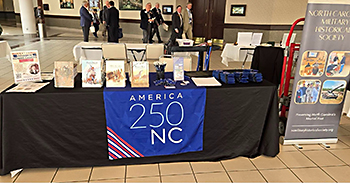
As the nation celebrates its 250th anniversary, we will have opportunities to explore the people, struggles, and ideas that helped shape both the state and the country. Through the America 250 NC initiative, a series of traveling exhibits is making its way to museums, libraries, universities, and historic sites across the state, including several stops in Fayetteville and surrounding communities. From the experiences of people living in colonial North Carolina and the fight for independence to the evolving meaning of civil rights and who has been included in the promise of “We the People,” the exhibits offer visitors a chance to explore 250 years of history close to home.
Making Our Voices Heard: North Carolinians Fighting for Civil Rights
This exhibit looks at the long struggle to make the promises of American democracy apply to more North Carolinians. Rather than concentrating only on nationally famous civil-rights figures, it tells the stories of seven North Carolinians: Gertrude Weil, Henry Owl, Joe Lewis, Abraham Galloway, Ronald Mace, James Hunter and Willa Player.
Their stories demonstrate different ways people challenged injustice through petitioning, protesting, organizing, education, advocacy and civic participation. The larger themes include civil rights, freedom, democracy, civic responsibility and the ability of individuals to bring about change. The physical exhibit consists of ten banner panels.
Local opportunities: This exhibit is at The Museum of the Cape Fear now and will run until Aug. 31. It will also be at Fayetteville State University, from Sept. 14 to Nov. 23, and Raeford-Hoke Museum, from Dec. 7 to Feb. 22, 2027.
When Are We US?
This may be the broadest and most thought-provoking of the exhibits. Rather than treating American history as a finished story, it essentially asks: At different moments in history, who counted as part of “We the People”?
The eight-panel exhibit explores North Carolina history through immigration, integration, fundamental rights, emancipation, and voting rights. It uses historical documents, photographs/images, and recordings held by repositories around North Carolina and elsewhere.
That means visitors have the opportunity to encounter history through primary sources rather than simply reading a modern narrative about what happened. Some of those sources in the exhibit contain outdated or offensive terminology, which the exhibit acknowledges with a content warning.
Local opportunities: It comes to Fayetteville State University Sept. 15 and will be open until Nov. 23, followed by the Raeford-Hoke Museum Dec. 1 to Jan. 11, 2027.
People of Colonial North Carolina
This exhibit focuses on the people who actually lived in North Carolina during the Revolutionary era, emphasizing that there wasn't a single universal "North Carolina experience" of the Revolution.
Different communities faced very different choices involving freedom, loyalty, survival, identity, and political allegiance. Using maps, rare documents and illustrations, the seven-panel exhibit examines how the Revolution affected ordinary people's lives and the sometimes conflicting paths different groups took during the conflict.
This exhibit serves as a useful counterpoint to traditional Revolutionary War exhibits because the emphasis isn't simply on generals, battles, and famous Founders. It asks visitors to think about what the Revolution meant to the varied people living in colonial North Carolina.
Local opportunity: This one is coming to Cumberland County Public Library April 13, 2027 to June 23, 2027.
Forging a Nation: The American Revolution and the Path to Independence
The nine-panel exhibit traces North Carolina's role in the creation of the United States, beginning with protests against British rule and moving through the Revolutionary War and ultimately toward the creation of the Constitution.
It incorporates maps, historical documents, and everyday objects to show how North Carolinians experienced this transformative period. Importantly, the exhibit doesn't portray nation-building as something accomplished only by famous political leaders. It emphasizes the roles of ordinary people, conflict, political ideas, and personal conviction in shaping the state's Revolutionary history.
Local opportunities: It will come to Cumberland County Public Library Feb. 2, 2027 to April 13, 2027
March to Kings Mountain
This exhibit follows the Overmountain Men and their journey toward the pivotal Battle of Kings Mountain during the American Revolution. Through maps, documents, and images of artifacts, the four-panel exhibit explores why these men decided to fight, what occurred during the battle, and the lasting significance of the Patriot victory.
Kings Mountain is particularly interesting because it allows visitors to look at the Revolution from the perspective of the Southern Campaign rather than concentrating on the better-known events around Boston, Philadelphia, and New York.
Local opportunity: This exhibit is scheduled for the Moore County Historical Association from April 16, 2027 to May 28, 2027.
With five America 250 NC traveling exhibits making stops in Fayetteville and surrounding communities, residents have a rare opportunity to experience the full collection without traveling far from home. Together, the exhibits span stories of revolution, independence, citizenship, civil rights and the ongoing effort to define the ideals of American democracy. As the country commemorates its 250th anniversary, visiting these exhibits offers more than a chance to learn about the past; it is an opportunity to come face to face with the people, documents, and stories that shaped North Carolina and the nation, and to consider how that history continues to influence the America we know today. For more information on these traveling exhibits and their local stops, visit https://www.america250.nc.gov/traveling-exhibits#WhenAreWeUs-543.
(Photo: America 250 NC has several traveling exhibits celebrating North Carolina's role in the independence of the United States of America. Photo courtesy of America 250 NC Facebook's page)